



Our Star’s Violent Temper
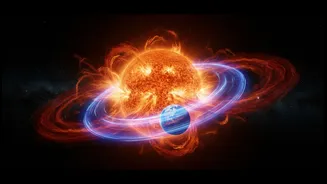
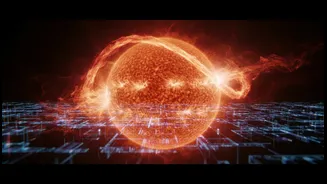
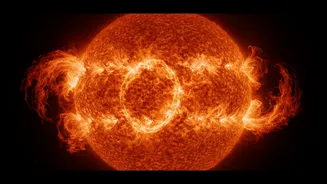
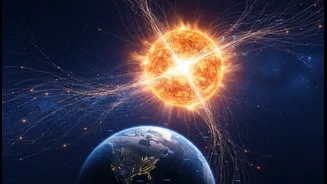
The sun isn't just a steady, shining orb. Its surface is a churning mass of hot, electrically charged gas, or plasma, governed by powerful magnetic fields. Sometimes, these magnetic fields twist and snap, releasing tremendous amounts of energy in what
are known as solar flares and coronal mass ejections (CMEs). A solar flare is an intense burst of radiation that reaches Earth in just eight minutes. A CME is even more significant: a massive explosion that ejects billions of tonnes of solar plasma and magnetic fields into space. These CMEs travel slower, taking one to five days to reach our planet, but they are the primary drivers of major space weather events.
The Global Neighbourhood Watch
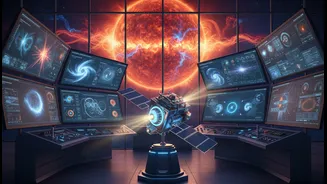
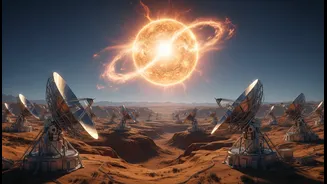
Because you can't see a CME coming with the naked eye, scientists rely on a sophisticated global 'neighbourhood watch'. This isn't one single telescope, but a network of observatories on the ground and in space, working together to provide a constant, 24/7 view of the sun. A single observatory would lose sight of the sun during its local nighttime, but a distributed network ensures there are always eyes on our star. One of the key ground-based systems is the Global Oscillation Network Group (GONG), which has six identical telescopes placed around the world, including one at the Udaipur Solar Observatory in India. This network ensures that no significant solar event goes unnoticed.
How They See the Invisible
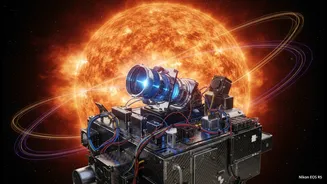
These observatories don't just take pictures in visible light. They use specialized instruments to 'see' the sun in different wavelengths of light, revealing its complex magnetic activity. Instruments called magnetograms map the sun's magnetic fields, looking for the complex, unstable regions where eruptions are likely to occur. Other instruments called coronagraphs block out the sun's bright face, creating an artificial eclipse that allows them to see the much fainter corona—the sun's outer atmosphere—and spot a CME as it blasts away from the surface. Space-based missions like NASA's Solar Dynamics Observatory (SDO) and the joint NASA/ESA Solar and Heliospheric Observatory (SOHO) provide incredibly detailed, high-resolution views that are impossible to get from beneath Earth's atmosphere.
India’s Eye on the Sun
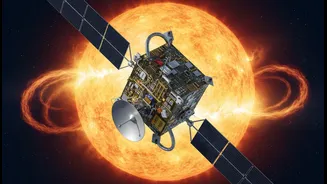
India is a key player in this global effort with its own dedicated solar observatory, Aditya-L1. Launched by ISRO, the spacecraft is positioned 1.5 million kilometres from Earth at a special spot called Lagrange Point 1 (L1). From this vantage point, Aditya-L1 has an uninterrupted view of the sun, free from eclipses or occultations. Its seven advanced instruments are designed to study everything from the sun's corona and photosphere to the solar wind and CMEs. A major goal is to help solve the mystery of why the corona is millions of degrees hotter than the surface. Aditya-L1's data enhances our global ability to monitor solar activity and improve space weather predictions.
From Solar Storm to Earthly Impact
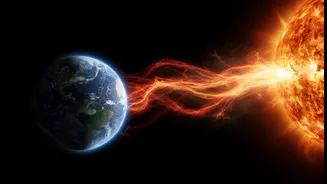
When a CME directed at Earth arrives, it slams into our planet's magnetic field, or magnetosphere. This collision can trigger a geomagnetic storm. While these storms are responsible for the beautiful auroras, or Northern and Southern Lights, they can also have serious consequences for our technology-dependent society. The influx of charged particles can induce powerful electrical currents in long conductors on the ground. This can overload transformers and destabilise entire power grids, potentially leading to widespread blackouts like the one that hit Quebec in 1989.
Why It Matters for Daily Life
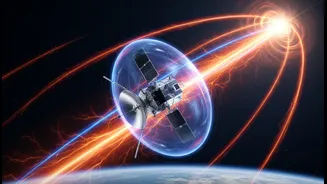
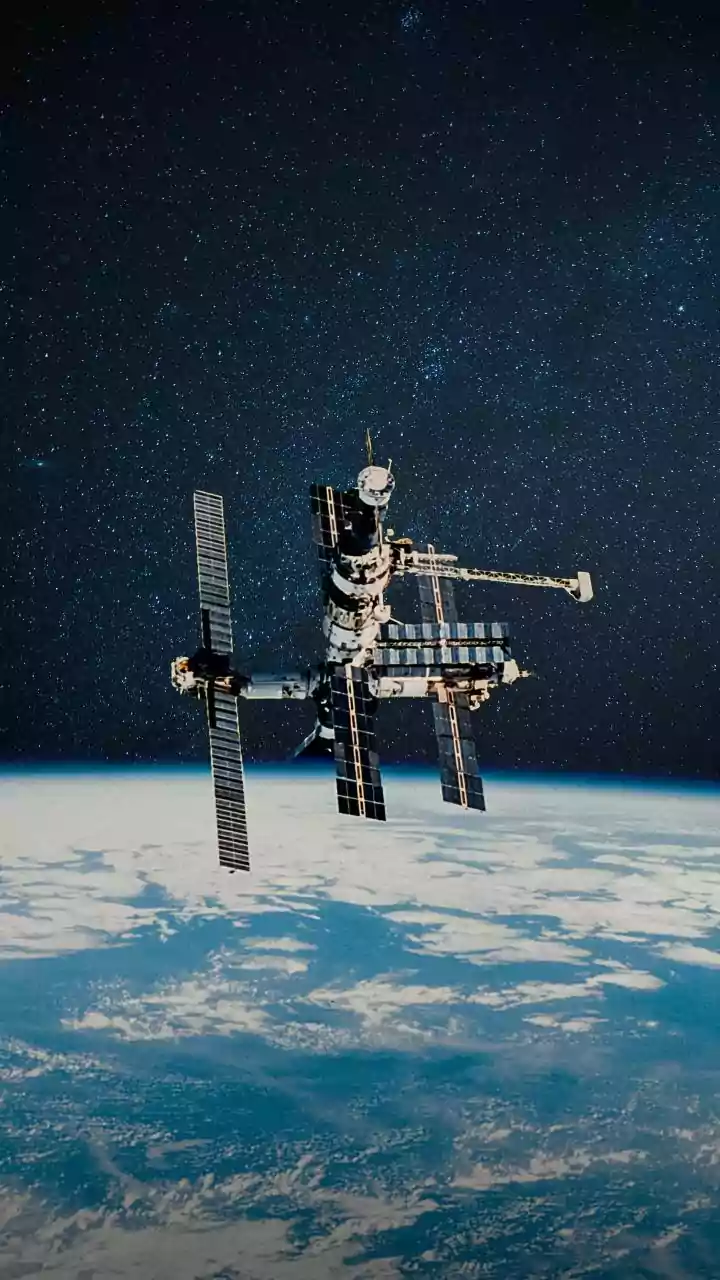
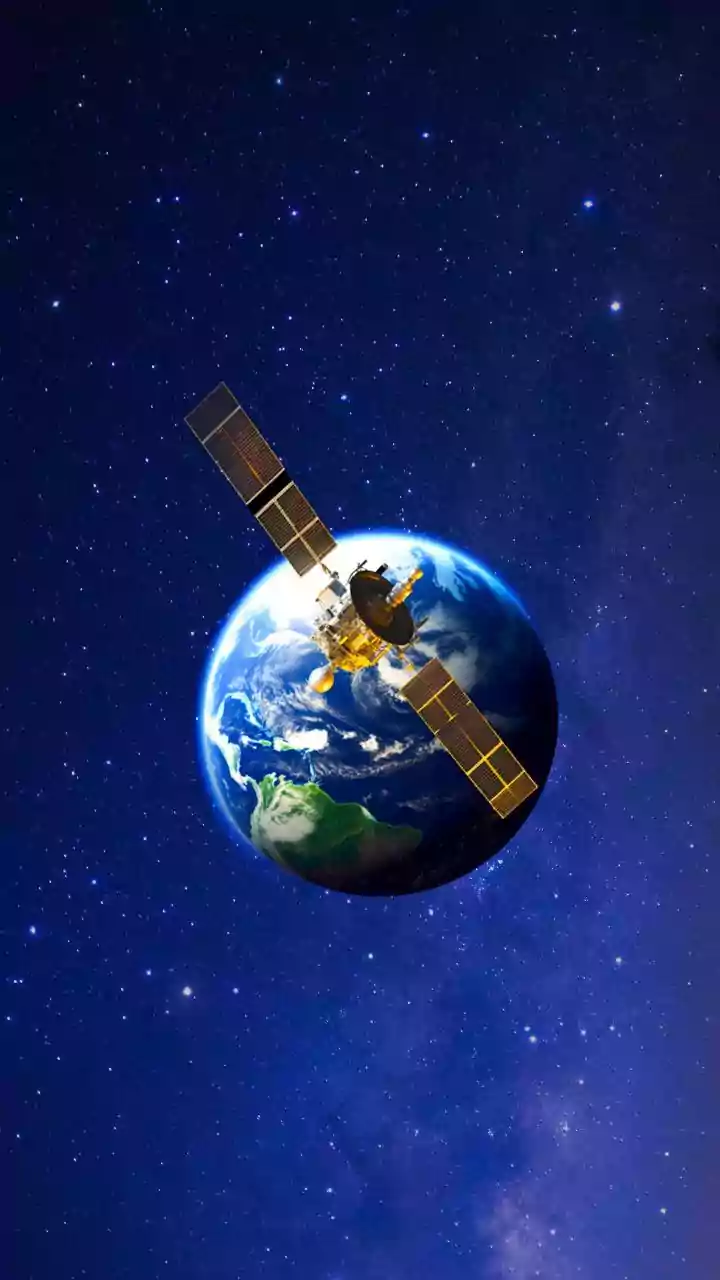
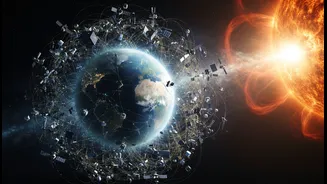
The threat extends beyond the power grid. Geomagnetic storms can damage satellites by frying their sensitive electronics or increasing atmospheric drag, causing them to fall out of orbit. This directly impacts services we rely on daily, including GPS navigation, television broadcasts, and mobile phone communication. Radio communications, particularly for aviation and emergency services, can be disrupted or blacked out completely. For a nation like India, with its rapidly growing technological infrastructure and satellite networks, understanding and forecasting these events is a matter of national importance.