
The Moon's Two Faces
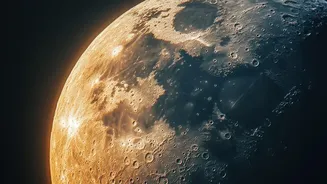
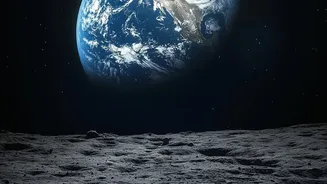
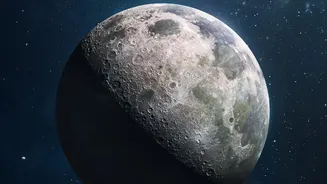
Anyone who has looked up at the night sky is familiar with the 'Man in the Moon'. Those dark patches are vast, flat plains of volcanic basalt called 'maria'. They dominate the nearside, giving it a relatively smooth appearance. But the side we never see
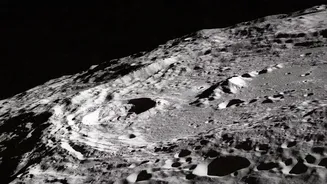
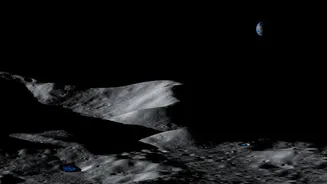
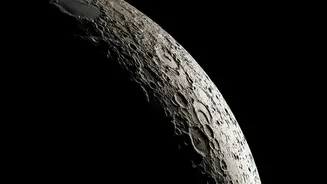
is a different world entirely. The lunar farside is almost completely covered in craters of all sizes, with a rugged, mountainous terrain and a crust that is significantly thicker than the nearside's. This stark contrast, known as the lunar dichotomy, has been a major puzzle since the first robotic missions gave humanity its first glimpse of the hidden hemisphere in 1959. Why would one side of the same celestial body be so geologically different from the other?
A Colossal, Ancient Impact
Recent studies point to a single, violent event that happened billions of years ago as the starting point for this divergence: a colossal impact. Around 4.3 billion years ago, a massive object slammed into the Moon's southern hemisphere, creating what is now known as the South Pole-Aitken (SPA) basin. Spanning nearly a quarter of the Moon's surface, the SPA basin is the largest and oldest known impact crater in our solar system. Computer simulations show that this impact would have generated an enormous amount of heat, creating a massive plume that propagated through the Moon's interior. This wave of heat didn't just stay put; it set in motion a chain of events that would permanently reshape the entire Moon.
How Heat Carried Crucial Elements
The key to the puzzle lies in a unique cocktail of lunar materials known by the acronym KREEP, which stands for potassium (K), rare-earth elements (REE), and phosphorus (P). These elements, along with radioactive heat-producers like thorium and uranium, were concentrated in the last dregs of the Moon's ancient magma ocean as it solidified. Research suggests this KREEP-rich material was initially distributed relatively evenly beneath the lunar crust. However, the models show that the heat plume from the SPA impact acted like a wave, picking up this material and carrying it through the mantle. This 'surfer' of KREEP material rode the heatwave away from the impact site, eventually concentrating almost entirely on the opposite side of the Moon—the nearside.
Forging the Nearside We See Today
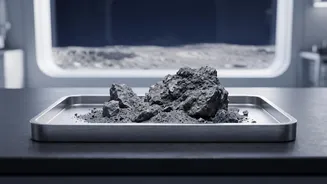
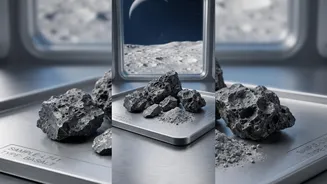
This massive redistribution of heat-producing elements had profound consequences. The concentration of radioactive materials like thorium and uranium on the nearside created a long-lasting hotspot. This kept the mantle on that side of the Moon hotter for much longer, fuelling prolonged and widespread volcanic activity. Magma repeatedly erupted to the surface, filling in ancient basins and creating the vast, dark lava plains—the maria—that we see today. This process also helps explain why the nearside crust is thinner; it was literally cooked from below. Meanwhile, the farside, having lost its share of KREEP, cooled down much faster and retained its ancient, heavily cratered highland terrain. More recent findings from China's Chang'e-6 mission, which returned the first samples from the farside, further support the idea that while the deep mantle is similar on both sides, the crust and its formation were dramatically altered by ancient heat dynamics.
Solving a Decades-Old Lunar Mystery
For years, scientists debated various theories for the lunar dichotomy, from the merger of two separate moons to tidal forces from a much-closer early Earth. While tidal heating from Earth likely played a role in the Moon's early evolution, the giant impact model provides a powerful mechanism that explains multiple observations at once. It connects the largest impact basin in the solar system directly to the unique geochemistry of the nearside, known as the Procellarum KREEP Terrane. This research not only offers a credible solution to one of the most significant open questions in lunar science but also paints a vivid picture of how a single event billions of years ago could set the course for the evolution of an entire world, creating the two-faced Moon we know today.