


A New Map of Lunar Gold
The idea of water on the Moon is not new. For years, orbital probes have confirmed the presence of water ice, particularly in Permanently Shadowed Regions (PSRs) near the lunar poles—craters where sunlight has not reached for billions of years. However,
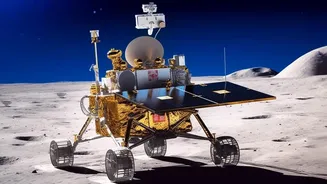
the focus of the global space effort has shifted dramatically from simply knowing the water is there to figuring out exactly where the most accessible, high-concentration deposits are. Recent, more detailed studies have suggested that the ice may not be in thick, easy-to-mine sheets, but rather in patchier, more sporadic deposits. This makes the current wave of mapping missions more of a high-stakes prospecting operation than a simple survey. Missions are creating resource maps to pinpoint the most promising locations, turning a scientific curiosity into an economic treasure map. The goal is to find the lunar equivalent of a rich vein of ore, which can be efficiently extracted.
How to Build a Gas Station in Space
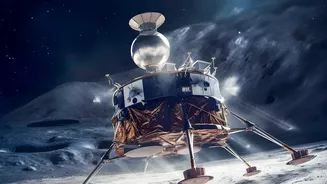
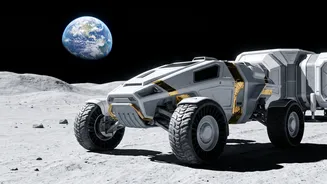
The game-changing potential of lunar water lies in a process called In-Situ Resource Utilization, or ISRU. In simple terms, it means living off the land. The plan is to land robotic miners that can scoop up the icy lunar soil, known as regolith. These machines will then heat the regolith in a container, causing the water ice to turn directly into vapor, which can be captured. From there, a process called electrolysis uses electricity—likely generated by solar panels or small nuclear reactors—to split the water molecules (H₂O) into their component parts: hydrogen and oxygen. When chilled to extremely low temperatures, these elements become liquid hydrogen and liquid oxygen, the two primary ingredients for modern rocket propellant. In effect, by mining for water, space agencies and private companies can create a fully functional, self-sustaining rocket fuel production plant on the Moon.
The Economics of the Cosmic Highway
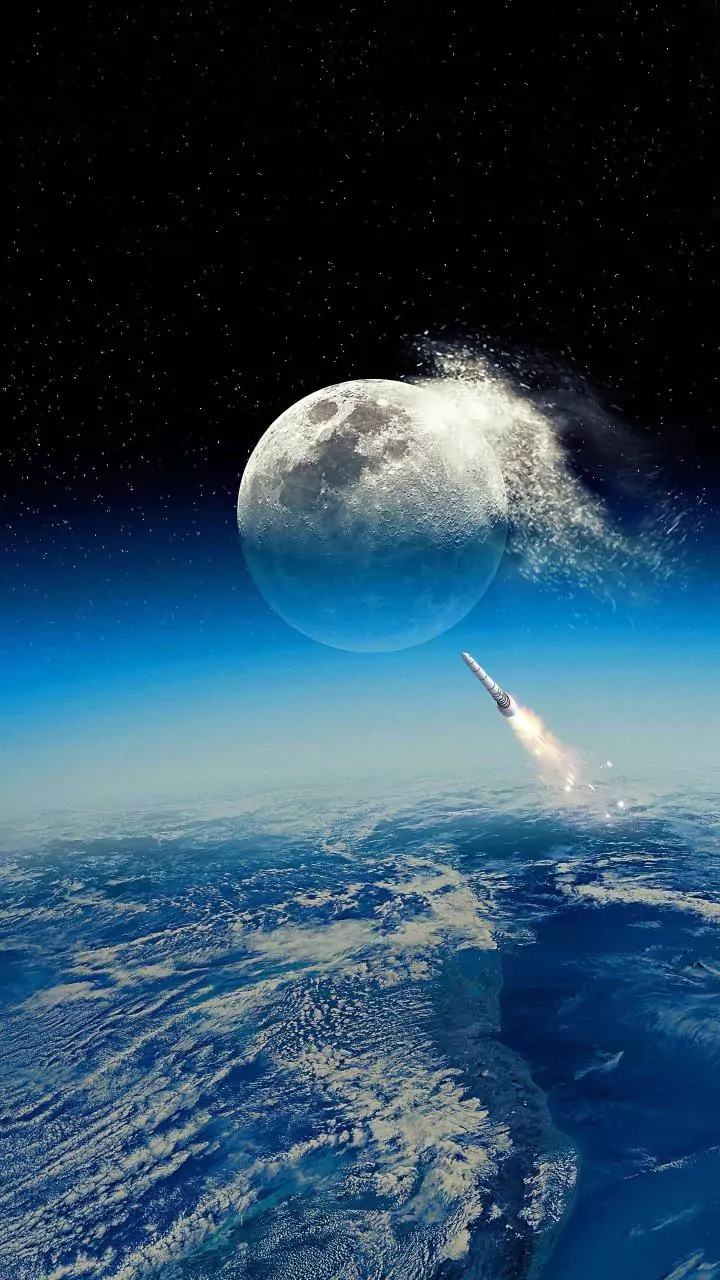
Creating fuel on the Moon is not a novelty; it is a profound economic necessity for the future of space exploration. The biggest challenge in space travel is escaping Earth's immense gravity, a process that requires enormous amounts of fuel. Launching a rocket loaded with all the fuel it needs for a round trip to Mars, for example, is incredibly expensive and inefficient. A lunar refuelling station changes everything. By launching with just enough fuel to get to the Moon, a spacecraft can top up its tanks there for a fraction of the cost. One estimate suggests that using fuel produced on the Moon could cut the cost of a mission to Mars by as much as $12 billion. This transforms the Moon from a mere destination into a critical logistics hub—a service station on the highway to the solar system.
The Emerging Cis-Lunar Economy
This vision has sparked a new commercial space race. Reports from major consulting firms now project the 'lunar economy' to be worth hundreds of billions of dollars within the next few decades, driven by industries like transportation, energy, and resource extraction. NASA is actively fostering this ecosystem through public-private partnerships, funding companies like Blue Origin, Intuitive Machines, and Astrobotic to build the landers, rovers, and infrastructure needed for a sustained lunar presence. These companies are not just conducting science experiments; they are building the foundational supply chain for an off-world economy. Water is the key resource that underpins it all, not just for fuel but for life support and agriculture, drastically reducing the crippling cost of shipping supplies from Earth.
A Global Race to the South Pole
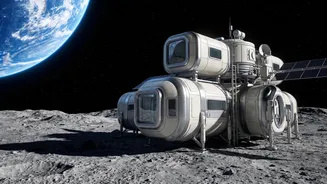
The strategic importance of lunar water has not gone unnoticed. While NASA's Artemis program is pushing forward with plans for a base camp at the Moon's South Pole, it is not alone. China, in partnership with Russia and other nations, is planning its own International Lunar Research Station in the very same resource-rich region, with construction goals set for the early 2030s. This geopolitical competition is accelerating timelines and investment, pushing the development of lunar mining and fuel-processing technology from theoretical concepts into concrete engineering challenges. With dozens of robotic and commercial missions planned by multiple nations before the end of the decade, the race is on to stake a claim and begin tapping into the resources that will power the next era of human expansion.