





An Age-Old Paradox
For dog lovers, the observation is as common as it is heartbreaking. Smaller breeds like dachshunds and poodles frequently live for 12 to 16 years, while their larger counterparts, such as mastiffs and Irish wolfhounds, often have lifespans of only 8
to 12 years. This pattern is a biological puzzle because across the wider animal kingdom, larger species tend to live longer—think of an elephant versus a mouse. Within a single species like the domestic dog, however, the opposite is true. This has led scientists to ask a fundamental question: is the shorter lifespan of big dogs simply a matter of their bodies wearing out faster, or is something more complex happening at a cellular level?
A Look Inside the 'Epigenetic Clock'
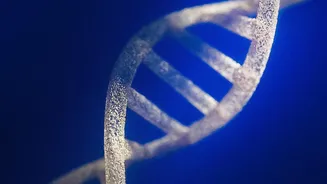
A groundbreaking study published in the journal 'Science' offers the clearest molecular explanation to date. Researchers from the Dog Aging Project, a long-term study of aging in companion animals, examined the DNA of over 850 dogs from numerous breeds. They didn't just look at the DNA sequence itself, but at its 'epigenome'—a layer of chemical tags that control which genes are turned on or off. These tags, which change predictably with age, act as a kind of 'epigenetic clock', measuring biological age rather than just chronological age. The findings revealed that even if a Great Dane and a Chihuahua are the same chronological age, the Great Dane is biologically older.
The Trouble with 'Jumping Genes'
The study pinpointed a key factor: the breakdown of control over genetic elements known as 'jumping genes', or transposable elements. Specifically, a class called LINE1s can copy themselves and 'jump' to new locations in the genome, potentially causing damage and instability. The body normally keeps these jumping genes in check using chemical tags in a process called DNA methylation. However, the research found that as dogs age, this methylation is lost, and the jumping genes can become more active. This loss happens much faster in larger dogs. On average, giant breeds lost about 35% more of this regulatory DNA methylation per year than small breeds. This suggests that the faster aging in large dogs is driven, at least in part, by this reduced control over their own DNA.
The Biological Trade-Off of Rapid Growth
This accelerated cellular aging appears to be a biological trade-off. The very thing that makes large breeds so magnificent—their size—comes at a steep price. The hormones that drive their rapid growth from puppyhood, such as insulin-like growth factor 1 (IGF-1), are also associated with faster aging across multiple species. The intense selective breeding by humans to create these large dogs may have inadvertently selected for a life lived in fast-forward. Their cells are programmed for rapid growth and division, which leads to a faster accumulation of DNA damage and a quicker decline in the systems that regulate cellular health. This rapid aging process not only shortens lifespan but also makes large dogs more susceptible to age-related diseases like cancer and orthopedic issues.
What This Means for Pet Parents
While you can't change your dog's genetics, this research underscores the importance of proactive healthcare, especially for large breeds. Understanding that their bodies are aging at an accelerated rate highlights the need for diligent wellness checks to catch age-related diseases early. Owners of large-breed puppies should work closely with veterinarians to manage their growth rate with appropriate nutrition, avoiding overly rapid weight gain that can stress their developing systems. Maintaining a healthy weight throughout their life is also crucial, as excess pounds put additional strain on their joints and cardiovascular system, which are already working harder. While science continues to unravel the complexities of aging, the time we have with our companions, big or small, remains precious.