


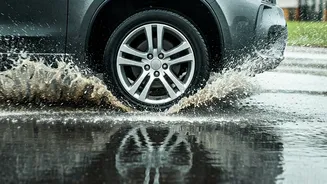


1. Go Beyond the Basic Tyre Check
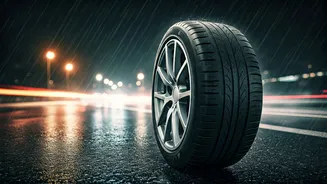
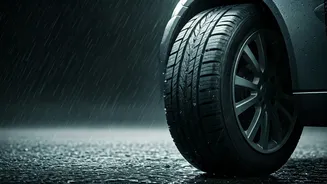
Everyone says, “check your tyres,” but what does that really mean? During the monsoon, this is non-negotiable. First, check the air pressure; under-inflated tyres are more prone to aquaplaning. Your car manual or a sticker on the driver-side door jamb
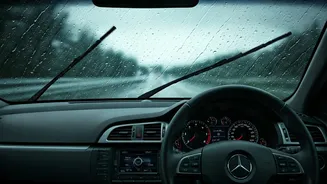
will tell you the correct pressure. More importantly, inspect the tread depth. The grooves on your tyres are designed to channel water away. If they are worn out, they can’t do their job. An easy hack: insert a one-rupee coin into the tread. If you can see the Ashoka Lion emblem’s head completely, your tyres are likely too worn and need immediate replacement. Don't forget the wiper blades. Check for cracks in the rubber and replace them if they leave streaks or don't clear the windscreen effectively.
2. Double Your Following Distance
You’ve probably heard of the 'three-second rule' for maintaining a safe following distance in dry conditions. On wet, slippery highways, this is simply not enough. The 'hack' is to double it to a 'six-second rule.' Braking distances can increase by up to three times on wet roads. To measure this, watch the vehicle ahead of you pass a fixed object like a lamp post or a sign. Then, count the seconds it takes for your car to pass the same object. If it’s less than six seconds, you are too close. This buffer zone gives you precious extra time to react to sudden braking, a pothole, or an unexpected obstacle hidden by the rain.
3. See and, Crucially, Be Seen
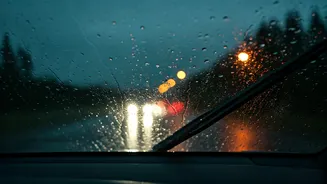
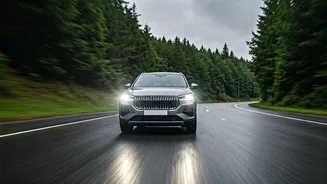
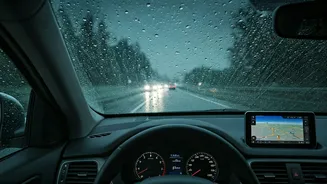
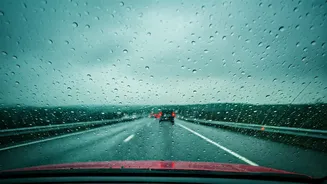
Low visibility is a major hazard in heavy rain. The most important rule is simple: if your wipers are on, your headlights should be on too. Use your low beams, not high beams. High beams reflect off the rain and fog, creating a wall of glare that worsens your own visibility and can blind oncoming drivers. This isn't just about you seeing the road; it's about making your vehicle visible to others through the spray kicked up by trucks and buses. Also, learn to use your fog lamps correctly. They are for dense fog or extremely heavy downpours, not a light drizzle. Using them unnecessarily can be distracting to other drivers.
4. How to Handle a Hydroplaning Scare
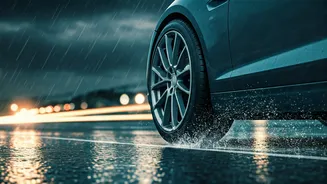
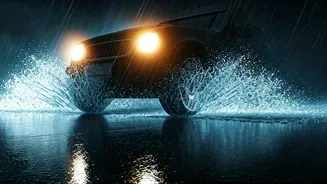
Hydroplaning, or aquaplaning, is when your tyres lose contact with the road surface and skim over a layer of water. It feels like you’re suddenly floating, and steering becomes unresponsive. It’s terrifying, but panicking is the worst thing you can do. The hack is to stay calm and follow these steps: do not slam on the brakes. Do not yank the steering wheel. Instead, gently ease your foot off the accelerator. Keep the steering wheel straight, or make very gentle corrections in the direction you want to go. As the car slows down, the tyres will regain contact with the road, and you will feel control return. The best way to beat hydroplaning is to prevent it by driving slower on wet roads.
5. Navigating Waterlogged Roads
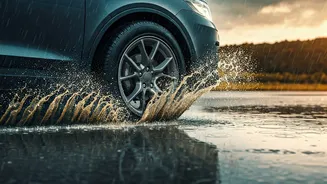
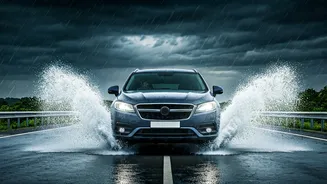
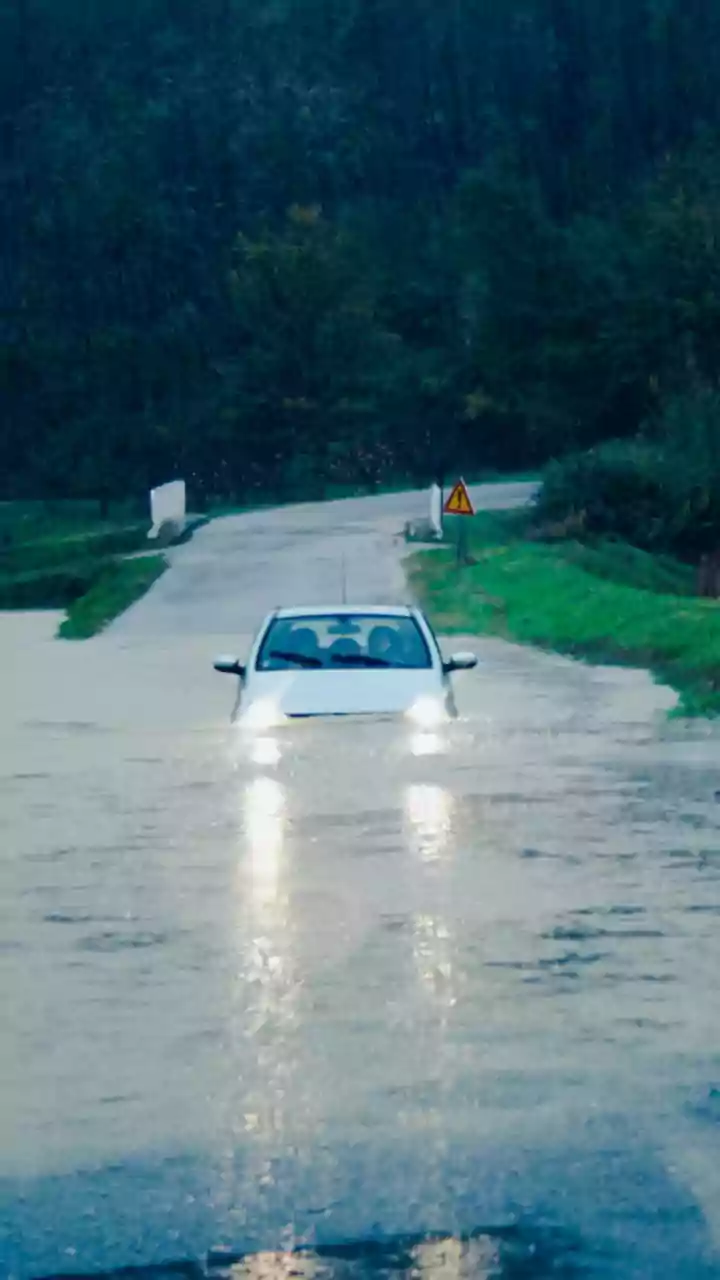
Indian highways can often have large, unavoidable puddles or completely waterlogged sections. Before you enter, try to gauge the depth. Watch other vehicles go through. If the water is splashing above the centre of their wheels, it might be too deep for your car. If you must proceed, the hack is to engage a low gear (first or second) and keep the engine revs high by lightly pressing the accelerator. Drive through slowly and steadily without stopping. This creates pressure in the exhaust pipe, preventing water from entering and stalling your engine. Once you're through, gently tap your brakes a few times to dry them out and ensure they are working properly.
6. The Ultimate Hack: Patience
The most effective highway hack isn't about your car; it's about your mindset. Rushing in the rain is a recipe for disaster. Accept that your journey will take longer. Plan for it. Aggressive driving, speeding, and frequent lane changes are extremely dangerous on wet roads. If the rain becomes a blinding torrent and visibility drops to near zero, the smartest move is to find a safe place to pull over, turn on your hazard lights, and wait for the worst of it to pass. A delayed arrival is infinitely better than not arriving at all. Take breaks to combat the fatigue that comes from the intense concentration required for monsoon driving.