







An Alarming Sight on the Coast
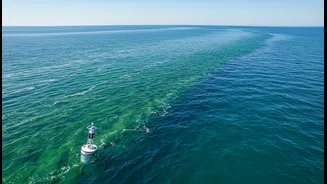
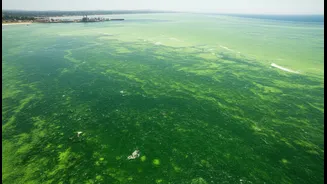
In late June 2026, an estimated 11 tonnes of fish washed ashore along a 1.5-kilometre stretch of the Boyapadu coastline near Anakapalli. The mass mortality event coincided with a visible, dense discolouration in the near-shore waters—a tell-tale sign
of an algal bloom. Environmental studies quickly identified the dominant organism as Trichodesmium, a type of cyanobacteria, at high concentrations. While local fishers worried about industrial effluents, scientists pointed to hypoxia, or severe oxygen depletion caused by the bloom, as the likely culprit. These events, which can turn pristine waters into thick, foul-smelling soups of green, red, or brown, are becoming alarmingly frequent along India's 7,500-kilometre coastline.
What Makes a Bloom 'Harmful'?
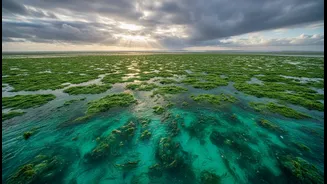
Not all algae are bad; they are simple photosynthetic organisms that form the base of most aquatic food webs. An algal bloom is simply a rapid, uncontrolled increase in their population. The problem arises with Harmful Algal Blooms (HABs). Some HABs produce potent toxins that can harm or even kill marine life and humans who consume contaminated seafood or come into contact with the water. Other blooms are harmful because of their sheer density. They block sunlight from reaching other marine plants and, when the massive bloom dies and decomposes, bacteria consume all the available oxygen in the water. This creates hypoxic or "dead zones" where fish and other aquatic organisms suffocate and die, as was the suspected cause in the Anakapalli incident.
A Perfect Storm of Causes
The rise in HABs across India is not accidental. It is fueled by a combination of human activities and environmental shifts. A primary driver is nutrient pollution. Runoff from agricultural fields carrying excess fertilisers, along with untreated sewage and industrial waste from urban centres, loads coastal waters with nitrogen and phosphorus—the perfect food for algae. Climate change acts as a powerful accelerator. Rising sea temperatures create more favorable conditions for algal growth, as many species thrive in warmer water. This combination of nutrient overload and warming seas is creating a perfect storm, leading to more frequent and intense blooms along both the east and west coasts of India, with hotspots identified near major urban and industrial hubs like Mumbai, Chennai, and in the Gulf of Khambhat.
The Renewed Push for Research
In response to this escalating threat, there is a renewed focus on bolstering India's coastal research capabilities. The goal is to move from merely reacting to blooms to predicting and mitigating them. Institutions like the National Centre for Coastal Research (NCCR) are at the forefront, expanding monitoring programs that track water quality and pollution hotspots. The Indian National Centre for Ocean Information Services (INCOIS) provides critical advisories by tracking bloom events. The research focus is shifting towards developing advanced early warning systems. This involves integrating traditional water sampling with cutting-edge technology to create a more comprehensive picture of coastal health.
Technology to Turn the Tide
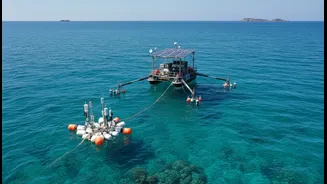
The new frontier in environmental monitoring is technology-driven. Scientists are increasingly using a suite of high-tech tools to get ahead of the problem. Satellite imagery from agencies like NASA and ISRO allows for the monitoring of vast coastal stretches, with instruments capable of detecting the chlorophyll signatures of algae from space. Some new satellite technologies can even peer through thin clouds, increasing the frequency and reliability of observations. Closer to the water, researchers are deploying automated camera systems with AI algorithms that can identify and track blooms in near real-time. Other innovations include flow imaging microscopy, which can rapidly analyse water samples and identify specific types of algae, and ultrasonic buoys that emit sound waves to disrupt the formation of certain blooms before they get out of control.