



A Tale of Two Planets
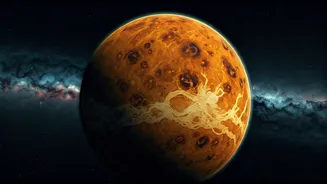
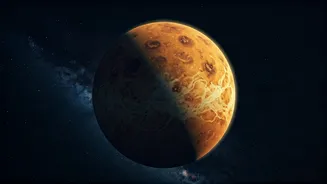
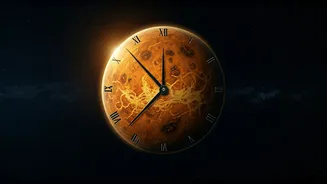
In the cosmic neighbourhood of our solar system, Venus and Earth started as siblings. They are nearly the same size, mass, and were born from the same cloud of gas and dust. For much of its history, scientists believe Venus may have had a climate similar
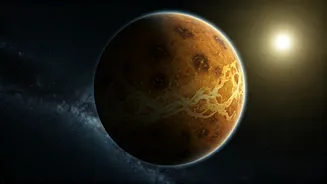
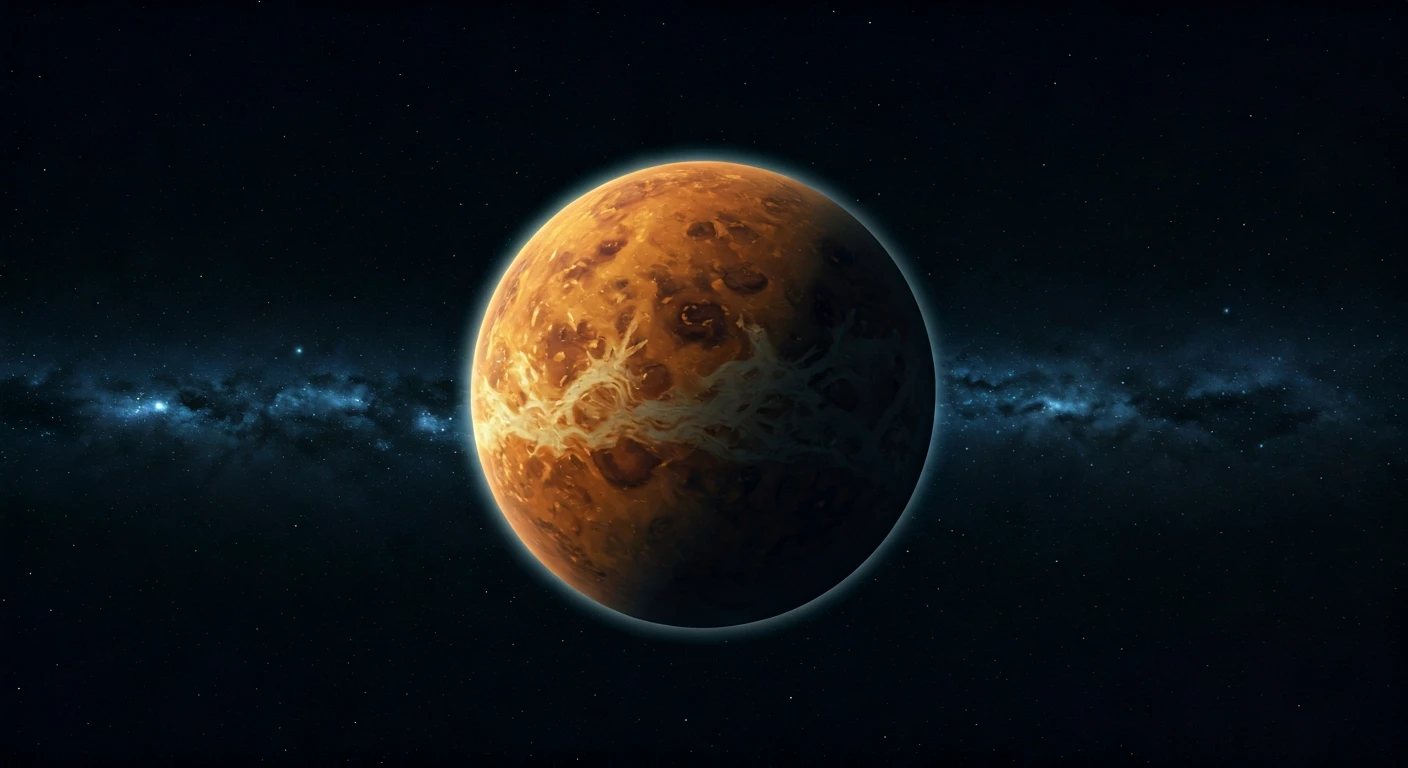
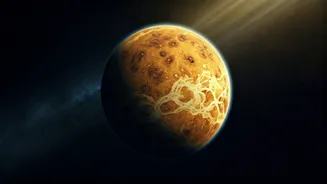
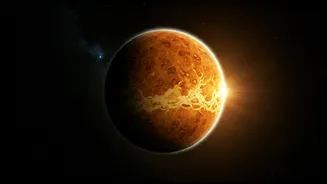
to Earth's, possibly with oceans, rain, and perhaps even continents. But somewhere along the way, their paths diverged dramatically. Today, Venus is a nightmare world. Its atmosphere is over 90 times denser than Earth's and is composed almost entirely of carbon dioxide. The surface temperature hovers around a blistering 465 degrees Celsius, hot enough to melt lead, making it the hottest planet in our solar system—even hotter than Mercury, which is closer to the sun. The mystery of how our twin became so inhospitable is one of the most pressing questions in planetary science, and the answer serves as a stark warning for our own planet.
The Runaway Greenhouse Effect
The primary culprit behind Venus's transformation is a phenomenon known as the runaway greenhouse effect. On Earth, the greenhouse effect is a natural process where gases like carbon dioxide and water vapour trap heat, keeping our planet warm enough for life. But on Venus, this process went into overdrive. It is thought that massive volcanic eruptions may have pumped enormous amounts of carbon dioxide into the atmosphere. As the planet heated up, its oceans would have started to boil away, releasing vast quantities of water vapour—itself a potent greenhouse gas—into the air. This created a catastrophic feedback loop: more heat led to more evaporation, which in turn trapped even more heat. Eventually, the oceans evaporated completely and the planet's climate spiralled out of control, leaving the scorched wasteland we see today.
A Natural Climate Laboratory
While Earth is not in immediate danger of becoming Venus, studying our neighbour provides a crucial natural laboratory for climate scientists. It allows them to test and refine the same climate models they use to predict Earth's future. If a model can accurately simulate the extreme conditions on Venus, scientists can have more confidence in its projections for Earth. One of the biggest uncertainties in our own climate models is the behaviour of clouds. Venus, permanently shrouded in thick clouds of sulphuric acid, offers an extreme case study. Understanding how these clouds interact with radiation helps scientists better grasp the complex role that Earth's own water clouds play in either reflecting sunlight and cooling the planet or trapping heat and warming it.
Future Missions to Our Lost Twin
A new wave of exploration is set to unlock more of Venus's secrets. After decades of focusing on Mars and other destinations, space agencies are turning their attention back to our twin. NASA has two ambitious missions planned. The DAVINCI mission (Deep Atmosphere Venus Investigation of Noble gases, Chemistry, and Imaging) will involve a probe plunging through the planet's dense atmosphere, sampling its chemical composition to understand its evolution. Another mission, VERITAS (Venus Emissivity, Radio Science, InSAR, Topography, and Spectroscopy), will orbit the planet, using advanced radar to map its surface in high resolution and look for evidence of past and present geological activity, like volcanoes. These missions promise to provide a treasure trove of data, helping to piece together the story of how a once-habitable world met its demise.