







The Old Reality: A Test of Endurance
For decades, the idea of a quick, two-day trip for leisure was a fantasy for the vast majority of India's burgeoning middle class. The romance of train travel often evaporated over a 15-hour journey to cover a distance you could drive in the U.S. in four.
Highways were often two-lane roads, congested with trucks and fraught with danger, turning a potential 200-mile trip into an all-day, exhausting ordeal. Flying was an option only between major metropolitan hubs, leaving stunning coastal towns, serene mountain retreats, and historic temple cities effectively cut off for anyone without a week to spare. A spontaneous trip to the hills? Forget it. The travel time alone would consume the entire weekend, making the journey more of a punishment than a pleasure.
Paving the Way for Spontaneity
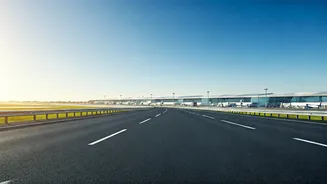
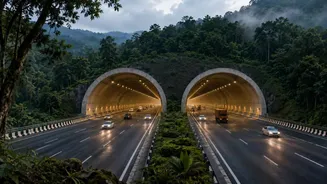
That reality is being rapidly bulldozed and repaved. India is in the midst of one of the most ambitious infrastructure overhauls on the planet. The Bharatmala Pariyojana project is a multi-billion-dollar initiative to build a web of world-class national highways, expressways, and economic corridors. A journey that once took 12 hours of white-knuckle driving is now a smooth, six-hour cruise. Simultaneously, the UDAN scheme—a government initiative to make air travel affordable and accessible—is connecting dozens of small, underserved towns. New airports and airstrips are popping up in places that were previously dots on a map, with subsidized flights making a one-hour plane ride cheaper than a long-haul train ticket. It’s the 21st-century equivalent of America’s post-war interstate highway boom, and it’s having a similarly profound effect on the nation’s psyche.
The Dawn of the 'Micro-Cation'
Enter the “micro-cation.” Fueled by rising disposable incomes and the sudden feasibility of travel, Indians are embracing the short trip with gusto. Young professionals in cities like Mumbai or Bangalore, who once faced a grueling overnight bus ride to reach a nearby beach or mountain resort, can now leave the office on a Friday afternoon and be sipping coconut water by the shore in three hours. Families are discovering that a weekend trip to visit grandparents or explore a nearby heritage site is no longer a major logistical operation. Travel companies and booking platforms report a massive spike in searches for two-to-four-day itineraries. This isn't just about convenience; it's a fundamental change in the work-life-leisure equation for millions.
A New Tourist Map Emerges
This boom is also redrawing India’s tourist map. For years, international and domestic tourism was heavily concentrated on the “Golden Triangle” of Delhi, Agra, and Jaipur, or the beaches of Goa. Now, tourism is decentralizing. Thanks to a new highway, a once-sleepy Himalayan village becomes a sought-after destination for weekend hikers. With a new regional airport, a remote coastal town in Odisha or a historic city in Gujarat suddenly finds itself on the tourist circuit. This is creating new economic ecosystems. Homestays, boutique hotels, cafes, and tour guide services are flourishing in places that were previously dependent on agriculture or small-scale industry. It's a powerful ripple effect, where a strip of asphalt or a new runway doesn't just cut travel time—it seeds an entire local economy, providing jobs and opportunities far from the megacities.