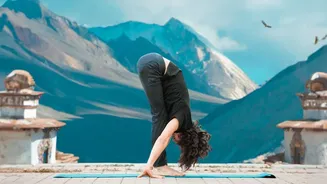



In the quest for a deep hamstring stretch, it’s easy to focus on one thing in Paschimottanasana: touching your toes. But the real magic of this pose lies not in how far you fold, but in how you get there. The key? A long, neutral spine.
What is a 'Long Neutral Spine'?
Before we fold,
let's clarify what a 'neutral spine' means. It isn’t about making your back perfectly flat or straight. Your spine has natural curves: a gentle inward curve at your lower back (lumbar) and neck (cervical), and an outward curve at your upper back (thoracic). A neutral spine is when these natural curves are maintained, creating an alignment that efficiently absorbs stress and distributes weight. The cue 'long' simply adds the idea of creating space and length between each vertebra. Imagine gently lifting the crown of your head towards the ceiling while your sit bones are rooted to the floor; that's the sensation of a long spine.
Why It Matters in a Forward Bend
When you fold forward in Paschimottanasana, the goal is to stretch your hamstrings, the large muscles on the back of your thighs. If you collapse and round your lower back to reach your feet, you shift the stretch away from the hamstrings and place potentially harmful pressure on your lumbar discs. This common mistake can lead to strain or even injury. By maintaining a long, neutral spine and hinging forward from the hips, you isolate the stretch in the belly of the hamstrings. This makes the pose safer, more effective, and ultimately more beneficial for releasing tension in the entire back of the body. The focus shifts from grabbing your feet to creating length.
Finding Neutral in the Fold
Start by sitting on the floor with your legs extended in front of you (Dandasana or Staff Pose). If you immediately feel your lower back rounding, your hamstrings are likely tight. This is your first cue to modify. To initiate the fold, don't think about bringing your head to your knees. Instead, inhale to lengthen your spine, lifting your chest. As you exhale, begin to hinge forward from your hip creases, leading with your heart. Keep your chest open and spine long for as long as possible. Place your hands on your shins, ankles, or wherever they land without forcing you to round your back. Your gaze should be forward, not down at your lap, to help keep your neck in line with the rest of your spine.
Listen to Your Hamstrings
The primary reason people struggle to keep a neutral spine in this pose is hamstring tightness. Tight hamstrings pull on the sit bones, causing the pelvis to tilt backward and the lower back to round as a consequence. Trying to force straight legs in this situation is counterproductive. The body is an interconnected chain, and tight hamstrings will win the tug-of-war with your lower back every time. Instead of fighting your body, work with it. The key is to reduce the pull of the hamstrings so your pelvis has the freedom to tilt forward, which is the foundation of a healthy forward fold.
Smart Modifications for a Safer Bend
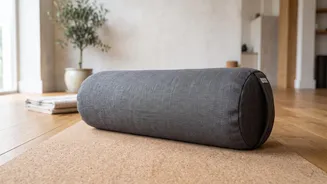
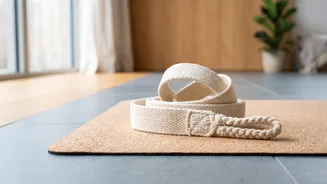
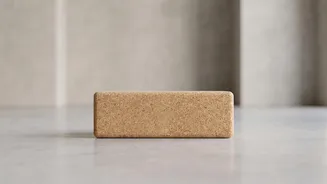
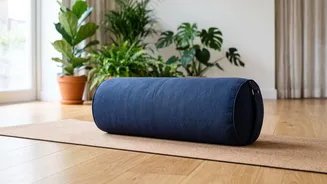
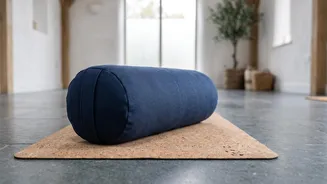
Props are a sign of smart yoga, not weakness. To make Paschimottanasana more accessible and effective, try these modifications. First, sit on the edge of a folded blanket or a yoga block. Elevating your hips gives your pelvis more room to tilt forward, making it much easier to maintain a neutral spine. Second, generously bend your knees. This instantly releases tension in the hamstrings, allowing you to fold from the hips and connect your torso to your thighs. From there, you can work on gradually straightening the legs over time. Finally, use a yoga strap. Loop it around the balls of your feet and hold it with both hands. This extends your reach, allowing you to keep your spine long without having to physically grasp your feet.