



Moving Beyond the Launchpad
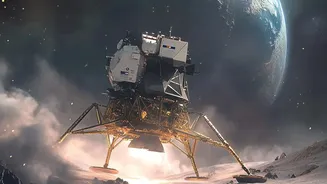
The Indian Space Research Organisation (ISRO) has earned its place in the top tier of global space powers, most notably by becoming the first nation to successfully land a spacecraft on the Moon's south pole. But as the 21st-century space race heats up,
the agency is shifting its focus from purely exploration-based milestones to developing foundational technologies that will define the future of space operations. According to ISRO Chairman S. Somanath and recent strategic announcements, the agency's roadmap is now heavily focused on achieving self-reliance and a competitive edge in areas that sound like science fiction: quantum communication and space-based artificial intelligence. These aren't just buzzwords; they represent a strategic pivot towards a future where data security and autonomous systems are as crucial as engine thrust and orbital mechanics. This agenda is part of a broader national vision for India to become a major space power by 2030, balancing scientific goals with national security and commercial opportunities.
Quantum Communication: The Unhackable Link
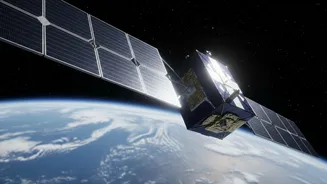
Imagine a communication channel that is physically impossible to eavesdrop on. That's the promise of quantum communication. Instead of traditional radio waves, it uses the principles of quantum mechanics—specifically, entangled photons—to transmit information. If a third party tries to intercept the signal, the very act of observing it changes its state, immediately alerting the sender and receiver. For space applications, this is a game-changer. It offers the potential for ultra-secure communication links for military satellites, sensitive government data, and critical financial transactions. ISRO has already successfully demonstrated free-space quantum communication over short distances and is collaborating with Indian research institutes to develop satellite-based systems. The goal is to establish a secure quantum network, potentially using satellites as nodes to connect ground stations across thousands of kilometers, making India one of the few nations pursuing this complex and highly strategic capability.
Smarter Satellites with Onboard AI
Artificial intelligence is the other pillar of ISRO's future-tech push. For decades, spacecraft have relied heavily on commands from ground control. AI promises to change that by making satellites and probes more autonomous and efficient. NASA has already demonstrated this with its Mars rovers, which use AI to navigate hazardous terrain on their own. ISRO plans to integrate AI for a wide range of applications. This includes on-board data processing, where satellites can analyze vast amounts of imagery and sensor data in orbit and send back only the most relevant information, saving precious bandwidth. AI can also be used for automated spacecraft health monitoring, predicting system failures before they happen, and managing large constellations of satellites. In disaster management scenarios, AI-powered satellites could provide real-time analysis of floods or other events, enabling faster and more effective responses on the ground.
The Geopolitical Chessboard in Orbit
ISRO's investment in quantum and AI technologies isn't happening in a vacuum. It's a direct response to a changing geopolitical landscape where space is an arena for strategic competition, particularly between the U.S. and China. China launched the world's first quantum satellite, Micius, in 2016, and has made significant strides in both space-based quantum networks and AI. By developing its own sovereign capabilities, India aims to reduce its reliance on foreign technology for critical infrastructure and secure its place as a key player in the Indo-Pacific and beyond. This technological push is about more than just national pride; it's about ensuring data security, enhancing military and intelligence capabilities, and building a robust domestic space economy. As nations from the U.S. to Europe explore similar technologies, ISRO's agenda shows that the race for the high ground of the 21st century will be won not just with rockets, but with the smartest, most secure networks in the sky.