





The New Rules of the Cosmic Road
Getting around in deep space isn't like using GPS on Earth. For decades, spacecraft have relied on ground-based radio antennas to tell them where they are. This works, but the communication delay over vast distances—minutes or even hours—makes real-time
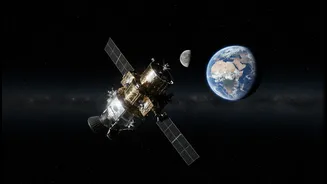
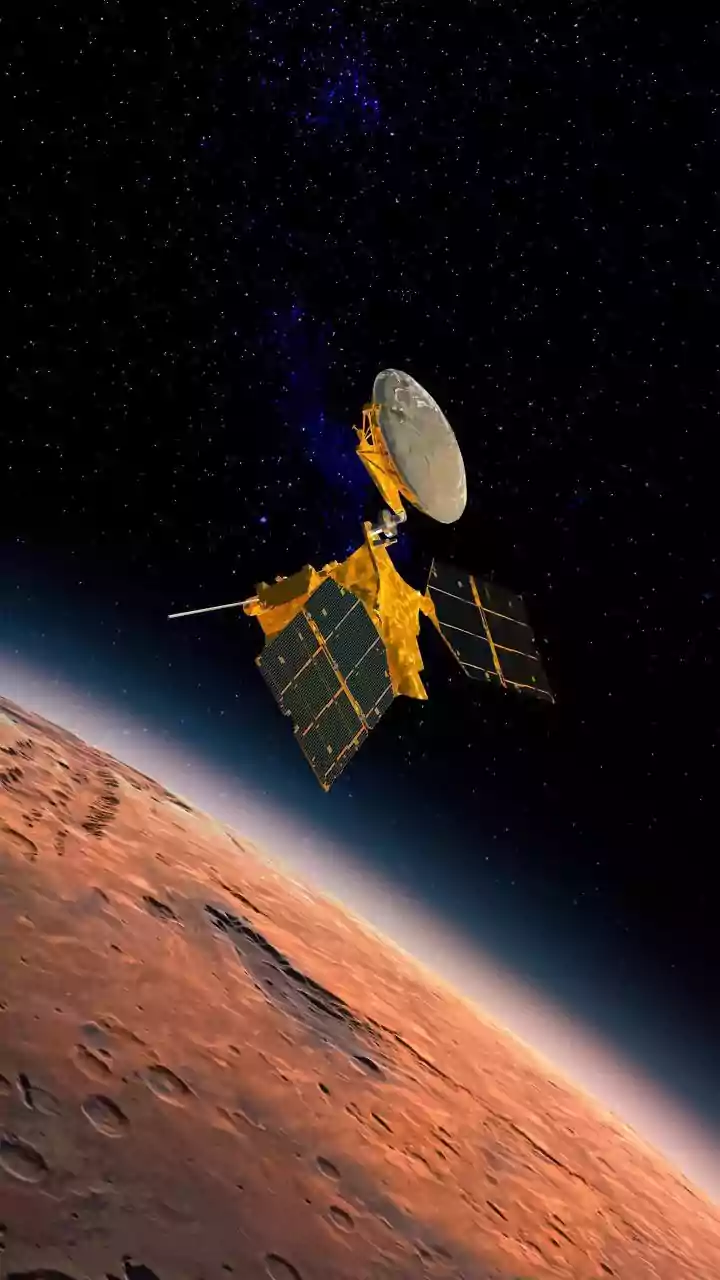
adjustments impossible. As humanity plans more complex missions, like those to the Moon, Mars, and beyond, this old model is becoming a bottleneck. The future of space exploration requires spacecraft that can navigate on their own. NASA is testing autonomous navigation systems, like the software on the CAPSTONE mission, which allow a spacecraft to determine its own position by observing celestial bodies like the Moon and Earth. Another futuristic method being tested is X-ray pulsar navigation (XNAV), which uses the hyper-regular signals from distant neutron stars as a kind of galactic GPS. These technologies are essential for enabling rapid, complex manoeuvres, such as landing on a specific Martian crater or rendezvousing with another object in deep space.
Mapping the Neighbourhood
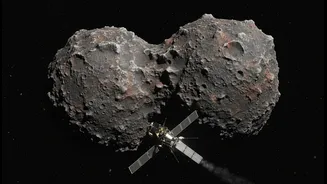
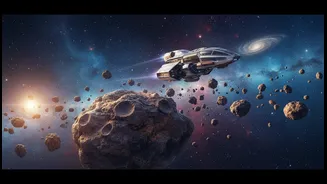
You can't navigate a place you haven't mapped, and you certainly can't defend against threats you don't see coming. This is where asteroid science becomes critical. We live in a solar system filled with rocky debris, and missions to study these objects are providing an unprecedented catalogue of our cosmic neighbours. Missions like Japan's Hayabusa2 and NASA's OSIRIS-REx have not only visited asteroids but have also returned physical samples, giving us invaluable information about their composition. These samples, containing carbon and water-bearing minerals, hint at how the building blocks of life might have arrived on Earth. Other missions, like Psyche, are targeting rare metallic asteroids thought to be the exposed cores of ancient, shattered proto-planets, offering a unique window into how planets form. By studying their orbits, sizes, and what they're made of, we create a vital map that is as much about scientific discovery as it is about planetary safety.
From Science to Security
The knowledge gained from asteroid science feeds directly into planetary defence—the effort to protect Earth from a potential asteroid impact. While catastrophic, dinosaur-ending impacts are exceedingly rare, smaller, city-sized objects strike far more frequently. The first step in defence is detection. Global networks and advanced telescopes are constantly scanning the skies to find and track Near-Earth Objects (NEOs). But finding an asteroid is only half the battle. To deflect one, we need to know what we're pushing against. Is it a solid rock, or a loose pile of rubble held together by gravity? This is where the synergy between science and defence becomes clear. The data from missions like OSIRIS-REx helps inform how we might approach a deflection mission. Knowing an asteroid's physical properties is crucial for deciding the best way to nudge it off course.
The Ultimate Insurance Policy
For years, deflecting an asteroid was pure science fiction. In 2022, it became science fact. NASA's Double Asteroid Redirection Test (DART) mission was humanity's first-ever test of a kinetic impactor. The spacecraft deliberately slammed into Dimorphos, a small moonlet orbiting the larger asteroid Didymos, over 10 million kilometres from Earth. The goal was to see if the impact could alter the moonlet's orbit. The mission was a stunning success, changing Dimorphos's orbital period by 32 minutes—far more than the 73-second benchmark for success. The impact even minutely changed the path of the entire binary asteroid system around the Sun. The European Space Agency's Hera mission, arriving at the Didymos system in 2026, will study the aftermath of DART's impact up close, providing crucial data to help scientists understand exactly how the deflection worked and how to scale the technique for different types of asteroids.
An Interconnected Toolkit for the Future
These three fields—precision navigation, asteroid science, and planetary defence—are not separate endeavours. They are a tightly integrated toolkit for our future in space. To intercept an asteroid for planetary defence, a spacecraft needs the advanced autonomous navigation to find and hit its target millions of miles away, just as the DART spacecraft did. To conduct meaningful asteroid science, a probe needs the same navigational precision to rendezvous with and orbit a tiny, fast-moving object. And the scientific data we gather is what makes a planetary defence strategy viable in the first place. This growing relevance is about a fundamental shift in our relationship with space. We are moving from being passive explorers to active stewards of our cosmic environment, developing the capability not just to observe, but to interact, manoeuvre, and even protect.