







The Morning Risk Assessment
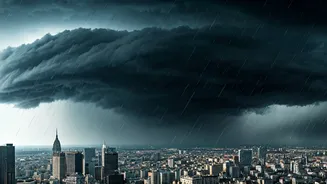
The first stage of Delhi adulting on a rainy day is the complex calculus performed before even leaving the bed. It involves a frantic dance between three weather apps, each predicting a slightly different apocalypse. This is followed by peering out the window,
trying to gauge the difference between a 'drizzle that will stop' and a 'deluge that will flood the underpass near the office'. The internal debate is fierce. Can you get away with a half-day? Is today the day to finally use that ‘work from home’ token you’ve been saving? But the pull of deadlines and the fear of an overflowing inbox are powerful motivators. The decision is made, often with a sigh of resignation. The office run is on.
The Armour of the Commuter
Preparing for a monsoon commute in Delhi is like gearing up for battle. The wardrobe choices are strategic. You need an outfit that says ‘professional’ but also ‘can survive a small flood’. This often means sacrificing your favourite shoes to the gods of murky water, opting instead for a pair of sacrificial floaters or rubber sandals you wouldn't be sad to lose. The laptop, a precious idol, is given the multi-layered security of a plastic bag within the laptop bag. A ‘waterproof’ jacket, which you know is merely water-resistant at best, is donned. An umbrella, flimsy and destined to be inverted by the first gust of wind, completes the ensemble. You are as ready as you’ll ever be.
Navigating a Submerged City
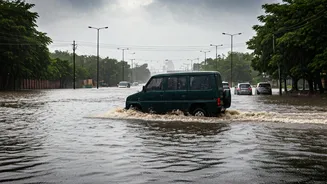
The real test begins on the streets. Every mode of transport presents its own unique challenge. The ride-hailing apps, sensing desperation, triple their prices. Finding an auto-rickshaw willing to brave the waterlogged roads for a reasonable fare is a victory worthy of a medal. For those who drive, the journey becomes a slow, nerve-wracking crawl through traffic, with the constant threat of a breakdown in knee-deep water at infamous choke points. The Delhi Metro, often hailed as the city's lifeline, becomes the only viable option for many, its coaches packed with damp, weary commuters. Though the services themselves are remarkably resilient, just reaching the station entrance through flooded access roads can be an adventure in itself. Every office-goer has their own horror story—a submerged underpass, a stalled car, a two-hour journey for a five-kilometre distance—that they will recount with a mixture of trauma and pride.
The Office: A Damp Sanctuary
Arriving at the office is the final leg. You stumble in, dripping, to be met by a wave of air-conditioning that feels arctic on damp clothes. The first fifteen minutes of the workday are not spent on emails, but on a collective debriefing session. Colleagues trade war stories from their commutes, comparing water levels in their respective neighbourhoods and sharing videos of floating cars. There's a shared camaraderie, a sense of having survived a common ordeal. You see trousers drying on chair backs and a small collection of puddles forming under desks. The office, usually a place of work, transforms into a temporary drying-out station and a shelter from the storm outside.
A Shared Rite of Passage
So why do we do it? Because in a city that constantly tests your limits, the monsoon commute is more than just a journey. It’s a testament to the resilience and resourcefulness required to thrive in Delhi. It’s the unspoken understanding between you and the auto-wallah who navigates a flooded lane like a seasoned boatman. It’s the collective groan when the traffic light turns red in the middle of a downpour. It is, in its own chaotic way, a character-building exercise. Mastering the rain-safe office run—knowing which routes to avoid, what shoes to wear, and exactly how early to leave—is a skill learned through experience. It's a sign that you've graduated to a new level of city living. It is, truly, peak Delhi adulting.