


Maharashtra's Valley of Flowers
Deep in the Sahyadri mountains of Maharashtra, about 130 kilometres from Pune, lies a place that spends most of the year as a barren, windswept plateau of volcanic rock. But for a few precious weeks between August and October, the Kaas Plateau, or Kas
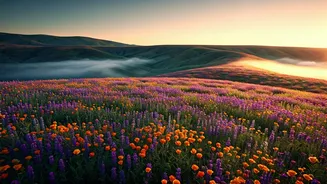
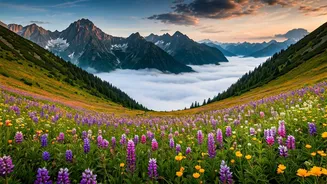
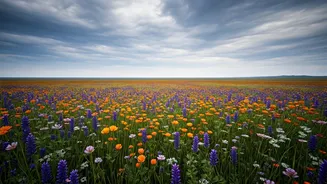
Pathar, undergoes a miraculous rebirth. The arrival of the monsoon rains awakens millions of dormant seeds, covering the 1,000-hectare landscape in a staggering carpet of wildflowers. Known locally as Maharashtra’s ‘Valley of Flowers,’ this natural wonder is a UNESCO World Natural Heritage Site, celebrated for its unique and fragile ecosystem. It’s not just a field of flowers; it's a living canvas painted with strokes of pink, yellow, blue, and white, drawing nature lovers, photographers, and social media influencers from across the country.
The Science of the Spectacle
What makes the Kaas Plateau so special is its specific geology and the timing of the monsoon. The plateau is made of porous laterite rock, which holds water just long enough for specific types of flora to thrive. It’s home to over 850 different species of flowering plants, including 624 listed on the IUCN Red List of threatened species and 39 found only in this region. This is not a manicured garden; it’s a wild, natural phenomenon. The flowers bloom in waves. One week, the landscape might be dominated by the pink balsams (Impatiens) and the yellow blooms of Smithia, colloquially known as Mickey Mouse flowers. A week later, the blue and purple hues of Utricularia and Senecio might take over. This fleeting, ever-changing display is a direct result of the monsoon cycle, a perfect storm of rain, temperature, and soil conditions that creates a short but unforgettable window of life.
A Photographer’s Paradise
The headline's claim of being ‘Instagrammable’ is not an exaggeration. The visual appeal of Kaas is undeniable and perfectly suited for a digital frame. The sheer density and vibrancy of the flowers create vast, colourful fields that stretch to the horizon—a dream composition for any photographer. The soft, misty light of the monsoon season diffuses the sunlight, preventing harsh shadows and making the colours pop with a natural saturation. Drones capture stunning aerial shots of the colour-blocked landscape, while macro lenses can focus on dewy petals and tiny insects. The contrast between the brilliant flowers, the deep green of the surrounding hills, and the often-overcast sky creates a dramatic and moody aesthetic that performs exceptionally well on social media. It’s a place where you don’t need filters; nature has already provided the perfect palette.
Beyond the ‘Gram: A Fragile Beauty
With this immense popularity comes a great responsibility. The Kaas Plateau is a delicate ecosystem, and its viral fame has put it under pressure. To protect the flora, authorities have implemented strict rules. Visitors are restricted to designated pathways, and the number of people allowed per day is capped to prevent trampling of the fragile plants. Fences have been erected to keep tourists and vehicles from damaging the core flowering areas. This highlights a modern conservation challenge: how do we celebrate and share natural beauty without inadvertently destroying it? The story of Kaas is not just about its photogenic qualities but also about the urgent need for responsible tourism. The best visitors are those who come with respect, stay on the marked trails, and understand that the perfect picture should never come at the cost of the environment.