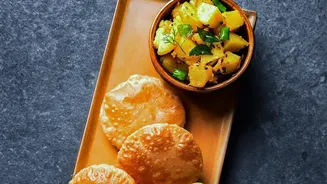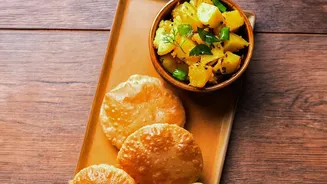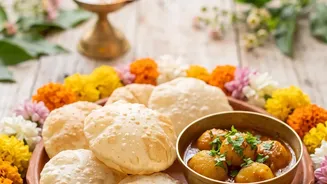



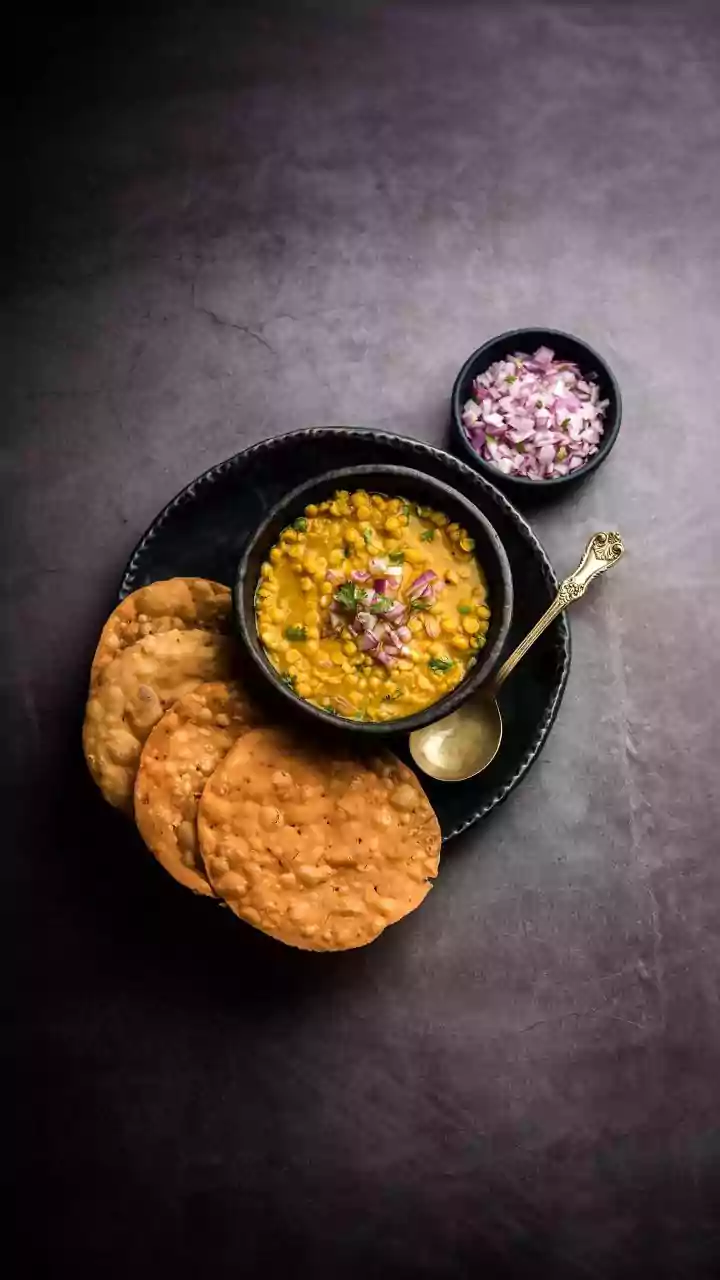

It’s a sight and scent familiar across India: a golden, puffed-up disc of bread served next to a steaming bowl of spiced potato curry. Puri Sabzi is more than just a meal; it’s a culinary institution, a source of comfort, and a reigning classic.
The Irresistible Combination
At its
heart, the appeal of Puri Sabzi lies in its perfect contrast of textures and flavours. The puri, a deep-fried bread made from unleavened wheat dough, is simultaneously crisp, chewy, and soft. It serves as the ideal vessel for scooping up the sabzi, most commonly a fragrant potato curry known as Aloo Sabzi. This curry, while simple, is a masterclass in balance, typically featuring potatoes cooked with turmeric, cumin, green chillies, and sometimes tomatoes until they are soft and flavourful. The combination is hearty, satisfying, and deeply comforting—a culinary experience that feels both indulgent and wonderfully simple.
A Dish with Many Faces
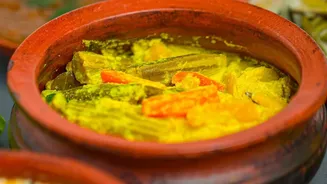
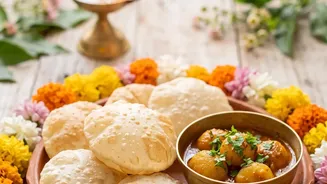
Part of Puri Sabzi's enduring popularity is its incredible adaptability. While the North Indian version with Aloo Sabzi is widely recognized, the dish transforms as it travels across the country. In Bengal and Odisha, it becomes 'Luchi Alur Dom'. Here, the puri is a delicate, pale Luchi made from refined flour (maida), yielding a softer, lighter bread. This is paired with Alur Dom, a spicier, thicker potato curry often enriched with ginger and tomato. In Maharashtra, the combination is known as Puri Bhaji, where the 'bhaji' is a semi-dry potato preparation, often lightly spiced with ginger, curry leaves, and green chillies. Meanwhile, in Uttar Pradesh, you might find Bedmi Puri, a heartier version where the dough itself is mixed with a paste of ground lentils and spices, served with a tangy aloo curry.
From Festive Feasts to Street Food Staple
Puri Sabzi is a dish for all occasions. It holds a cherished place in households as a special Sunday breakfast or a festive meal, especially during celebrations like Ashtami. The act of making puris at home—rolling the dough and watching them puff up in hot oil—is a ritual in itself, often bringing families together. At the same time, it is one of India's most popular street foods. Roadside stalls and bustling markets across the country serve up fresh, hot plates of Puri Sabzi to people from all walks of life, making it an affordable, accessible, and filling meal for those on the go. This dual identity, as both a celebratory dish and an everyday comfort food, cements its status in Indian culinary culture.
The Enduring Appeal of Simplicity
Despite its many regional forms, the core of Puri Sabzi remains unchanged: basic ingredients transformed into something extraordinary. The puri starts with just whole wheat flour, water, and a bit of oil or ghee. The sabzi, too, is built on the humble potato, a canvas for a myriad of spice combinations. Even the history of its core ingredients tells a story of adaptation; potatoes, tomatoes, and chillies were introduced to India only in the 16th and 17th centuries, yet they have become fundamental to this 'traditional' dish. This inherent simplicity is its strength, allowing for endless variation while retaining the familiar soul of the dish that has been loved for generations.