


Taming the Data Deluge
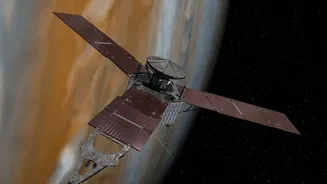
Modern space exploration is built on data. Telescopes like the retired Kepler and the current TESS mission have gathered light measurements from millions of stars, creating a dataset so vast it’s practically impossible for humans to sift through manually.
This is where AI excels. Sophisticated deep learning models, such as NASA's ExoMiner, can process these enormous archives to find the faint, tell-tale dips in starlight that indicate a planet passing in front of its star. This method has already proven incredibly successful. In one instance, an AI algorithm validated 301 new exoplanets from old Kepler data that had been previously missed. More recently developed AI tools like RAVEN are being applied to TESS data, confirming over 100 new planets, including rare worlds that orbit their star in less than a day. By automating the search, AI not only speeds up discovery but also identifies weak signals that human analysts might overlook.
Smarter, Safer Spacecraft
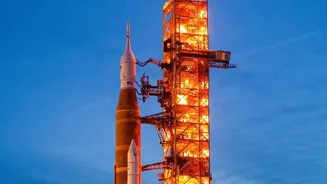
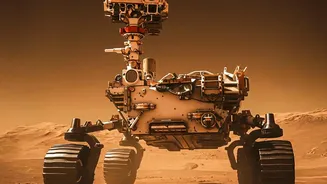
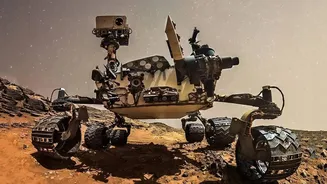
The farther we travel from Earth, the more independent our spacecraft need to be. Communication delays to Mars can be up to 13 minutes each way, making real-time human control impossible. AI is the key to genuine autonomy. On Mars, the Perseverance rover uses AI to navigate the planet's hazardous terrain, with roughly 88% of its driving being autonomous. It analyzes images of the ground ahead to identify and avoid obstacles on its own. But AI's role extends beyond just driving. It is also used to autonomously select rock targets for chemical analysis, a crucial task in the search for ancient life. Looking ahead to the Artemis missions to the Moon, AI will be fundamental. It will assist in spacecraft navigation, perform system health checks, predict potential failures, and even help manage communications to ensure critical data gets through. NASA is also developing new, radiation-hardened computer chips specifically designed to run complex AI programs in the harsh environment of deep space, promising even greater autonomy for future missions.
An Indispensable Scientific Partner
Beyond finding planets and driving rovers, AI is becoming a core part of the scientific process itself. Machine learning models are being trained to predict solar events like flares and coronal mass ejections, which is critical for protecting astronauts on deep-space missions from harmful radiation. On Earth, NASA uses AI in partnership with companies like IBM to analyze climate patterns and improve extreme weather prediction. Recently, NASA announced its participation in the Genesis Mission, a national AI initiative aimed at accelerating scientific discovery. This program will apply advanced AI to over 150 petabytes of NASA's accumulated data from decades of missions. The goal is to reduce analysis times for complex datasets from years to mere days, speeding up everything from mission planning to understanding our own planet. AI is also helping to organize this wealth of information. The agency is using AI tools to automatically tag and categorize its scientific and technical data, making it easier for researchers everywhere to find and use.
The Future of Exploration
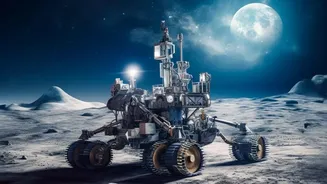
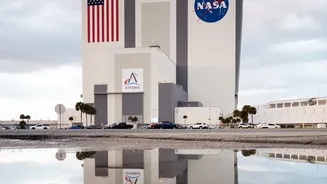
For NASA, artificial intelligence is not seen as a replacement for human ingenuity but as an essential collaborator. As David Salvagnini, NASA's Chief Data and Artificial Intelligence Officer, has noted, AI should be viewed as a tool to make human work easier and more efficient. This partnership is evident across the agency's plans. For the Artemis program, AI-powered systems are being designed to help astronauts manage their spacecraft, reducing cognitive load and allowing them to focus on exploration. Cooperative robotic missions, where multiple AI-driven rovers work together without human intervention to explore the lunar surface, are also in development. This human-machine teaming is what will enable a sustained presence on the Moon and, eventually, the first crewed missions to Mars. AI provides the speed, autonomy, and analytical power needed to explore farther and more safely than ever before, turning the science fiction of yesterday into the reality of tomorrow's discoveries.