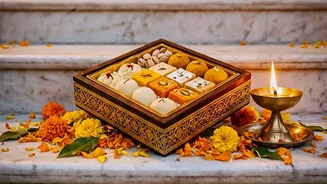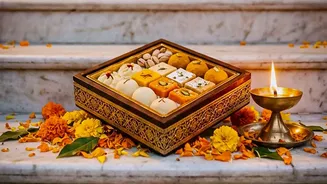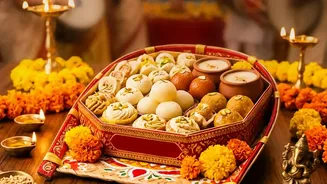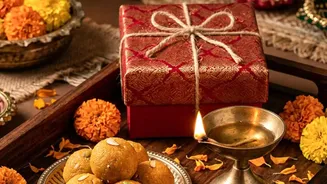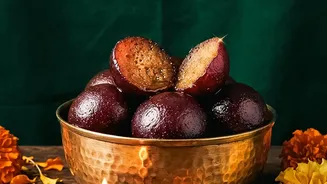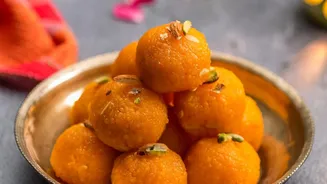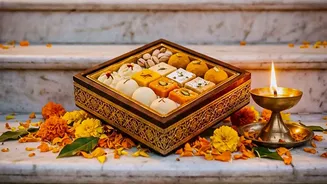


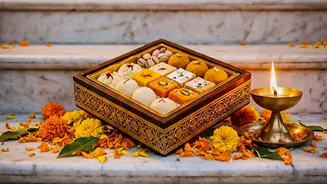
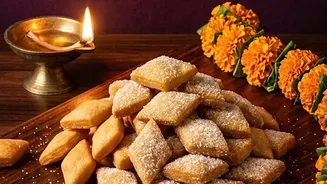
As Diwali approaches, so do platters of tempting sweets. Amidst the classics, a new category is rising: 'healthy' mithai. But what does that label really mean? Let's unwrap the truth behind these supposedly guilt-free festive treats.
The 'Healthy' Sweet Illusion
The shelves are full
of them: date-and-nut ladoos, jaggery-sweetened barfis, and baked gujiyas. Marketed as wholesome alternatives, these sweets promise festive indulgence without the guilt. The appeal is obvious. Traditional sweets are often loaded with refined sugar, maida, and hydrogenated fats, which can lead to energy crashes and weight gain. 'Healthy' versions, in contrast, use ingredients like millets, nuts, and natural sweeteners. However, 'healthy' is a relative term. A sweet made with dates and nuts is certainly more nutrient-dense than one made with pure sugar, offering fibre, protein, and minerals. But it doesn't mean it's a low-calorie health food. At the end of the day, a sweet is still a sweet, and the most important factor remains moderation.
The Great Sugar Swap: Jaggery and Dates
The most common swap in 'healthy' sweets is replacing refined white sugar with natural alternatives like jaggery (gur), dates, or honey. Jaggery is often touted as a healthier choice because, unlike highly processed sugar, it retains minerals like iron, potassium, and magnesium. However, the critical point that many miss is that jaggery and refined sugar have nearly identical calorie counts and glycemic index (GI) values, meaning they spike blood sugar in a very similar way. While jaggery's mineral content makes it a marginally better option, the amount in a single sweet is too small to offer significant health benefits. Similarly, dates are a fantastic source of natural sweetness, fibre, and nutrients. But they are also dense in natural sugars. A ladoo bound with date paste contains no 'added' sugar, but it is still high in sugar and calories, making it a better-quality treat, not a free pass to overindulge.
Fat Facts: Ghee vs. Refined Oils
The fat used in a sweet dramatically affects its flavour, texture, and nutritional profile. Many commercial sweets now use cheap refined oils or hydrogenated fats (dalda) to cut costs. Health-conscious alternatives often return to traditional fats like pure ghee. Ghee has a very high smoke point (around 250°C), which means it remains stable at high temperatures and doesn't break down into harmful compounds, making it ideal for roasting and frying. In contrast, many refined vegetable oils, while also having high smoke points, can oxidize more quickly. From a health perspective, pure ghee, especially A2 bilona ghee, is rich in fat-soluble vitamins and gut-nourishing butyric acid. While all fats are calorie-dense, ghee offers a more stable and aromatic option than highly processed refined oils.
Beyond Sweeteners: Whole Ingredients Matter
A truly healthier sweet is defined by all its ingredients, not just the sweetener. The most nutritious options are those built on a foundation of whole foods. Sweets made from nuts, seeds, and whole_grain flours like besan (gram flour) or millet flour are inherently better choices. These ingredients provide protein, healthy fats, and fibre, which help slow the absorption of sugar and keep you feeling full for longer. For example, a dry fruit ladoo made from dates, almonds, walnuts, and seeds offers a complex nutritional profile that a simple besan ladoo loaded with sugar cannot match. Another meaningful change is the cooking method. Opting for baked versions of snacks like gujiya, karanji, or sev instead of deep_fried ones can significantly cut down the calorie and fat content, making them a genuinely lighter option.
The Golden Rule: Portion Control is King
No matter how 'healthy' the label claims a sweet to be', mindful consumption remains the most crucial aspect of a healthy Diwali. Nutritionists advise that instead of trying to resist all temptations', it is better to pick one or two favourite treats and enjoy them in small portions. Eating a sweet slowly', preferably after a balanced meal', can help prevent a rapid spike in blood sugar. Don't skip meals to 'save up' calories for sweets', as this often leads to overeating later. Ultimately', a healthy lifestyle is about consistent choices', and enjoying a festive treat doesn't undo your progress. The key is to savour the moment', listen to your body', and drop the guilt.