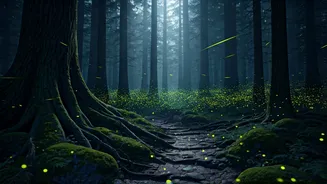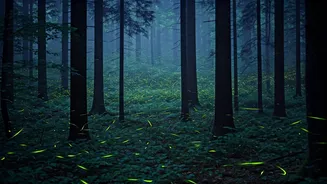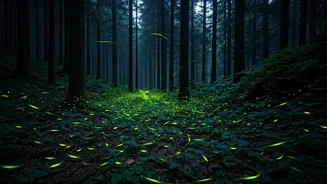







A Forest Aglow with Life
Every year, in late May and early June, something magical happens in the rural highlands of Maharashtra, a state on India’s west coast. As the air grows thick with the promise of rain, the forests and fields come alive with a silent, pulsating glow. This
isn’t a man-made installation; it's the annual Firefly Festival, a natural phenomenon that has become one of the region's most sought-after ecotourism experiences. For a few precious weeks, villages like Purushwadi, Bhandardara, and areas around historic forts like Rajmachi become hotspots for visitors hoping to witness millions of fireflies illuminating the night in a breathtaking, synchronized ballet of light. The demand is so high that weekend treks and camping trips organized by local guides and tour companies are often booked solid weeks in advance, turning these quiet hamlets into bustling hubs of natural wonder.
The Science of a Silent Spectacle
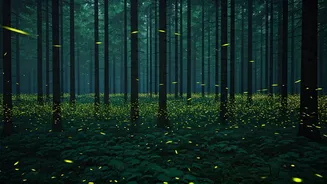
What drives this incredible display is the simple, powerful force of biology. The light is a product of bioluminescence, a chemical reaction within the fireflies’ bodies that they use to communicate. For the males, flashing is a way to attract a mate. But what makes the Maharashtra festival so unique is the sheer scale and synchrony of the event. While scientists are still debating the exact reason, many believe the fireflies flash in unison to amplify their signal, making it easier for females to spot a potential partner in the crowded, dark forest. The result is a mesmerizing rhythm, with entire trees and stretches of forest floor blinking on and off in a coordinated wave of light. It’s a silent, natural rave, driven by the instinct to continue the species, creating a spectacle that feels both primal and otherworldly.
Trekking Through a Starry Forest
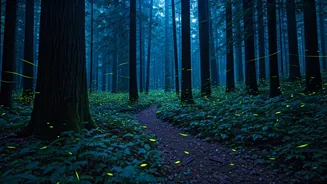
The experience itself is low-tech and deeply immersive. The “night trails” that sell out are not elaborate, paved paths but simple guided walks through the dark. As dusk settles, groups led by local experts venture into the wilderness, away from the light pollution of cities and towns. The instructions are simple: walk quietly, keep flashlights pointed down or off, and let your eyes adjust. As they do, the show begins. First, a few tentative sparks appear, then a few more, until the darkness is filled with thousands upon thousands of tiny, brilliant lights. They hover over bushes, cling to tree branches, and dance in the air, their collective pulse creating a hypnotic rhythm. For many, the highlight is finding a spot to simply sit and watch as waves of light wash over the landscape, turning an ordinary forest into an enchanted wonderland.
An Ecotourism Boom with a Purpose
The festival’s popularity has provided a vital economic boost to the rural communities that host it. Organizations like Grassroutes, which helped pioneer community-based tourism in Purushwadi, ensure that a significant portion of the revenue goes directly to local families who act as guides, host homestays, and provide meals. This model transforms the natural heritage of the fireflies into a sustainable source of income, giving villagers a powerful incentive to conserve the pristine environment these insects need to thrive. However, the surging popularity also brings challenges. Overcrowding, noise, and light pollution from tourists can disrupt the very mating rituals they’ve come to see. In response, responsible tour operators and village councils are increasingly implementing rules to manage the crowds, emphasizing conservation and ensuring the firefly festival remains a magical—and sustainable—event for years to come.