






The Perishable Profits Problem
India's floriculture industry is a significant part of its agricultural economy, yet it faces a staggering challenge: post-harvest losses. For delicate flowers like roses, this loss is particularly acute. Estimates suggest that between 30% and 40% of flowers perish
before they ever reach a customer. This is largely due to a broken or non-existent cold chain—the refrigerated supply line needed to keep perishable goods fresh from farm to market. Once cut, a rose’s vase life starts ticking down. Without immediate cooling, the process of wilting and decay accelerates dramatically, turning potential income into waste. For the nation's small and marginal farmers, who make up the majority of flower growers, these losses can be financially devastating.
When the Grid Fails the Farm
The obvious solution, conventional refrigeration, is often out of reach for rural farmers. Many agricultural areas suffer from erratic and unreliable electricity supply, making grid-powered cold storage an unworkable option. Even where power is available, the high operational costs can be prohibitive for small-scale producers. Furthermore, most existing cold storage facilities in India are large-scale, concentrated in specific areas, and primarily designed for durable commodities like potatoes, not delicate flowers. This leaves farmers with a painful choice: sell their entire harvest immediately at whatever price the market offers, or risk losing a substantial portion to spoilage. This lack of control significantly limits their earning potential and market access.
Sunshine to the Rescue
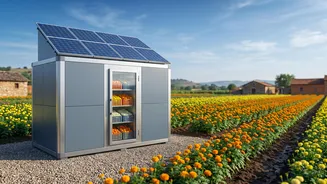
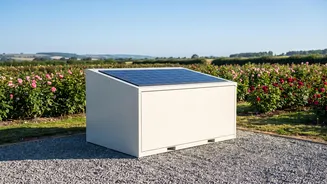
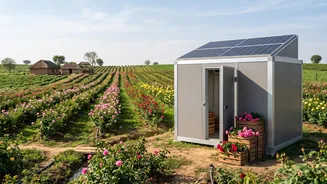
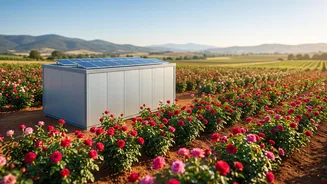
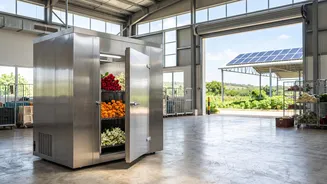
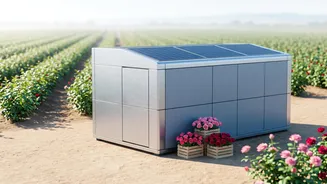
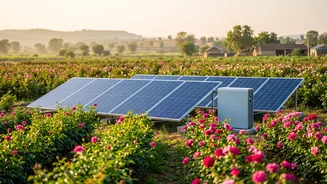
Enter off-grid solar cold storage. These standalone units, powered entirely by solar panels, are emerging as a game-changing solution. The technology is straightforward but effective: photovoltaic (PV) panels capture sunlight to power a refrigeration unit, maintaining an optimal low temperature inside an insulated storage room. Some systems use batteries to provide cooling through the night and on cloudy days, while newer, innovative models use thermal energy storage, like water-based systems, to operate without batteries. These decentralized units can be installed directly at the farm gate, providing immediate access to cooling facilities where they are needed most, completely independent of the unreliable main power grid.
From Wilting Flowers to Growing Incomes
The impact on farmers is profound. By slowing the natural decay process, solar cold rooms extend the shelf life of roses and other flowers from mere hours to several days. This simple extension of time empowers farmers in multiple ways. They are no longer forced into distress sales and can wait for more favourable market prices, boosting their profits. In a case study from Sadali village in Karnataka, a Farmer Producer Organisation (FPO) reported that local farmers used a solar cold room to store roses and other horticultural products, noting the system prevented spoilage and was far more affordable than conventional options. This ability to store produce allows farmers to aggregate larger quantities, access more distant markets, and deliver consistently high-quality flowers, ultimately strengthening their position in the supply chain.
A Blueprint for a Greener Future
The success of solar cold storage with roses offers a blueprint for the broader agricultural sector in India. The technology is scalable and can be adapted for a wide variety of perishable goods, from fruits and vegetables to dairy products. Farmer Producer Organisations (FPOs) and Self-Help Groups are increasingly playing a key role, adopting models like 'Cooling-as-a-Service' where farmers can rent space for a nominal fee, making the technology accessible without a large upfront investment. By reducing post-harvest losses, these solutions enhance food security, boost rural economies, and promote a greener, more sustainable approach to agriculture by reducing reliance on fossil fuels. As these systems become more widespread, they promise to build a more resilient and profitable future for millions of farmers across India.