





A Vision in White Marble
Conceived by Lord Curzon, the then Viceroy of India, the Victoria Memorial was built between 1906 and 1921 to honour Queen Victoria after her death. Curzon envisioned a grand structure that would serve as both a tribute and a museum, capturing the story
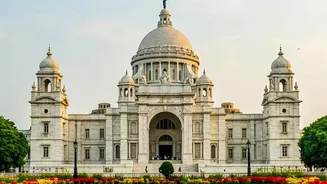
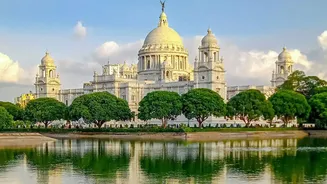
of an era. To achieve this, he insisted on using the same pristine white Makrana marble from which the Taj Mahal was built, creating an immediate visual parallel and ensuring the monument would have a luminous, timeless quality. The entire project was a massive undertaking, funded largely by contributions from Indian princely states and individuals, making it a monumental effort of its time.
A Symphony of Styles
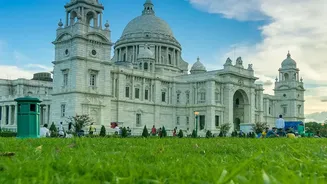
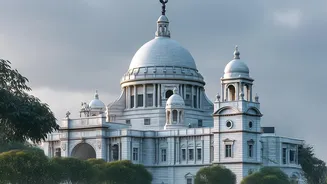
The chief architect, William Emerson, designed the memorial in the Indo-Saracenic revivalist style. This architectural form is a creative fusion, blending the grandeur of British design with distinct elements of Mughal and other Indian traditions. Look closely and you will see European-style statues and columns coexisting with Mughal-inspired domes (chhatris) at the corners and intricate latticework (jalis) reminiscent of Indian palaces. The design also incorporates Venetian, Egyptian, and Deccani influences, creating a unique and harmonious structure that stands as a testament to the complex history of the period. The building’s scale is immense, rising to a height of 56 metres, and its central dome is topped by the famous 'Angel of Victory', a 16-foot tall bronze statue that rotates with the wind.
Exploring the Interior Galleries
The memorial's grand exterior is matched by the treasures it holds within. It functions as a museum with 25 galleries, each offering a window into India's past. The Royal Gallery showcases a stunning collection of paintings by European artists, depicting scenes from Queen Victoria's life. You can also see personal items like the Queen's childhood piano and writing desk. Another key attraction is the Calcutta Gallery, which provides a vivid history of the city's development. After India’s independence, the museum's scope expanded to include artifacts and portraits related to the freedom movement, making it a space that tells a more complete story of India's journey.
The Lush Gardens and Light Show
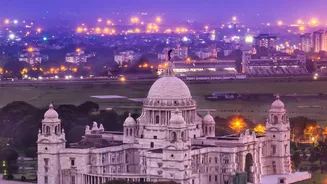
The monument is set within 64 acres of beautiful, meticulously maintained gardens, designed by Lord Redesdale and Sir David Prain. These gardens are an attraction in their own right, featuring serene water bodies, manicured lawns, and numerous statues of historical figures, creating an open-air gallery. For many visitors, a highlight is the evening light and sound show, titled 'Pride & Glory - The Story of Calcutta'. The facade of the memorial is transformed into a giant canvas, with colourful projections and a compelling narrative bringing the city's rich history to life, making for a magical end to a day of exploration.
Planning Your Perfect Visit
The Victoria Memorial is located at Queen's Way in the Maidan area. The nearest metro station is Maidan, just a short walk away. The gardens are open daily from early morning until about 6 p.m., while the museum gallery opens from 10 a.m. to 6 p.m. and remains closed on Mondays and national holidays. It's advisable to buy separate tickets if you plan to see the evening light and sound show. To avoid crowds, consider visiting on a weekday morning or late afternoon. The winter months, from November to February, offer the most pleasant weather for exploring the expansive grounds.