




A Landmark Discovery
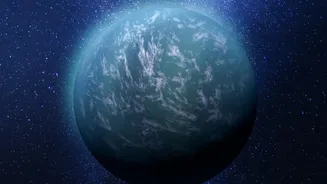
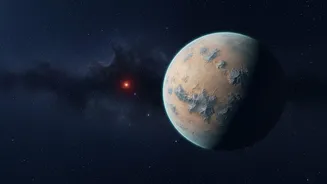
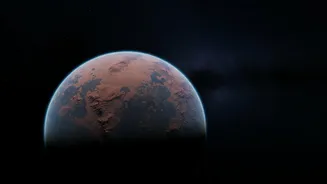
In a paper released this week, astronomers announced the detection of methane gas in the atmosphere of TRAPPIST-1e, an Earth-sized planet just 40 light-years away. This is a landmark moment. While methane has been detected on other giant exoplanets, finding
a significant carbon-based molecule on a small, rocky world in the habitable zone is a huge leap forward. The term “heavy carbon gas” in the headline refers to molecules like methane (CH4), which are heavier than the primordial hydrogen and helium that often form a planet's first atmosphere. Finding them suggests the planet has a secondary, more evolved atmosphere—a crucial ingredient for habitability.
Revisiting the TRAPPIST-1 System
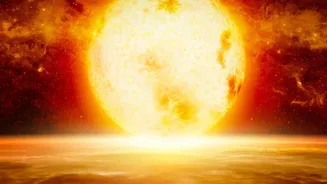
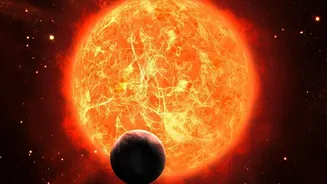
Remember TRAPPIST-1? It made headlines years ago as a star system packed with potential. It hosts seven rocky, Earth-sized planets orbiting a cool, dim red dwarf star. Because the star is less intense than our sun, planets can orbit much closer and still have temperatures that might allow for liquid water. Three of its planets—e, f, and g—are located in this so-called “habitable zone.” This planetary treasure trove gives scientists an unprecedented natural laboratory to study how Earth-sized planets form and evolve, making it a prime target for the powerful gaze of the JWST.
Why Methane Is a Tantalizing Clue
On Earth, methane is overwhelmingly produced by living organisms, from microbes in wetlands to cows. Because of this, it's considered a top-tier “biosignature,” a chemical fingerprint that could hint at the presence of life. However, science requires caution. Methane can also be produced by purely geological processes, like volcanic activity, which are also fascinating. The detection on TRAPPIST-1e doesn't mean we've found aliens. What it does mean is that the planet is geochemically active, with processes that are either biological or geological, creating a dynamic environment. Untangling which source is responsible is the next great challenge for astronomers.
More Than Just Gas
This discovery is about more than a single chemical. It’s the first strong evidence of a “complex atmosphere” on a TRAPPIST-1 planet. A complex atmosphere isn't just a thin, single-element layer; it's a rich mixture of different gases that interact with each other, the planet's surface, and the light from its star. It implies weather, chemistry, and a system that can transport heat. Previous studies had raised the possibility that the inner TRAPPIST-1 planets were bare rocks, their atmospheres blasted away by the star's radiation. This new finding suggests that, at least for TRAPPIST-1e, the atmosphere has survived and is substantial enough for us to study.
The Power of the Webb Telescope
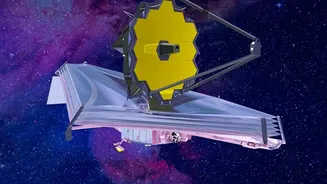
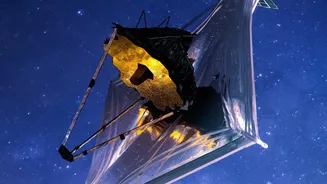
This finding would be impossible without the James Webb Space Telescope. So, how does it see the air on a planet trillions of kilometres away? The technique is called transmission spectroscopy. When TRAPPIST-1e passes in front of its star from our perspective (an event called a transit), a tiny fraction of the starlight filters through the planet's atmosphere. Different gases absorb specific colours, or wavelengths, of light. By analyzing the starlight that reaches the telescope, scientists can spot these missing colours and deduce which gases are present, like a cosmic barcode.
What Comes Next?
This is a beginning, not an end. The methane detection, while exciting, is based on initial observations that are still being refined. Scientists will now dedicate even more of JWST's precious time to stare at TRAPPIST-1e, confirming the methane signal and searching for other crucial gases like carbon dioxide, water vapour, and oxygen. Finding a combination of these gases would provide a much stronger case for the planet’s habitability. The goal is to build a complete chemical profile of the atmosphere, allowing us to model its climate and determine if the conditions really could be right for liquid water—and life.