





The quest for cleaner indoor air often leads to a common dilemma: should you invest in a sleek air purifier or fill your home with lush, green plants? The answer is more complex, and it starts with a crucial step you might be skipping.
The Green Myth: Can Plants Purify Your Air?
The idea that houseplants
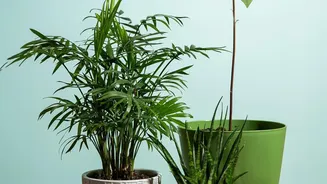
are nature's air purifiers is a popular one, largely thanks to a 1989 NASA study. The research showed that in a sealed, controlled chamber, plants like the peace lily and snake plant could remove volatile organic compounds (VOCs) like benzene and formaldehyde from the air. However, this finding has been widely misinterpreted. Subsequent research has clarified that the conditions of that experiment—a small, sealed environment—do not reflect a typical home with drafts, open doors, and constant air exchange. Scientists now estimate you would need an impractically large number of plants, somewhere between 10 and 1,000 per square metre, to even begin to compete with a building's natural ventilation rate, let alone a mechanical purifier. While plants are not effective air cleaners at a household scale, they offer other real benefits, such as boosting humidity, enhancing mood, and reducing stress. So, keep your plants for their aesthetic and wellness benefits, but don't rely on them to clean the air.
The Tech Solution: How Air Purifiers Work
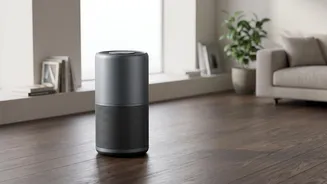
When it comes to removing airborne pollutants, air purifiers with High-Efficiency Particulate Air (HEPA) filters are the undisputed heavyweights. A true HEPA filter is certified to capture 99.97% of particles down to 0.3 microns in size. This includes common irritants prevalent in Indian homes, such as PM2.5 particles, dust, pollen, and pet dander. An air purifier works by actively drawing in a room's air, forcing it through this dense filter, and circulating the cleaner air back out. This process is thousands of times more effective and faster at removing particles than the passive biological processes of a plant. Studies show that using a HEPA purifier can significantly reduce indoor PM2.5 concentrations, in some cases by over 50%, providing measurable relief for those with allergies and asthma. For gaseous pollutants and odours, models with an activated carbon filter are also necessary.
The Outdoor Factor: Your Windows and the AQI
Many people believe opening a window is the best way to 'air out' a room. While ventilation is important to reduce indoor pollutants like CO2, it can be a double-edged sword, especially in urban India. Opening windows when the outdoor Air Quality Index (AQI) is high means you are actively inviting harmful pollutants like PM2.5 into your home, often making your indoor air worse than it was before. India's Central Pollution Control Board (CPCB) uses a 0-500 scale for its National AQI. The advice from air quality experts is clear: you must check your local AQI before deciding whether to ventilate.
The AQI Rule of Thumb: When to Open Windows
Making a habit of checking the daily AQI on a weather app is essential. Here is a simple guide based on India's National AQI bands:
- AQI 0-50 (Good): This is the ideal time to open your windows freely. Airing out your home for 15–30 minutes can effectively reduce indoor–generated pollutants.
- AQI 51–100 (Satisfactory): Ventilation is generally acceptable for most healthy people. However, those with asthma, children, and the elderly may want to limit opening windows or do so in short bursts.
- AQI 101–150 (Moderate): Keep windows closed, especially if anyone in the household is in a sensitive group. This is when outdoor air pollution starts to pose a more significant health risk.
- AQI 151+ (Unhealthy to Severe): Windows should remain firmly shut for everyone. At these levels, the outdoor air is significantly polluted, and opening windows will severely degrade your indoor air quality.
The Smart Strategy: An Integrated Approach
The most effective way to manage your home's air quality is not an 'either/or' choice between plants and purifiers. It's a three–part strategy. First, use an air purifier with a HEPA filter as your primary tool for actively removing particulate matter from the air you breathe, running it in the rooms where you spend the most time. Second, keep your indoor plants for the proven psychological and aesthetic benefits they provide. Finally, practice 'smart ventilation'. Check your local AQI daily and open your windows only when the air quality is good or satisfactory. During periods of high pollution, keep windows closed and rely on your purifier to maintain a healthier indoor environment. This integrated approach gives you the best of all worlds : mechanically cleaned air , the natural beauty of plants , and fresh air when it's actually safe to let it in.