






Connecting India's Economic Powerhouses
The headline's 'sleeper link' points to a broader vision for enhancing Pune's overnight and high-speed connectivity. The two major cities set to be most impacted by these new rail lines are Mumbai, the nation's financial capital, and Hyderabad, a burgeoning
tech and business hub. The Union Budget for 2026-27 included proposals for seven high-speed rail corridors identified as 'growth connectors', with the Mumbai-Pune and Pune-Hyderabad routes being key components. These projects aim to slash travel times, making day trips and business travel more feasible than ever before.
The Mumbai-Pune High-Speed Corridor
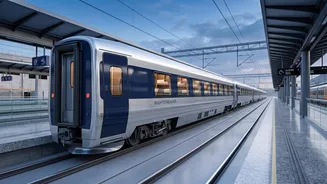
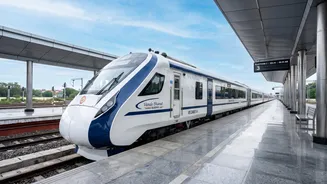
The connection between Mumbai and Pune is one of India's busiest travel arteries. While the Mumbai-Pune Expressway has served the region for years, growing traffic has created a need for faster alternatives. The proposed high-speed rail link is a game-changer, promising to reduce the journey to a mere 48 minutes. For the thousands of professionals who commute between these two cities, this would be a revolutionary shift. Additionally, a Vande Bharat sleeper service connecting Mumbai to Bengaluru, with a proposed stop in Pune, is expected to launch around November 1, 2026. This service aims to make the overnight journey faster and more comfortable than existing train options.
The Pune-Hyderabad Connection
The proposed Pune-Hyderabad high-speed rail corridor is another critical project that aims to link the industrial belts of western and southern India. This link is projected to cut travel time between the two IT hubs to just under two hours. The Detailed Project Report (DPR) for the larger Mumbai-Pune-Hyderabad corridor has been completed, marking a significant step forward. If approved, the entire journey from Mumbai to Hyderabad could take as little as 3.5 hours, with Pune positioned as a central junction on this vital route.
What About the Pune-Nashik Link?
While Mumbai and Hyderabad are the focus of the new high-speed proposals, another significant project has been the Pune-Nashik semi-high-speed rail line. This project, intended to complete Maharashtra's 'industrial triangle' (Mumbai-Pune-Nashik), has faced significant delays and route changes. Initially planned as a direct route, it was revised to go via Ahilyanagar and Shirdi due to technical conflicts with the Giant Metrewave Radio Telescope (GMRT) facility. Following public opposition to the longer route, the state government formed an expert committee in August 2026 to re-examine the feasibility of the original, more direct alignment. The future of this corridor remains under review.
The Broader Impact on Pune
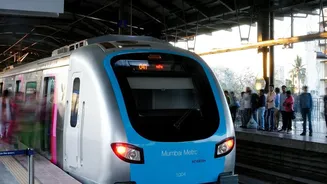
These new rail links are part of a massive infrastructure overhaul for the Pune Metropolitan Region. Projects like the extensive Ring Road and new Metro lines are also underway to ease internal congestion and support the city’s expansion. The government's focus is on improving mobility as Pune's economy, driven by a booming Global Capability Centre (GCC) ecosystem, continues to attract investment and talent. By transforming into a central hub on India's developing high-speed rail grid, Pune is not just improving links to other cities; it is fundamentally redefining its economic geography and securing its role as a key driver of national growth.