



What Are AI Backdrop Engines?
Imagine needing a surreal, neon-lit Mumbai streetscape for a fashion shoot concept, or a minimalist Scandinavian living room for a furniture catalogue. Traditionally, a creator would spend hours searching for stock images, building a mood board, or even
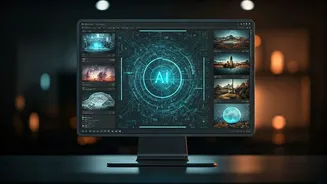
commissioning a 3D render. Generative AI backdrop engines, powered by platforms like Midjourney, Stable Diffusion, and DALL-E, change this entirely. These tools use complex algorithms to generate completely new, photorealistic, or stylized images from simple text descriptions. By typing in a prompt like, “A dramatic, sun-drenched desert landscape with a single baobab tree at golden hour, hyperrealistic,” a creator can generate dozens of unique options in minutes. These are not existing photographs; they are original visuals created by the AI, offering an almost infinite canvas for brainstorming.
The New Pitch: From Mood Board to Mock-up
The real power of this technology lies in its application during the client pitching process. For photographers, art directors, and brand stylists, communicating a visual concept can be challenging. A mood board is often too abstract, and a test shoot is too expensive. Generative AI offers a compelling middle ground. A freelance photographer can now generate five different backdrop concepts for a product shoot and superimpose the client’s product onto them. This creates a high-fidelity mock-up that looks incredibly close to a final shot. Instead of telling the client, “Imagine your watch on a backdrop of volcanic rock,” they can show them. This tangible preview helps clients feel more confident in the creator's vision, reduces misunderstandings, and can significantly shorten the approval process.
The Upside: Speed, Cost, and Creative Freedom
The benefits for Indian freelancers, competing in a vibrant but crowded market, are substantial. First is speed. A process that once took days of sourcing, collaging, and designing can now be completed in a few hours. This allows creators to take on more pitches and respond to client requests faster. Second is cost. The expense of stock image subscriptions, 3D software, or location scouting for a pitch is virtually eliminated. For a monthly subscription of around ₹1,000-₹2,500, freelancers gain access to a powerful creative engine. This democratises the ability to produce high-quality pitches, levelling the playing field between individual creators and larger agencies. Finally, it unlocks creative freedom. A creator is no longer limited by available stock photos or physical locations. They can explore wild, imaginative concepts and present them as viable options, potentially upselling clients on more ambitious creative ideas.
The Downside: Navigating New Client Expectations
However, this new tool comes with its own set of challenges. The primary concern is managing client expectations. When a client sees a perfect AI-generated mock-up, they may expect the final photograph or video to be an exact replica, failing to understand the complexities of lighting, physics, and on-set production. Freelancers must become adept at communicating that AI visuals are for concept and direction, not a literal blueprint for the final product. There's also the risk of clients devaluing the creative process, believing the “computer did all the work.” Smart creators are positioning these tools as part of their sophisticated workflow, not a magic button that replaces skill.
Originality, Skill, and the 'AI Look'
The question of originality also looms large. While the images are technically unique, many AI models have a recognisable aesthetic—a certain glossiness or surreal quality that can feel generic if overused. A truly skilled creator uses these tools as a starting point, not an endpoint. They might generate a backdrop for inspiration but then use their traditional skills in photography, lighting, and post-production to create something genuinely unique. The ultimate value still lies in the creator's taste, curation, and technical execution. The ability to write a great prompt is becoming a new skill, but it is the ability to integrate that output into a professional workflow that separates the amateur from the pro.