







The Fateful Toss Decision
Sourav Ganguly won the toss and sent shockwaves by opting to field first. The logic, as Ganguly has explained since, was to exploit the morning's damp conditions on the Johannesburg pitch. The plan was to unleash India's seamers on the Australian openers
and chase a manageable total, a strategy that had worked for the team before. However, the decision was widely seen as a defensive move born out of fear of Australia's fiery pace attack, particularly Brett Lee and Glenn McGrath. In a high-pressure final, conventional wisdom often dictates batting first to put runs on the board. Australia's captain, Ricky Ponting, admitted he would have chosen to bat. The gamble didn't just fail; it backfired spectacularly. The pitch offered little of the anticipated help, and instead of chasing a modest score, India was left facing a mountain.
A Nervous Start and Ponting's Onslaught
The pressure of the final was immediately visible. Zaheer Khan, India's lead pacer, was entrusted with the first over. What followed was a complete meltdown. A series of wides and no-balls resulted in a 15-run over, handing the momentum to Australia on a platter. Openers Adam Gilchrist and Matthew Hayden seized the initiative, putting on a blistering 105-run partnership in just 14 overs. While Harbhajan Singh managed to dismiss both, it only brought captain Ricky Ponting to the crease. Ponting then played one of the greatest innings in World Cup history. He systematically dismantled the Indian bowling attack, scoring an unbeaten 140 off just 121 balls, an innings studded with eight towering sixes. He was brutally supported by Damien Martyn (88 not out), and their unbroken 234-run partnership powered Australia to a colossal 359/2. The Indian bowlers looked demoralized and out of ideas against the onslaught.
The Impossible Chase
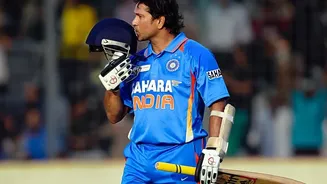
Chasing 360 to win a World Cup was an unprecedented task. India’s hopes rested almost entirely on Sachin Tendulkar, the tournament's leading run-scorer. But the dream ended on the fifth ball of the chase. Facing Glenn McGrath, Tendulkar top-edged a pull shot and was caught and bowled for just four. The silence at the Wanderers and across India was deafening. While Virender Sehwag played a valiant hand, scoring a brisk 82, the pressure of the enormous target was too much. Wickets fell at regular intervals as the required run rate kept climbing. There were no substantial partnerships to challenge the Australian total. The team was eventually bowled out for 234, falling short by a massive 125 runs. The batting lineup, which had been so potent throughout the tournament, crumbled under the immense scoreboard pressure of the final.