



The Speed of a Sunbeam
Everything we see, we see because of light. But light, while incredibly fast, is not instantaneous. It travels at the universe's ultimate speed limit: approximately 300,000 kilometres per second. That’s fast enough to circle the Earth more than seven
times in a single second. For things on our planet, this delay is unnoticeable. The light reflecting off a friend’s face reaches your eyes so quickly it might as well be instant.Space is different. Space is vast, empty, and defined by distances our minds struggle to comprehend. The distances between stars are so enormous that measuring them in kilometres would result in impossibly large numbers. So, astronomers use a different yardstick: the light-year. This isn't a measure of time, but of distance. One light-year is the distance that a beam of light travels in one year—a staggering 9.5 trillion kilometres.
Our Cosmic Time Machine
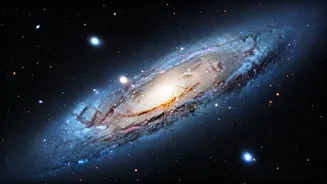
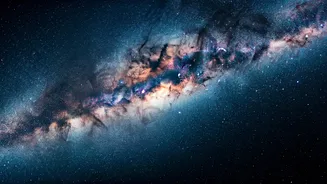
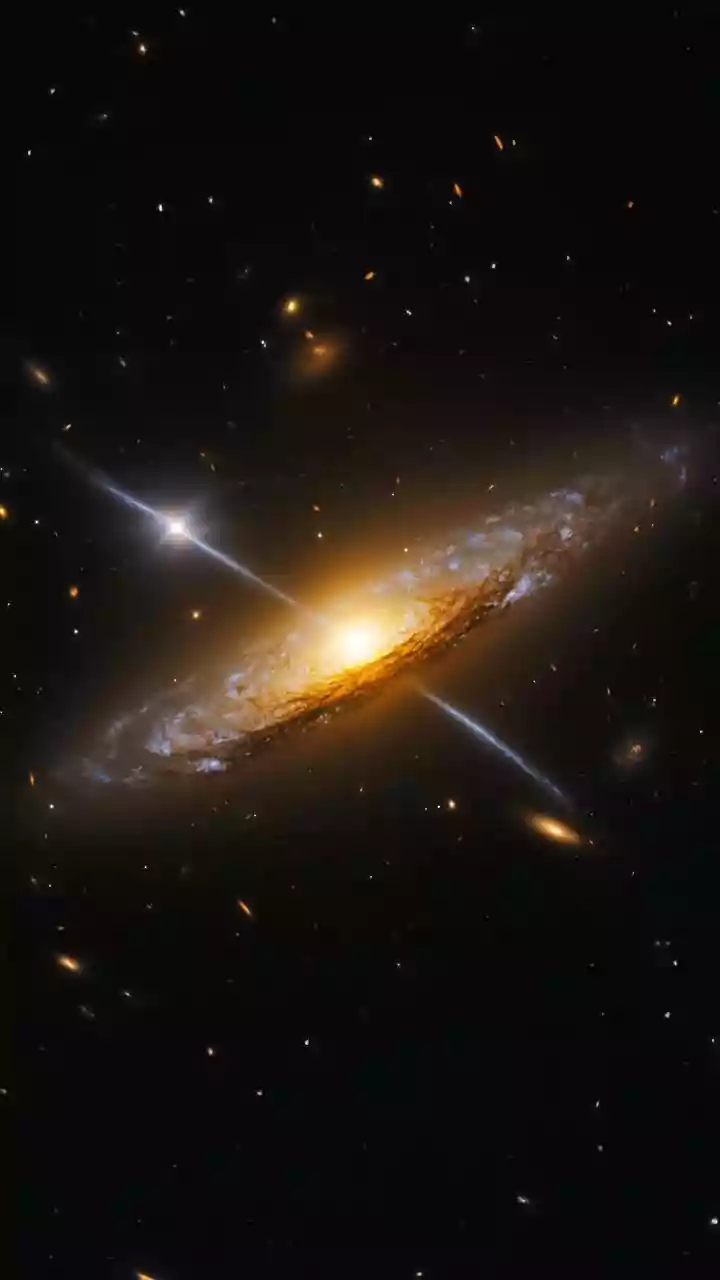
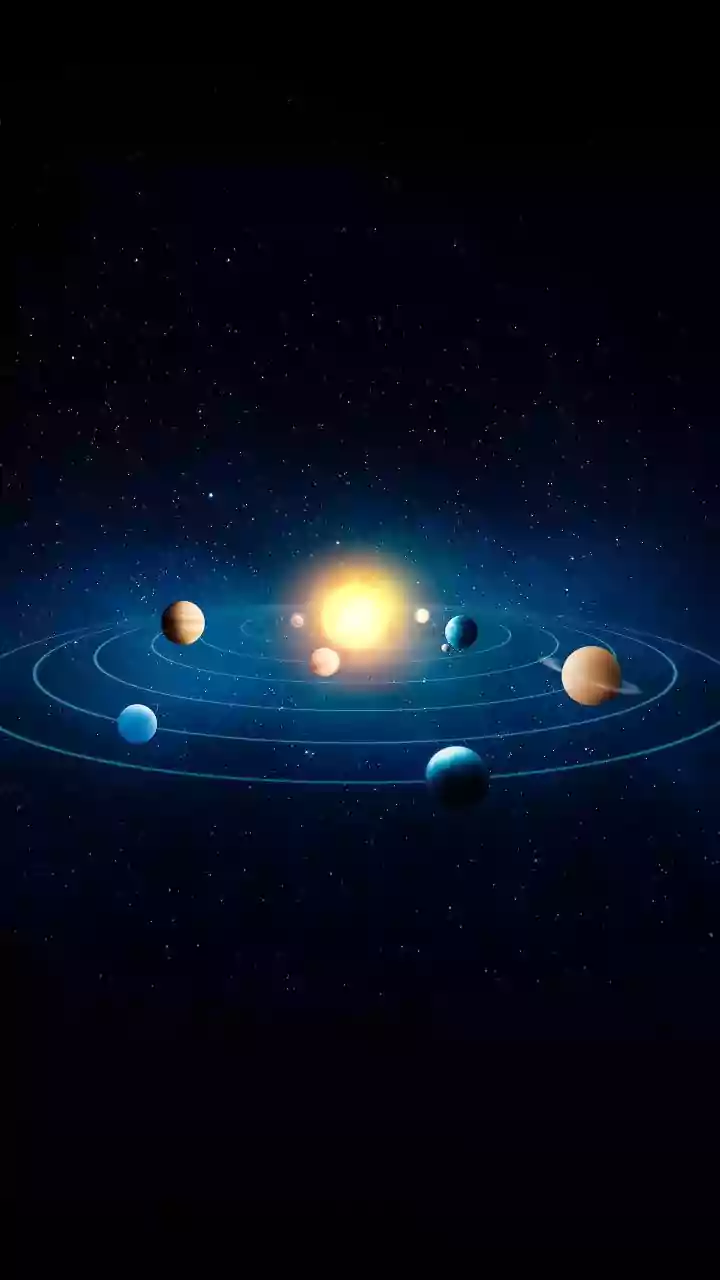
Here is where the magic happens. If a star is one light-year away, it means the light we see from it tonight has been travelling for one full year. If it’s 100 light-years away, its light has been journeying across the cosmos for a century. In effect, every telescope is a time machine. The farther we look into space, the deeper we look into the past.The light from our own Sun, for instance, takes about eight minutes and 20 seconds to reach Earth. If the Sun were to suddenly vanish, we wouldn’t know about it for over eight minutes. This principle extends to every single object in the night sky. The soft glow of the Andromeda Galaxy, our closest major galactic neighbour visible to the naked eye under dark skies, is a message from 2.5 million years ago. When that light began its journey, modern humans didn't even exist.
Greetings from the Past
Let’s bring this closer to home with stars you can likely spot from a city balcony or a rural field in India. Take Sirius, the brightest star in our night sky, also known as Dog Star. It’s relatively close, at about 8.6 light-years away. The light you see from Sirius tonight left the star around 2015.Now look for Polaris, the North Star. It’s a crucial navigational star, but it’s much farther away—about 433 light-years. The light from Polaris that guides you tonight began its journey around the year 1591. At that time in India, Akbar was ruling the Mughal Empire, constructing the grand city of Fatehpur Sikri. The light from Polaris is a relic from that era.What about the prominent constellation of Orion, with its famous three-star belt? The stars that form it are at vastly different distances. The light from Betelgeuse, the reddish star marking Orion’s shoulder, travelled for about 550 years to reach us. It left around the time the Lodhi dynasty was ruling Delhi, long before the Mughals arrived.
A Sky Full of Ghosts?
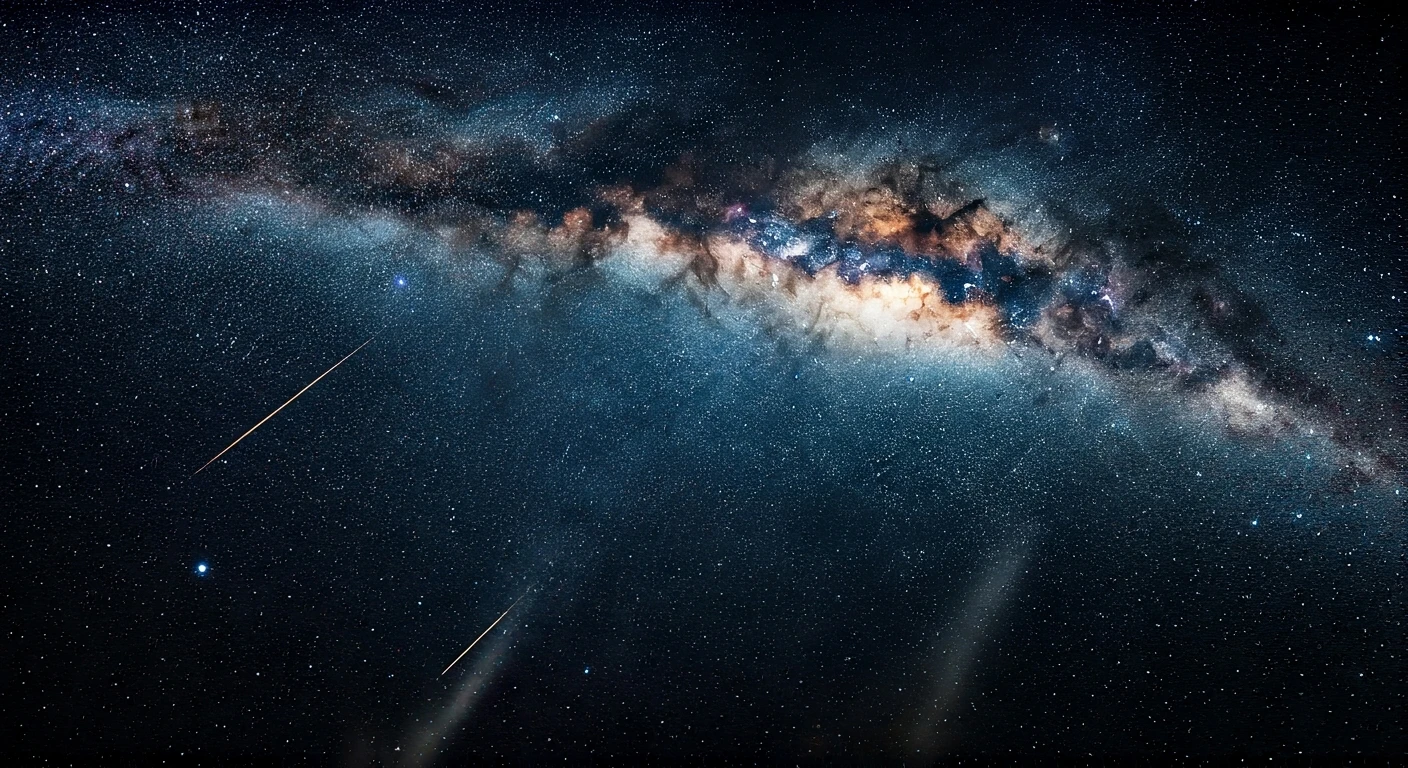
This cosmic time lag has a fascinating and slightly haunting consequence. We are never seeing the universe as it is *right now*. We are only seeing it as it *was*. For the most distant stars, this means we could be looking at a star that, in reality, is no longer there. It may have exploded in a supernova or collapsed into a black hole centuries ago, but its final burst of light has not yet completed its long journey to our eyes.Betelgeuse is a prime candidate for this phenomenon. It is a red supergiant star nearing the end of its life. Astronomers know it will explode in a spectacular supernova, becoming as bright as the full moon for weeks. The question isn't if, but when. This explosion could have already happened 100 years ago, and we would still be seeing the star shine calmly for another 450 years, completely unaware of its dramatic death. The night sky is, in a way, a gallery of stellar ghosts and echoes.