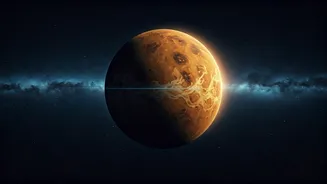




A Day Longer Than a Year
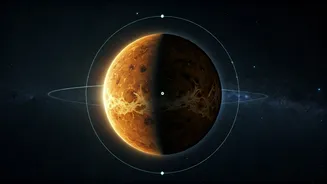
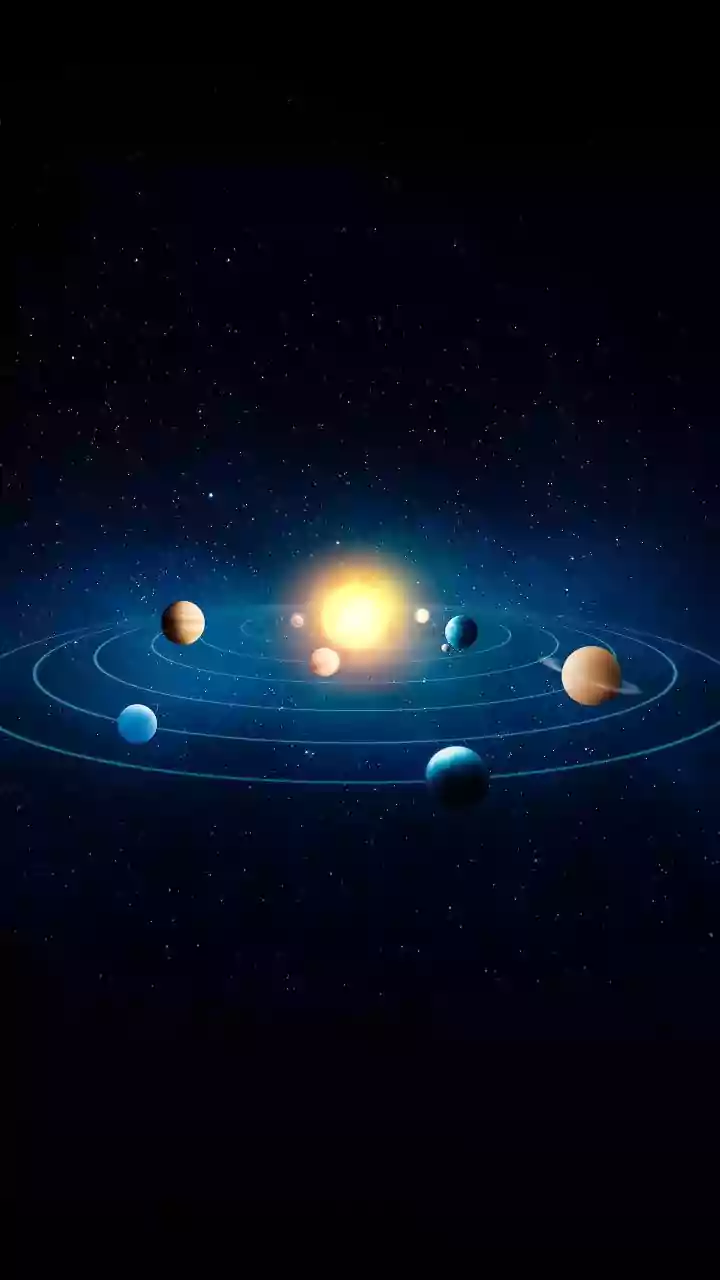
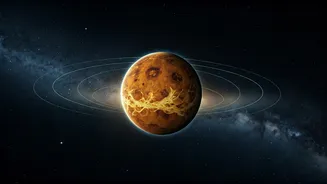
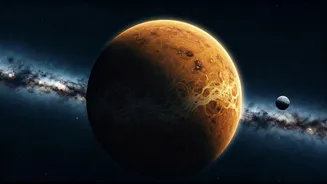
It sounds like a riddle, but it’s a simple, mind-bending fact of celestial mechanics. A 'year' on Venus—the time it takes to complete one orbit around the Sun—is approximately 225 Earth days. However, a 'day' on Venus—the time it takes for the planet
to complete a single rotation on its axis—is a sluggish 243 Earth days. This means that if you could stand on the surface of Venus, you would experience a full year passing by before a single day-night cycle was complete. It’s a phenomenon unique in our solar system, making Venus a true astronomical oddity.
The Slowest, Strangest Spin
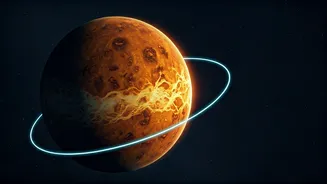
Not only is Venus’s rotation incredibly slow, it’s also backwards. Every other planet in our solar system, except for Uranus which is tilted on its side, spins on its axis in a counter-clockwise direction (prograde). Venus, however, spins clockwise (retrograde). This means that on Venus, the Sun rises in the west and sets in the east. This combination of an extremely slow spin and a retrograde motion points to a violent and chaotic past, setting it apart from its planetary siblings. Scientists have spent decades trying to understand what could have possibly knocked a planet-sized body into such a strange rhythm.
Why Does Venus Spin This Way?
There isn't one definitive answer, but scientists have two leading theories. The first involves a colossal impact. Early in the solar system’s history, a massive asteroid or protoplanet may have slammed into Venus, not only slowing its rotation to a near-standstill but actually reversing its direction. The second, more recent theory points to Venus's own atmosphere. Its atmosphere is incredibly dense—90 times thicker than Earth’s—and it super-rotates, whipping around the planet in just four Earth days. This creates a powerful 'thermal tide,' a wave of atmospheric pressure that follows the Sun. Scientists believe the immense friction and gravitational pull from this thick, fast-moving atmosphere has, over billions of years, acted like a brake, slowing the planet’s spin and even helping to maintain its retrograde motion.
The Impact on the Venusian 'Day'
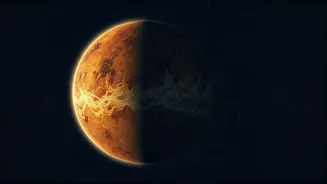
Here's where it gets even stranger. While one full rotation (a sidereal day) takes 243 Earth days, the time from one sunrise to the next (a solar day) is different. Because the planet is slowly rotating backwards while also orbiting the Sun, the time it takes for the Sun to return to the same point in the sky is 'only' about 117 Earth days. So, while a Venusian day is longer than its year, you’d experience roughly two sunrises and sunsets for every one trip around the Sun. This long exposure to the Sun during the day and the equally long night that follows has profound consequences for the planet's environment.
A Hellish World Forged by Time
The planet's slow rotation is a key ingredient in its hellish recipe. The extremely long days bake the surface under the intense Sun, contributing to a runaway greenhouse effect that traps heat with terrifying efficiency. The temperature on Venus is a stable, scorching 465° Celsius, hot enough to melt lead. Because the day is so long, you might expect the night side to cool down, but the thick, carbon-dioxide-rich atmosphere is so effective at distributing heat that the temperature barely drops. The entire planet is shrouded in a blanket of heat, with no relief, day or night. This extreme environment, shaped by its peculiar relationship with time, serves as a stark reminder of how planetary dynamics can create worlds so utterly alien to our own.