

In the world of yoga, Paschimottanasana often becomes a measure of flexibility, with the goal being to touch your toes. But what if the true purpose isn't about how far you can fold, but how mindfully you can surrender into the pose?
Beyond Toe-Touching: The Real Goal
Paschimottanasana,
or the Seated Forward Bend, translates to 'Intense Stretch of the West', where 'west' refers to the entire back of the body. The ultimate goal isn't to flatten your torso onto your legs or grab your feet at all costs. Instead, it's about creating a safe, sustained, and beneficial stretch along the entire posterior chain—from your heels and calves, through your hamstrings and glutes, and all the way up your spine to the back of your neck. Forcing the pose by aggressively rounding the back just to reach further defeats its primary purpose and can risk injury, particularly to the lower back and hamstrings. The real victory is in lengthening the spine and finding release, not in achieving a specific shape.
The Anatomy of a Mindful Bend
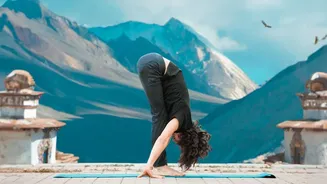
When performed with awareness, Paschimottanasana is incredibly therapeutic. The forward-hinging action, initiated from the hips rather than the waist, lengthens the spine and stretches the hamstrings. This gentle compression of the abdomen also massages digestive organs like the liver and kidneys, improving their function. On a neurological level, forward folds have a profound calming effect. They encourage the parasympathetic nervous system—our 'rest and digest' mode—to take over, which helps to reduce stress and anxiety. Forcing a deep bend creates tension and puts the body in a state of stress, which is the exact opposite of the pose’s intention.
How to Find Your Comfortable Depth
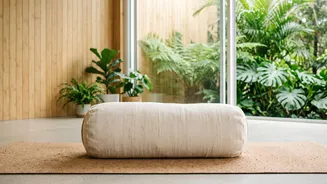
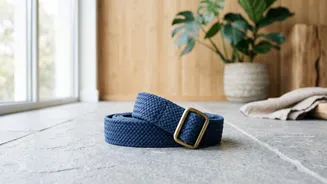
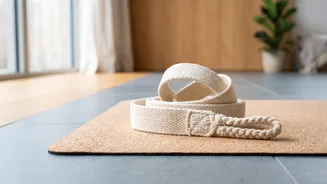
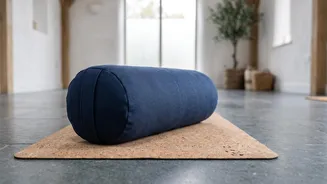
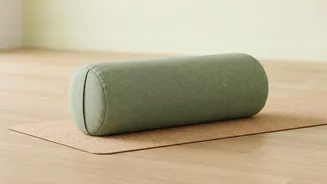
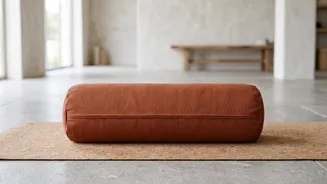
Finding your 'comfortable depth' is about listening to your body, not your ego. The key principle is 'sthira sukham asanam'—the posture should be steady and comfortable. If your hamstrings are tight, the most effective modification is to bend your knees generously. This releases the pull on the lower back, allowing you to lengthen your spine and fold from your hips correctly. You can place a rolled blanket under your knees for support. Another invaluable tool is a yoga strap. Looping a strap around the soles of your feet allows you to maintain a long spine while gently guiding your torso forward, without rounding your back to reach your feet. Your 'comfortable depth' is the point where you feel a meaningful stretch, but can still breathe easily and relax your shoulders.
It's a Feeling, Not a Look
Yoga is an internal practice. The most 'advanced' version of a pose is not necessarily the one that looks the most extreme, but the one that is practiced with the most awareness. Paschimottanasana teaches patience and surrender. The mental effort required to stay present and breathe into sensation, rather than pushing past your limits, can be as intense as the physical stretch itself. Instead of focusing on how the pose looks, shift your attention to how it feels. Notice the sensation of your hamstrings lengthening, your spine extending with each inhale, and your body softening with each exhale. This inward focus is what transforms a simple stretch into a meditative experience.
The Many Benefits of a Softer Approach
By prioritising a comfortable depth, you unlock the full spectrum of Paschimottanasana's benefits, which extend far beyond flexibility. Regular, mindful practice can improve posture, relieve stress and mild fatigue, calm the brain, improve digestion, and soothe symptoms of menopause and menstrual discomfort. It stretches the shoulders, lengthens the spine, and invigorates the entire nervous system. By letting go of any need to achieve a 'perfect' pose, you allow your body and mind to receive the deep, restorative benefits that this classic posture has to offer.