

The New Lunar Treasure Map
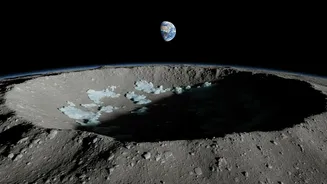
For decades, scientists have known that water ice exists on the Moon, primarily tucked away in permanently shadowed craters at the poles. However, recent advancements have moved beyond mere detection to detailed mapping. Using data from missions like
India's Chandrayaan series and NASA's Lunar Reconnaissance Orbiter, scientists are creating the first comprehensive resource maps of another celestial body. These aren't just simple charts; they integrate data on temperature, geology, and mineralogy to pinpoint not just where ice is, but where it's most likely to be accessible. Recent studies have combined radar data from multiple missions to look beneath the surface, confirming that significant deposits of water ice exist mixed with soil in these cold traps. This is a critical distinction; knowing the location and accessibility of these deposits is the difference between knowing there's treasure in a vault and having the combination to the lock.
Why Water is the Oil of the Solar System
The intense interest in lunar water isn't about quenching an astronaut's thirst, although that's part of it. Water (H2O) is a uniquely versatile and valuable resource for space exploration. On-site water can be purified for drinking and used to grow food, dramatically reducing the need for costly resupply missions from Earth. More importantly, through a process called electrolysis, water can be split into its constituent elements: hydrogen and oxygen. This provides breathable air for astronauts and, critically, the two primary components of rocket propellant. The ability to manufacture rocket fuel on the Moon would revolutionize space travel. A spacecraft launching from the Moon would need far less energy than one leaving Earth's much stronger gravity well, effectively turning the Moon into a refuelling station for more ambitious missions to Mars and beyond.
From Outpost to Permanent Base
The presence of accessible water fundamentally changes the calculus for living on the Moon. Without it, any lunar habitat would be a temporary outpost, entirely dependent on a fragile and expensive supply chain from Earth. With local resource utilization—often called 'in-situ resource utilization' or ISRU—the possibility of a self-sustaining, long-term human presence becomes viable. This blueprint for water access allows mission planners for programs like NASA's Artemis to design infrastructure around a known resource. It informs where to land, where to build habitats, and where to establish power generation and processing facilities. This shift from a 'visit' to a 'stay' mentality is why nations and private companies are in a race to the lunar south pole, a region believed to hold vast reserves of this game-changing resource.
The Chilly Challenge of Extraction
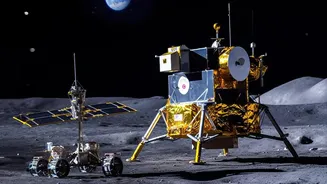
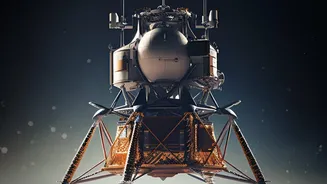
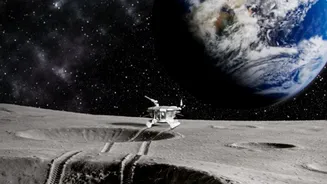
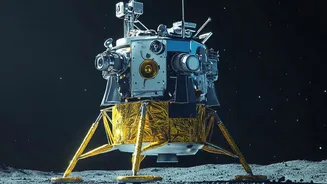
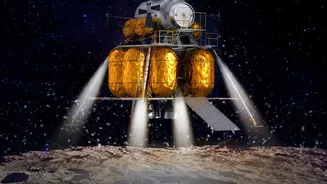
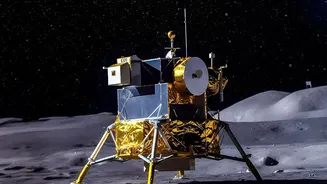
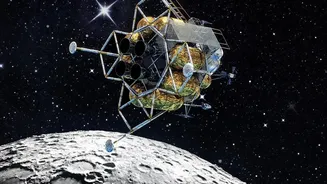
While having a map is a monumental leap forward, the task ahead is far from simple. The water ice on the Moon is not a convenient sheet waiting to be harvested. It's mixed with abrasive lunar soil, or regolith, in some of the coldest places in the solar system, with temperatures dropping below -250 degrees Celsius. Extracting this ice will require a new generation of robotic technology. Rovers and landers must be able to survive these extreme temperatures, drill into what is essentially frozen rock, and heat the material to sublimate the water vapor so it can be captured. Missions like the now-revived NASA VIPER rover are being designed specifically for this task: to rove into these dark craters, drill into the surface, and provide the first 'ground truth' data to confirm what the orbital maps suggest. New research is even exploring how to use moonquakes to detect and map ice deposits from afar.