





The Monsoon Menace for Potted Plants
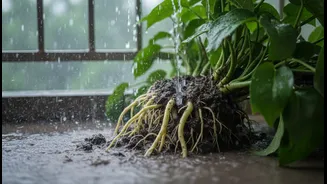
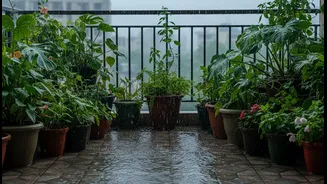
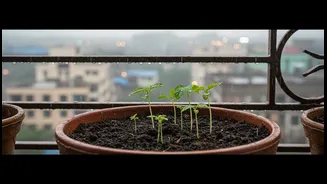
While the rains are a blessing for ground-level gardens, plants confined to pots on a balcony face a unique set of challenges. Heavy and persistent rain can quickly lead to waterlogged soil. When soil is saturated, the air pockets that roots need to breathe
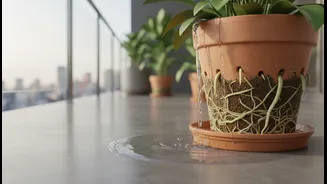
are filled with water. This oxygen deprivation is the first step toward a common and often fatal problem: root rot. Fungi and bacteria that thrive in soggy, anaerobic conditions begin to attack the plant's root system, causing them to turn mushy and black. Once the roots are compromised, the plant can no longer absorb nutrients and water properly, leading to a slow decline even though the soil is wet.
Telltale Signs of Poor Drainage
How can you tell if your plants are suffering from waterlogged soil? The signs can sometimes be misleading and look like underwatering. Look out for yellowing leaves, especially older ones at the base of the plant. The plant might appear wilted or droopy despite the soil being damp to the touch. Other warning signs include mushy stems, a foul or sour smell coming from the soil, and the appearance of fungal growth like green algae on the soil surface. Spotting these symptoms early is key to saving your plant from further damage.
Build a Better Foundation for Flow
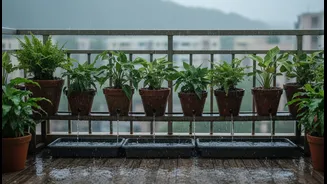
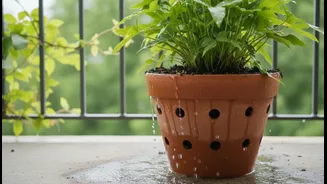
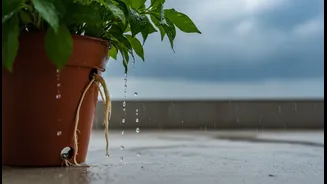
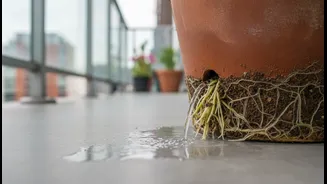
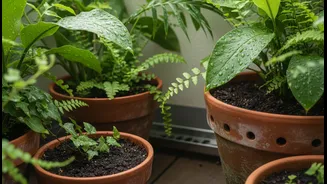
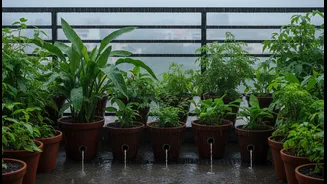
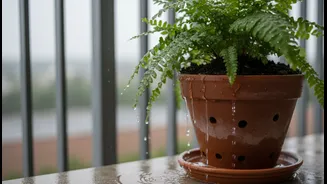
The first line of defence is the pot itself. Ensure every container has an adequate number of drainage holes. If a pot has only one small hole, it can easily be blocked. Small to medium pots should have at least three to five holes. A simple but highly effective trick is to elevate your pots. Placing them on bricks, pot feet, or simple stands allows excess water to drain away freely and prevents the pot from sitting in a puddle. This also improves air circulation around the base of the pot, helping the soil to dry out more evenly.
Craft the Perfect Monsoon Potting Mix
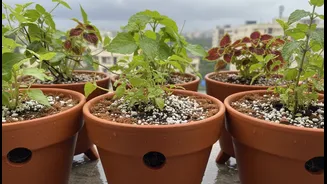
Standard garden soil is often too heavy and dense for containers, especially during the monsoon when it can compact and retain excessive water. The secret to healthy roots lies in a light, well-aerated potting mix. A good monsoon mix should prioritize drainage. Create your own blend by combining garden soil with materials that improve porosity, such as cocopeat, compost, and perlite or coarse sand. A reliable recipe could be 40% garden soil, 40% compost, and 20% cocopeat, with an added handful of perlite or sand. These amendments create air pockets in the soil, allowing water to pass through quickly while retaining just enough moisture for the plant.
Debunking the Gravel-in-Pot Myth
For generations, gardeners have been told to add a layer of gravel or broken pot shards to the bottom of containers to improve drainage. However, modern horticulture has shown this to be a myth. In fact, it can make things worse. Water does not move easily from a fine-textured material (like soil) to a coarse-textured one (like gravel). Instead of draining away, water tends to collect in the soil just above the gravel layer, creating what is known as a 'perched water table'. This effectively raises the soggy bottom of the pot, bringing the waterlogged zone closer to your plant's sensitive roots and reducing the total volume of healthy soil available to them. The best practice is to use a well-draining soil mix throughout the entire pot.
Smart Habits for a Thriving Balcony
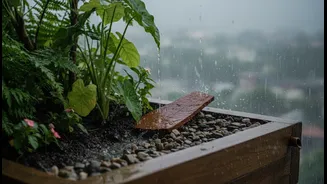
Beyond drainage, a few simple adjustments can make a big difference. First, adjust your watering schedule. The rain is doing most of the work for you, so always check if the top inch of soil is dry before you even think about watering. For particularly sensitive plants like succulents, or those that prefer drier conditions, consider moving them to a sheltered spot away from direct, heavy downpours. Finally, good air circulation can help prevent fungal diseases that are common in humid weather. Avoid overcrowding your plants to ensure air can move freely between them. With these simple steps, you can help your balcony garden not just survive, but truly thrive through the rainy season.