







A Giant Leap for Spacesuit Technology
NASA is preparing to send astronauts back to the Moon, this time to the challenging and scientifically rich lunar South Pole. To do this, they need gear that's far more advanced than what the Apollo crews wore over 50 years ago. The answer lies in the Exploration
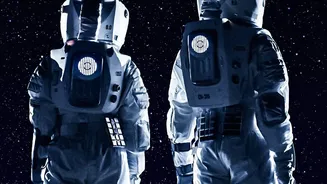
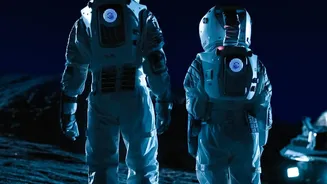
Extravehicular Activity Services (xEVAS) program, a new approach where NASA partners with commercial companies to develop and operate the next generation of spacesuits. The primary company leading the charge for the Artemis III lunar landing is Axiom Space, which has developed the Axiom Extravehicular Mobility Unit, or AxEMU. This isn't just an updated suit; it's a personal spacecraft designed for a new era of exploration.
Engineered for a New Era of Exploration
The key innovation of the AxEMU suit is its remarkable flexibility. Unlike the rigid and cumbersome Apollo suits, the new design uses a system of advanced joints and bearings that allow for an unprecedented range of motion. Astronauts will be able to walk naturally, bend, kneel to pick up rock samples, and twist their upper bodies with ease. This mobility is critical for conducting complex scientific work on the uneven and treacherous terrain of the lunar South Pole. The suit is also designed to be highly adjustable, fitting a much wider range of male and female body types than previous models. Another significant upgrade is the rear-entry hatch, which allows astronauts to climb into the suit from the back, a design that is safer and more efficient.
Surviving the Extremes of the South Pole
The lunar South Pole is a place of stark contrasts, with areas of permanent darkness next to regions of blinding sunlight. Temperatures can swing wildly from over 120°C in the sun to below -200°C in the shadows. The AxEMU is built to withstand these extremes. Its outer layers, developed in partnership with fashion house Prada, are designed not just for style but for function, incorporating advanced materials to provide thermal insulation and protection from abrasive lunar dust. The helmet features integrated HD cameras and powerful lights, essential for navigating the long, dark shadows that dominate the polar landscape.
A New Commercial Space Paradigm
The development of these suits also marks a major shift in how NASA operates. Instead of owning and managing the hardware itself, the agency is essentially buying a service from commercial partners like Axiom Space under the xEVAS contract. This multi-billion dollar program tasks private companies with the full scope of providing spacewalk capabilities, from suit design and manufacturing to training and mission support. This approach is intended to foster innovation, reduce costs, and allow NASA to focus on its broader exploration goals. Initially, Collins Aerospace was also contracted to develop a suit, primarily for the International Space Station, but those plans were changed, leaving Axiom as the key provider for the upcoming lunar mission.