




In Indian kitchens, ghee is more than an ingredient; it’s a symbol of nourishment and tradition. But the age-old question remains: which is better? The answer lies in their distinct fat compositions, which affect everything from taste to health.
Fat and Calorie Content
The most
significant difference begins with the source milk. Buffalo milk is naturally higher in fat content, containing roughly 6-8% fat compared to cow's milk at 3.5-4.5%. This means it takes less buffalo milk to produce a kilogram of ghee, which often makes it a more economical choice. Consequently, buffalo ghee is denser and slightly higher in calories and fat per serving. While a tablespoon of either is rich in energy, those managing weight or calorie intake often prefer cow ghee, which is considered lighter. For individuals looking to gain weight or needing higher energy, such as athletes, the calorie density of buffalo ghee can be beneficial.
Saturated and Unsaturated Fats
Both ghees are predominantly composed of saturated fat, but their specific fatty acid profiles differ. Buffalo ghee tends to have a higher concentration of saturated fats, which contributes to its solid, dense texture and longer shelf life. This higher saturated fat content can be a concern for individuals monitoring their cholesterol levels. Cow ghee, in contrast, generally contains a slightly higher proportion of polyunsaturated fatty acids (PUFA), including beneficial fats like Conjugated Linoleic Acid (CLA) and Omega-3s, particularly when sourced from grass-fed cows. These fats are linked to a healthier metabolism. Because of its fat structure, cow ghee has a lower melting point, making it feel lighter in the mouth.
Vitamins and Antioxidants
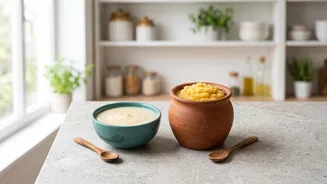
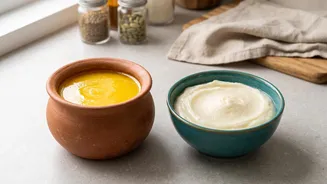
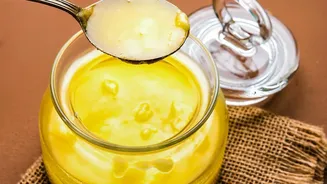
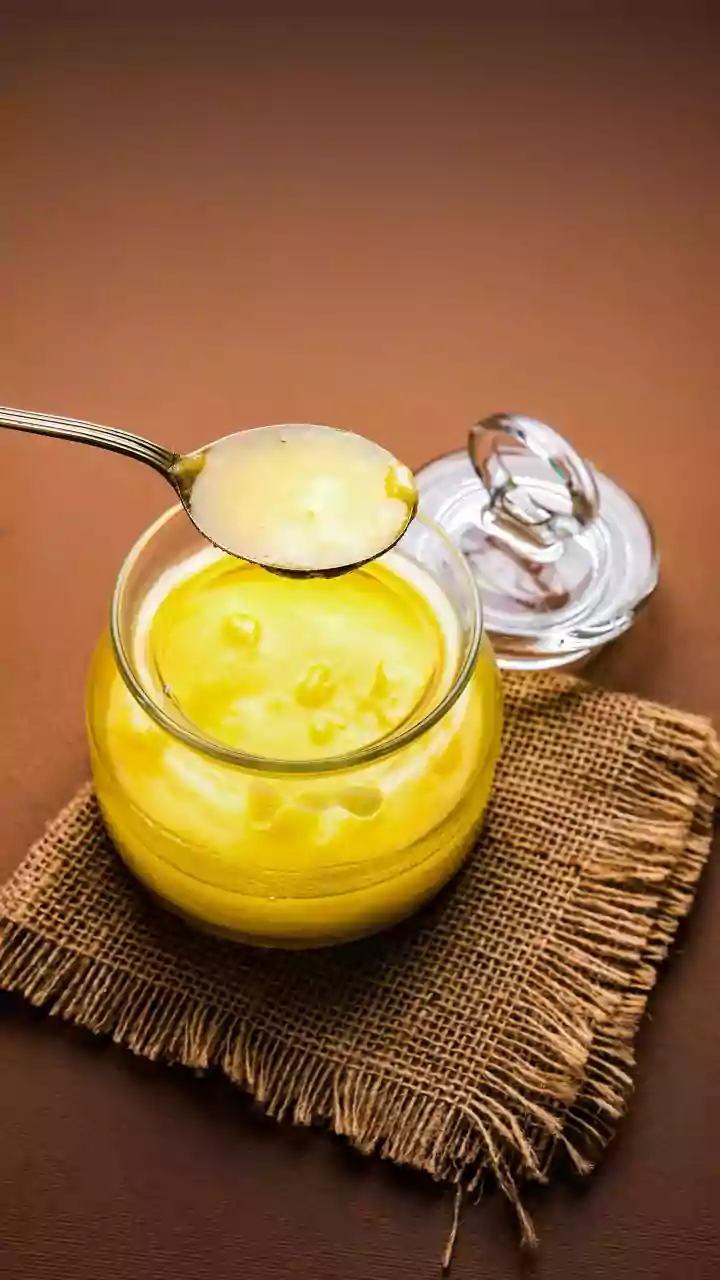
The vibrant golden-yellow colour of cow ghee is a direct indicator of its beta-carotene content, an antioxidant that the body converts into Vitamin A. Cows transfer this pigment from the grass and fodder they eat directly into their milk fat. Buffaloes, on the other hand, have a more efficient system that converts almost all beta-carotene into colourless Vitamin A before it reaches the milk, which is why buffalo ghee is white or pale cream. While both contain fat-soluble vitamins A, D, E, and K, cow ghee is often noted for being richer in Vitamin A due to its beta-carotene. These vitamins are crucial for eyesight, skin health, and immunity.
Digestion and Ayurvedic Perspective
From a digestive standpoint, cow ghee is widely considered superior. It has a higher concentration of short- and medium_chain fatty acids, which are easier for the body to break down and absorb. Ayurveda traditionally recommends cow ghee for its 'satvik' (pure and calming) properties, suggesting it is gentler on the digestive system. This makes it the preferred choice for children, the elderly, and those with sensitive digestion. Buffalo ghee, being heavier and denser due to its higher long_chain fatty acid content, is considered harder to digest.
Culinary Uses and Flavour Profile
The differences in fat composition also dictate their best uses in the kitchen. Cow ghee has a mild, slightly nutty flavour that complements everyday dishes like dal, rice, and roti without overpowering them. Its granular texture is often seen as a sign of high quality. Buffalo ghee has a richer, more pronounced flavour and a creamier, denser texture. Its higher smoke point and stability under sustained heat make it a favourite for deep_frying and preparing rich sweets like halwa and ladoos, especially in North India.
The Verdict: Which One for You?
There is no single 'better' ghee; the right choice depends entirely on your personal health goals and culinary needs. For daily consumption, weight management, easier digestion, and for feeding children and the elderly, cow ghee is the recommended option. Its lighter profile and richer vitamin content make it a versatile and healthy choice for everyday meals. If your goal is to gain weight, you have high energy needs, or you're preparing festive sweets and rich dishes, the denser, more calorific buffalo ghee is an excellent choice. It provides energy and a creamy richness that is perfect for indulgent cooking.