







The Unseen Pantry Contaminant
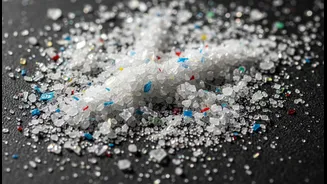
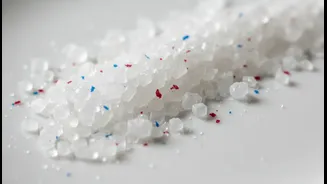
Microplastics are tiny plastic particles, technically defined as being less than 5 millimetres long. They come from two main sources. Primary microplastics are those manufactured to be small, like microbeads in old cosmetic products. Secondary microplastics are the
result of larger plastic items—like bags, bottles, and fishing nets—breaking down over time due to sun and water exposure. Because they are so small and durable, they have spread across the entire planet, from the deepest oceans to the highest mountains, and inevitably, into our food chain.
A Shock in the Kitchen Staples
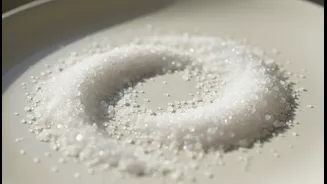
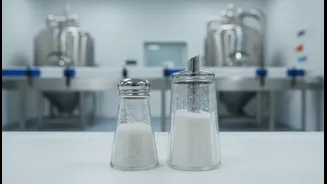
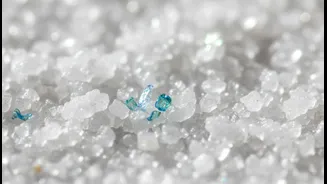
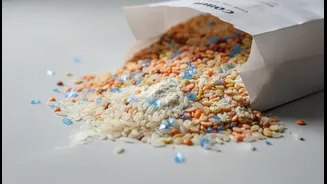
Recent research has brought this invisible problem into sharp focus, particularly for Indian consumers. A study by the environmental organisation Toxics Link found microplastics in all tested Indian brands of salt and sugar, regardless of whether they were big-name brands or local products, packaged or sold loose. The study revealed that iodised salt contained the highest concentrations of microplastics, while organic rock salt had the lowest. For sugar, microplastic levels were also present in all samples, with non-organic sugar showing higher concentrations. The particles found were a mix of fibres, films, and fragments, confirming a widespread presence in these fundamental ingredients.
From Ocean and Factory to Your Table
How do these particles end up in our salt and sugar? For salt, especially sea salt, the pathway is direct. Our oceans are unfortunately filled with plastic waste, and when seawater is evaporated to produce salt, the microplastics are left behind and concentrated in the final product. Even rock salt, which is mined, isn't completely safe, as it can be contaminated during processing and packaging. Sugar's contamination route can be more varied. It can happen during industrial processing through abrasion from plastic equipment, from airborne plastic dust in factories, or from the packaging itself.
The Big Health Question Mark
The discovery of microplastics in our food naturally leads to one critical question: what are the health effects? The scientific community is actively researching this, and while there are no definitive long-term human studies yet, early findings from animal and cell studies raise concerns. The potential risks are threefold: the physical particles could cause internal irritation and inflammation; they can act like sponges, absorbing toxins like pesticides and heavy metals from the environment and releasing them in our bodies; and the plastics themselves can leach harmful chemical additives like BPA or phthalates. Research has linked exposure in lab settings to issues like oxidative stress, immune responses, and metabolic disorders, but the direct impact from dietary intake is still an area of intense investigation.
The 'Clean Eating' Dilemma
For advocates of 'clean eating,' this news is particularly distressing. The clean eating philosophy is built on consuming whole, unprocessed foods to avoid synthetic additives, preservatives, and environmental contaminants. It's a conscious effort to control dietary intake down to the most basic level. The revelation that foundational ingredients like salt and sugar—items that are not typically considered 'processed' in the same way as junk food—are contaminated with industrial pollution strikes at the very core of this lifestyle. It highlights a frustrating reality: no matter how carefully an individual curates their diet, they may still be unable to escape the pervasive problem of plastic pollution.
Navigating a Contaminated World
While completely avoiding microplastics is likely impossible in the modern world, consumers can take small steps to reduce their exposure. Based on current research, opting for rock salt over sea salt may lower intake, as studies consistently show lower particle counts in mined salts. When it comes to sugar, choosing products in non-plastic packaging like paper or glass might help reduce contamination that occurs after processing. However, these are individual solutions to a systemic problem. The most effective change will come from broader action: improving industrial filtration systems, reducing our global reliance on single-use plastics, and enhancing waste management to prevent plastics from entering our environment in the first place. Awareness is the first step toward demanding these larger changes.