


Catch the Last of the Perseids
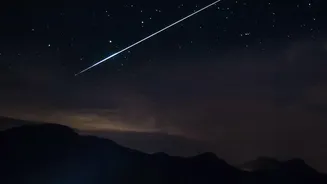
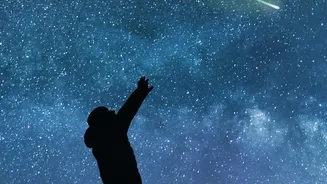
If you missed the spectacular peak of the Perseid meteor shower on August 12 and 13, you still have a small window of opportunity. The shower remains active until August 24, and while the rate of meteors has dropped significantly from its peak of nearly
100 per hour, you can still spot some of these celestial streaks. These meteors are fragments of the comet Swift-Tuttle burning up in our atmosphere. For your best chance, find a location away from city lights after midnight. Look towards the northeastern sky and give your eyes about 20-30 minutes to fully adjust to the darkness. Patience is key, as the numbers will be lower, but a bright Perseid can still offer a breathtaking sight. The biggest challenge for many across India will remain the monsoon clouds, which can obstruct the view.
Saturn: The Star of the Night
The true gem of the late August night sky is the planet Saturn. The ringed planet is visible for most of the night, rising in the east during the evening and appearing as a bright, steady, golden-hued point of light. Unlike stars, which twinkle, planets shine with a constant glow, making Saturn easy to identify. It is currently travelling through the constellation of Pisces. This month provides an excellent opportunity for viewing as the planet is heading towards its opposition on October 4, 2026. Opposition is when Earth passes directly between the Sun and Saturn, making the planet appear at its biggest and brightest for the year. Mark your calendars for the nights of August 30 and 31, when the waning gibbous Moon will pass close to Saturn, creating a beautiful pairing that will make the planet unmistakably easy to find.
Venus Dances in the Evening Twilight
For those who prefer to do their stargazing shortly after sunset, the planet Venus offers a brilliant display. Look to the western sky about 45 minutes after the sun goes down to spot the dazzlingly bright 'Evening Star'. Throughout the end of August, Venus is putting on a slow-motion show as it appears to draw closer to the bright star Spica, the brightest star in the constellation Virgo. Each evening, you can notice Venus closing the gap, leading up to a close conjunction between the two on September 1. This celestial dance is easily visible to the naked eye, even from urban areas, providing a simple yet rewarding sight for sky-watchers of all levels. All you need is a clear view of the western horizon.
An Early Morning Planetary Treat
If you're an early riser, the pre-dawn sky has its own rewards. The planet Mars is currently visible in the eastern sky, appearing as a distinct, reddish point of light. The Red Planet is marching eastward across the constellation of Gemini. Joining Mars in the morning is the giant planet Jupiter, which is making its return to the morning sky. Jupiter will appear lower towards the east-northeast horizon, so you’ll need a clear and unobstructed view to spot it in the gathering morning twilight. While Mars is easy to spot, you can use a stargazing app to help you locate both planets before the sun rises and washes them from view.
The Sturgeon Full Moon
August will conclude with a Full Moon on August 28. This full moon is traditionally known in some cultures as the 'Sturgeon Moon'. On this night, the Moon will rise around sunset and remain visible throughout the night, brilliantly illuminating the landscape. You may also hear talk of a partial lunar eclipse occurring on the same date. It is important for Indian stargazers to know that this deep partial lunar eclipse will not be visible from India. The event will reach its peak during the daytime in India, when the Moon is below the horizon. So, while you can certainly enjoy the beauty of the full moon itself, the eclipse will be an event to follow online via live streams from other parts of the world.