


The Cold Case File of the Cosmos
Imagine trying to find the birthplace of a person who has been wandering the globe for 80 years with no records. That’s the challenge astronomers face with stars. Stars are born in dense clouds of gas and dust called stellar nurseries. Stars that form
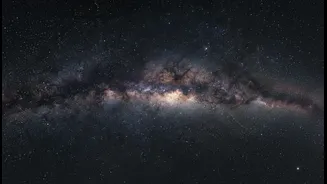
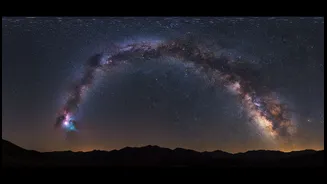
together in these clusters initially share a similar chemical composition, like a family’s DNA. However, over millions and billions of years, the gravitational pull of the galaxy sends these sibling stars on epic journeys, scattering them across the vast expanse of the Milky Way. Their birth clusters dissolve, and their origins become a cosmic cold case. For decades, figuring out where a star came from was like trying to unscramble an egg. Astronomers could identify a star’s current location and its chemical makeup, but its historical path was largely a mystery.
Rewinding the Galactic Clock
The game changed with a revolutionary approach akin to forensic science, powered by incredible new data. This field is called “galactic archaeology.” The key is to precisely measure a star's current position and its complete motion—how fast it's moving and in what direction. This is where the European Space Agency's Gaia mission has been a revelation. Launched in 2013, the Gaia space observatory has been meticulously charting the positions and movements of nearly two billion stars with unprecedented accuracy. This torrent of data gives astronomers the crucial clues they need. With a star's current 6D coordinates (its 3D position and 3D velocity), scientists can use powerful computer models to essentially rewind the clock. By programming in a detailed map of the Milky Way's gravity, they can calculate a star's orbit backward in time, tracing its path through the galaxy over billions of years to pinpoint its likely origin.
A Star's Journey Home
This technique has already yielded spectacular results. Astronomers have been able to identify streams of stars moving together through the galaxy, like ghostly trails of breadcrumbs left by dwarf galaxies that were long ago devoured by the much larger Milky Way. By tracing the orbits of the stars in these streams, they can reconstruct the death spirals of these ancient satellite galaxies, revealing a violent history of galactic cannibalism that was previously only theoretical. For example, studies have revealed that a significant portion of our galaxy's inner halo is composed of debris from a single massive merger with a dwarf galaxy, now nicknamed Gaia-Sausage-Enceladus, that occurred billions of years ago. This is not just about one star; it is about finding entire families of stars and restoring their collective history.
The Rise of Galactic Archaeology
Reconstructing stellar orbits is more than just a party trick; it's a cornerstone of the burgeoning field of galactic archaeology. Just as archaeologists on Earth excavate ancient ruins to understand past civilizations, galactic archaeologists study the motions and chemical compositions of stars—the galaxy's fossils—to piece together the life story of the Milky Way. Every star's reconstructed history is a new data point. By combining the histories of thousands or millions of stars, astronomers can build a dynamic, moving picture of our galaxy's evolution. They can see how the Milky Way’s elegant spiral arms formed, map the impact of past galactic collisions, and understand the processes that triggered major episodes of star formation, one of which may have even given rise to our own Sun. This work, combining Gaia's motion data with chemical information from ground-based surveys, is creating the most detailed history of our cosmic home ever attempted.