








Beyond Concrete and Levees
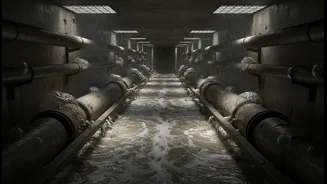
For generations, our primary response to rising waters has been to build higher and stronger. Concrete embankments, levees, and sophisticated drainage systems are the hallmarks of traditional flood control. These measures aim to channel and expel floodwater
as quickly as possible. Yet, as we've seen in urban centres across India, from Mumbai to Chennai, these engineered solutions can be overwhelmed. Channelising rivers often speeds up water flow, increasing flood peaks downstream, while degraded floodplains lose their natural ability to absorb excess water. This has led scientists and engineers to search for more sustainable, nature-based solutions that work with a river's natural processes rather than against them. The search is leading them underground, to a dynamic and vital ecosystem that has been largely overlooked.
The Secret World Beneath the River
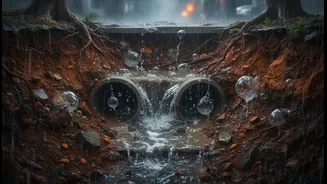
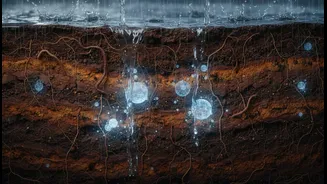
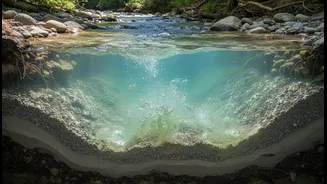
Beneath and alongside every healthy river is a zone where surface water and groundwater meet and mingle. This area, composed of gravel, sand, and sediment, is called the hyporheic zone—literally meaning “beneath the flow.” It is not simply wet soil; it is a living, breathing part of the river system. Water from the stream percolates down into this zone, flows through it for a period, and then re-emerges back into the main channel downstream. This constant exchange is driven by features on the riverbed, like pools and riffles, which create subtle pressure differences that push water into the substrate and pull it back out. Far from being static, this subterranean world is a bustling hub of biogeochemical activity, filtering water and providing a unique habitat for microscopic organisms.
A Natural Sponge for Floodwaters
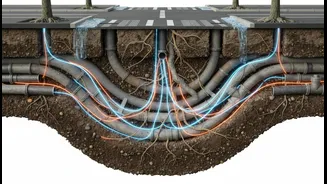
The true potential of the hyporheic zone for flood management lies in its function as a massive, natural sponge. During periods of high flow, such as after heavy monsoon rains, a healthy and connected hyporheic zone can absorb a significant volume of water from the swollen river. This process temporarily stores excess water underground, slowing its journey downstream and lowering the flood's peak intensity. The water is then released slowly back into the river as the flood subsides. This natural attenuation effect can be powerful. By increasing the river's connection to its subsurface, we essentially expand the channel's capacity to hold water without needing to build taller walls. This underground storage not only mitigates flood risk but also helps recharge groundwater aquifers, a critical benefit in water-stressed regions.
Restoring the Underground Connection
Unfortunately, many urban rivers have been disconnected from their hyporheic zones. Decades of channelisation with concrete, dredging, and floodplain development have effectively sealed off this vital underground connection. However, a new frontier in river restoration focuses on re-establishing this link. Projects are exploring techniques like removing concrete liners, reintroducing natural riverbed materials like gravel, and engineering structures that enhance hyporheic exchange. One study showed that specially designed plunge pools could increase the vertical flow of water into the streambed by a factor of 17 compared to pristine streams. In India, initiatives like the Namami Gange project are already focusing on rejuvenating river ecosystems, which includes afforestation along banks to stabilise soil and reduce runoff, a key step in restoring natural hydrological functions.
The Path Forward
Harnessing the hyporheic zone is not a universal fix, but it represents a profound shift in thinking. It moves us from a mindset of controlling nature to one of collaborating with it. Implementing these strategies requires a deep, site-specific understanding of local geology and hydrology. It also demands policy changes, especially in urban planning, to protect and restore river corridors instead of encroaching on them. Scientists are still working to fully understand and model these complex subsurface interactions to predict their effects at a large scale. While challenging, integrating this hidden underground process into our flood management toolkit offers a more resilient, cost-effective, and ecologically beneficial path to safeguarding our communities from future floods.