


Shukrayaan-1: India’s Next Interplanetary Leap
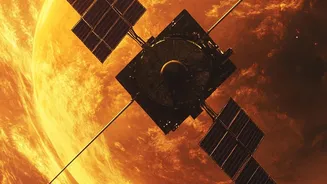
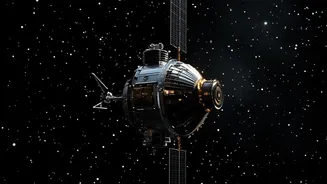
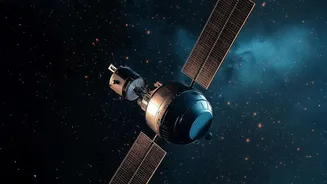
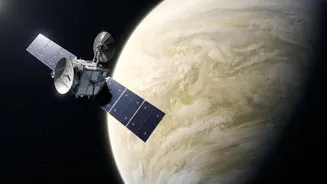
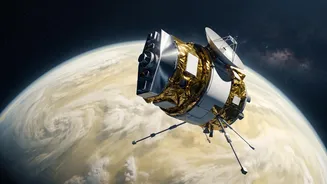
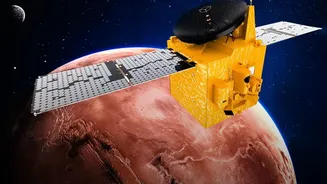
Shukrayaan-1, which translates to "Venus Craft," is India's first dedicated mission to the second planet from the Sun. Officially known as the Venus Orbiter Mission (VOM), it marks ISRO's second interplanetary venture after the resounding success of the Mars
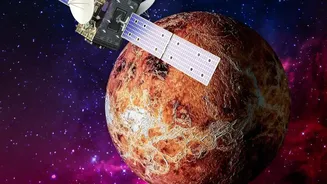
Orbiter Mission (Mangalyaan). Formally approved by the Union Cabinet in September 2024, the mission is a major national project, cementing India's position as a leader in space exploration. Scheduled for launch on March 29, 2028, aboard the powerful LVM-3 rocket, the spacecraft will embark on a 112-day journey to reach Venus. Once there, it will enter a large elliptical orbit before using a fuel-efficient technique called aerobraking—gliding through the upper atmosphere—to settle into a lower, more stable science orbit. This will position its suite of advanced instruments to study the planet for at least four years.
Why Venus? Unlocking the Secrets of Earth’s ‘Twin’
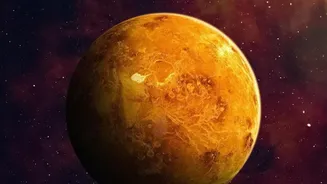
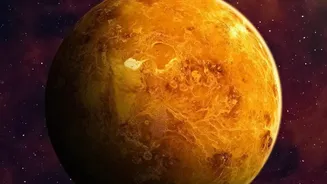
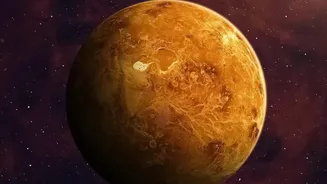
Venus is often called Earth's "twin sister" due to its similar size, mass, and proximity to the Sun. However, the similarities end there. Venus is a hellish world, the hottest planet in our solar system, with surface temperatures soaring above 460°C—hot enough to melt lead. Its atmosphere is over 90 times denser than Earth's and composed almost entirely of carbon dioxide, with thick, swirling clouds of sulfuric acid. Scientists believe Venus may have once been more like Earth, possibly with liquid water, but suffered a runaway greenhouse effect. Studying Venus is therefore crucial for understanding planetary evolution. By learning why our twin took such a dramatically different path, we can gain invaluable insights into climate change, atmospheric dynamics, and the long-term future of our own planet.
Peering Beneath the Veil: The Sensor Payloads
The greatest challenge in studying Venus is its opaque cloud cover, which makes direct observation of the surface impossible with conventional cameras. Shukrayaan-1 will overcome this with a payload of sophisticated instruments designed to see the unseen. The headline instrument is a high-resolution Synthetic Aperture Radar (SAR), which can pierce through the dense clouds to map the planet's surface topography and geology in unprecedented detail. It will be complemented by a ground-penetrating radar, a first for Venus exploration, to investigate the subsurface stratigraphy. The orbiter will carry a payload of approximately 100 kg, comprising around 19 instruments in total, including both Indian and international contributions. These sensors will investigate everything from the chemical composition of the atmosphere to its interaction with the solar wind.
A Deep Dive into the Atmosphere
A primary objective of the mission is to create a comprehensive profile of the Venusian atmosphere. Sensors like a thermal camera, cloud monitoring camera, and lightning sensor will study atmospheric dynamics. Other instruments, known as spectrometers, will analyze the chemical makeup of the toxic air, searching for clues about its evolution. International collaboration plays a key role here. A Swedish instrument, the Venusian Neutrals Analyser (VNA), will be part of a package called VISWAS to study how the solar wind interacts with the planet's ionosphere. Russia is contributing an instrument called VIRAL (Venus InfraRed Atmospheric gases Linker) to study atmospheric gases. Together, these tools will build a global dataset of Venus's atmosphere, helping scientists understand its super-rotating winds and extreme weather.
A Landmark Mission for India
With a budget of approximately ₹1,236 crore, the Venus Orbiter Mission is a testament to India's growing ambitions in space. Following the historic Chandrayaan-3 lunar landing and the pioneering Mangalyaan mission, Shukrayaan-1 represents the next logical step in ISRO's planetary exploration roadmap. The mission not only showcases India's advanced technological capabilities but also fosters international partnerships with space agencies from Sweden and Russia. By tackling the immense challenges of exploring Venus, India joins a select group of nations contributing to our fundamental understanding of the solar system. The data gathered will be invaluable, potentially unlocking secrets about Earth's past and future while inspiring a new generation of scientists and engineers across the nation.