



A New Window on a Cosmic Neighbour
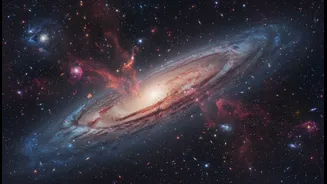
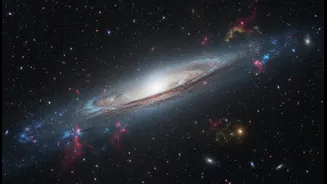
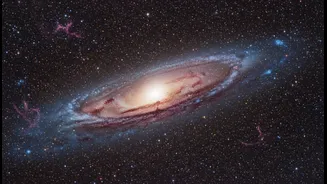
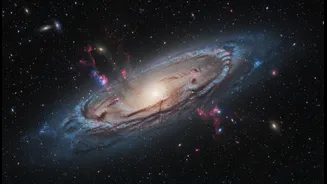
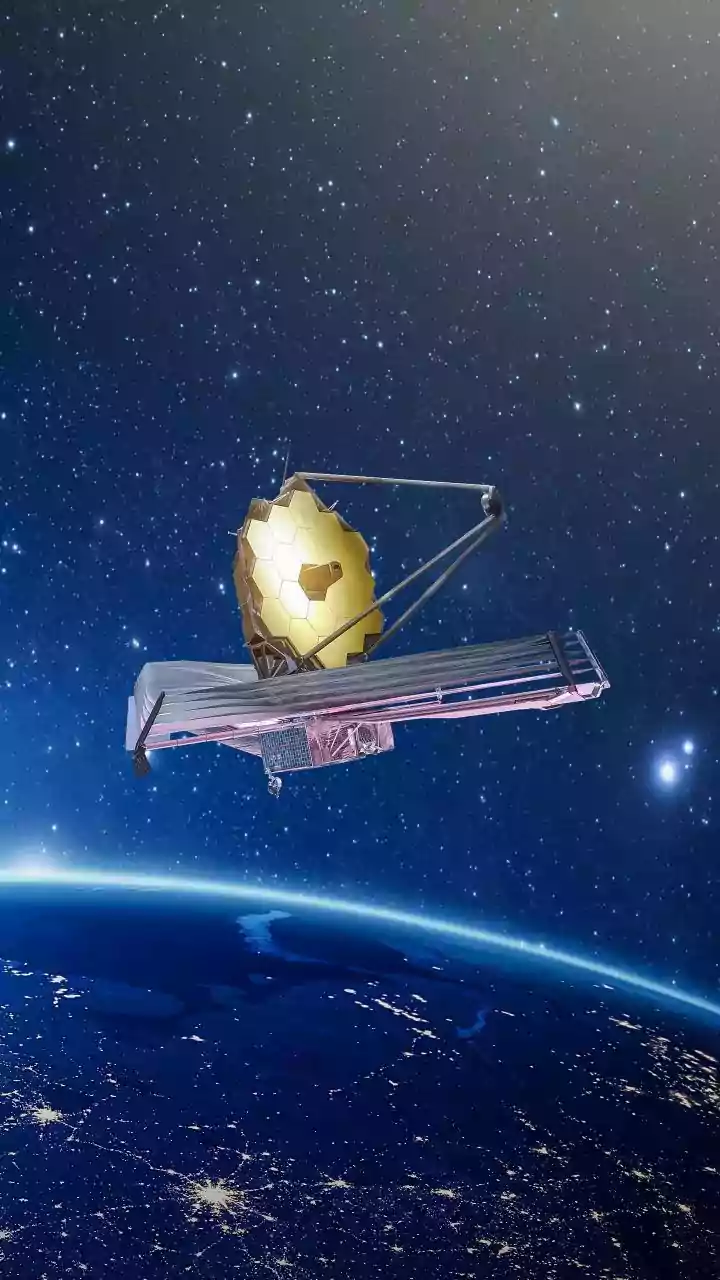
To mark its fourth anniversary of science operations, the James Webb Space Telescope (JWST) has released spectacular new images of Centaurus A, one of the brightest and closest active galaxies to Earth. Located about 11 to 13 million light-years away,
this galaxy has long been an object of fascination. Where the Hubble Space Telescope saw a galaxy bisected by an obscuring lane of dark dust, Webb’s powerful infrared vision cuts through the haze. The new images expose a densely packed field of millions of individual stars and intricate, glowing dust structures, some of which form a mysterious 'S' shape near the core. This unprecedented detail allows astronomers to perform what they call 'galactic archaeology,' studying the galaxy star by star to piece together its violent history.
The Case of the Cannibal Galaxy
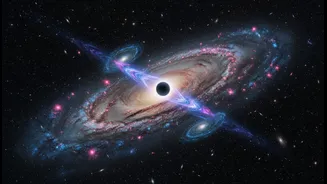
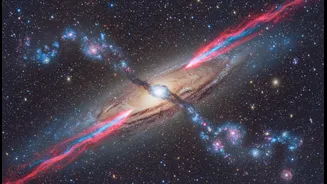
For decades, astronomers have believed that Centaurus A is the product of a colossal cosmic collision. The prevailing theory suggests that a large elliptical galaxy merged with a smaller, dust-rich spiral galaxy hundreds of millions or even a few billion years ago. The evidence is compelling: the galaxy has a warped shape, a prominent dust lane characteristic of a spiral galaxy, and a firestorm of new star formation triggered by the shockwaves of the merger. It also hosts a supermassive black hole at its core, which is actively feeding on gas and dust from the collision and launching powerful jets of energy into space. These features strongly suggest a dramatic and messy past, making Centaurus A a perfect laboratory for understanding how such mergers shape galactic evolution.
The Limits of a Snapshot
Despite the extraordinary new details, the JWST image is still just a snapshot in cosmic time. While it beautifully confirms the aftermath of a merger, it cannot, by itself, prove the precise sequence of events. Think of it like arriving at the scene of a car crash hours after it happened. You can see the wreckage and infer what happened, but you can't be certain about the exact speed of the vehicles or their precise trajectories at the moment of impact without more information. A static image, no matter how detailed, doesn’t fully capture the dynamics of the merger—how the two galaxies approached each other, their exact mass ratio, and how the collision unfolded over millions of years. These are the details needed for definitive proof.
The Search for a Smoking Gun
To truly cement the story of Centaurus A’s formation, astronomers need more than just images. The next step involves a different kind of data: spectroscopy. By breaking down the light from different parts of the galaxy into its constituent colors, scientists can determine the chemical composition, age, and—most importantly—the movement of different star populations. If astronomers can use Webb's spectroscopic instruments to clearly identify two distinct groups of stars—one belonging to the original elliptical galaxy and another from the consumed spiral galaxy—with different ages and orbital patterns, that would serve as the smoking gun. This would allow them to create a detailed timeline of the galaxy’s evolution, showing when stars formed before, during, and after the collision.