








A State-of-the-Art Island
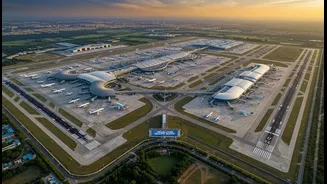
Phase 1 of the Noida International Airport (NIA) is impressive by any measure. Developed by Switzerland's Zurich Airport, it boasts modern technology, self-baggage drops, and a capacity to handle 12 million passengers annually. Having opened for domestic
routes with airlines like IndiGo and Akasa Air, and with international flights planned before the end of the year, the airport is rapidly scaling up operations. It promises to decongest Delhi's Indira Gandhi International Airport and supercharge the economy of Western Uttar Pradesh. Yet, in its first month, it has faced a harsh reality: distance and affordability are significant deterrents for passengers who have the option of the better-connected IGI airport.
The Tyranny of Distance
For a potential passenger in South Delhi, Gurugram, or even central Noida, the new airport presents a geographical challenge. It is located approximately 65 km from Noida's Sector 18, a journey that, for now, is primarily dependent on the Yamuna Expressway and costly app-based cabs. Early reports after the airport's launch highlighted high cab fares and limited public transport as major pain points. In its first month of operation, the airport has seen a slow start, with some airlines even suspending initial routes due to low passenger numbers, underscoring that convenience is king. While the airport may be a boon for residents along the Yamuna Expressway, for the wider NCR, it remains an inconvenient choice without robust, affordable, and fast transit options.
A Web of Promised Links
To its credit, the government has envisioned a multi-modal transport hub. The plans are ambitious and comprehensive. On the road front, a 31-km elevated expressway from Delhi is planned to provide a high-speed alternative to the congested Noida Expressway. For rail-based transit, the Ghaziabad-Jewar Namo Bharat (RRTS) corridor has entered the Detailed Project Report (DPR) stage, promising to cut travel time from Ghaziabad to the airport to about 40-50 minutes. The Noida Metro Aqua Line is also slated for an extension. Furthermore, there are proposals to integrate the airport with the future Delhi-Varanasi bullet train corridor, which could theoretically slash travel time from Delhi to just 21 minutes.
A High-Stakes Race Against Time
The critical issue is timing. While the airport is already operational, these vital connectivity projects are not. The RRTS corridor, for instance, has only just reached the DPR stage, with a potential opening for its first section targeted around 2030. Road projects like the new elevated expressway have a two-year construction timeline, but work is just beginning. At the time of its launch, the airport's access was primarily road-based, relying on buses and taxis. A survey conducted before the launch found that 95% of NCR flyers preferred to stick with Delhi's IGI airport, citing easier accessibility and cheaper fares. This highlights a classic chicken-and-egg problem: passengers won't flock to the airport until connectivity improves, but the urgency to fast-track these links is directly tied to the airport's underperformance.
The Verdict Is Written in Transit
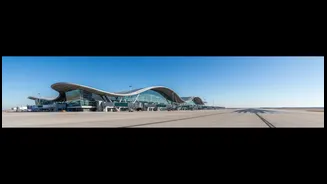
The story of a new, distant airport struggling with initial ridership is not new. But in the hyper-competitive NCR market, where a well-established alternative exists, the challenge is amplified. Noida Airport's success won't be measured by the number of flights it can handle, but by how easily a passenger from Ghaziabad or Faridabad can reach the departure gate. The initial slow passenger traffic is not a verdict on the airport itself, but a clear signal from the public. The airport's gleaming terminal and advanced runway are the hardware; seamless, affordable, and multi-modal connectivity is the operating system that will truly bring it to life. Without it, NIA risks becoming a world-class facility that is simply too far and too difficult for many to reach.