






Beyond the Footprints
The Apollo missions of the 20th century were a monumental achievement, proving humans could reach another celestial body. However, they were short-term sprints. The 21st-century vision, embodied by programs like Artemis, is a marathon. The goal is to
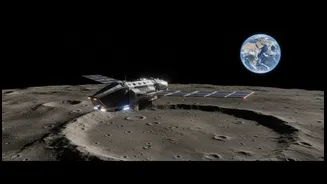
establish a long-term, sustainable human presence on and around the Moon. This shift requires moving from merely visiting to actually living and working in deep space. Central to this new era is the concept of sustainability—reducing reliance on expensive and constant resupply missions from Earth. Instead of packing everything we need, the focus is on learning to use what's already there, a practice known as in-situ resource utilization (ISRU). This is the foundation for creating a true lunar economy, but before we can build on the Moon, we need a robust testing ground.
Why Orbit is the New Proving Ground
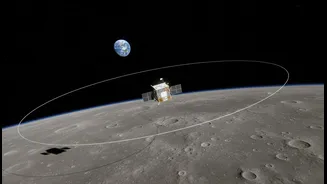
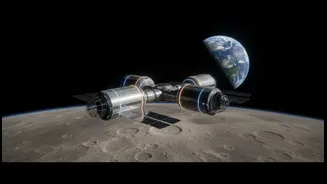
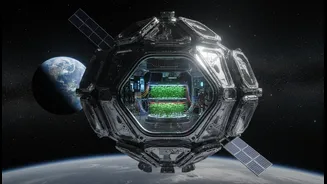
While the ultimate goal is a surface base, lunar orbit provides a unique and vital environment for testing the technologies needed to survive and thrive. An orbital outpost, like the planned Lunar Gateway, serves as a staging point and a laboratory. It allows scientists to conduct long-duration experiments in a deep-space environment that can't be fully replicated on Earth or even on the International Space Station, which is still largely protected by our planet's magnetic field. This orbit is a harsh classroom where equipment is exposed to intense solar and cosmic radiation, extreme temperature swings, and the vacuum of space. By testing systems here first, space agencies can validate life support, power generation, and radiation shielding technologies before deploying them on the much more complex and unforgiving lunar surface.
The Experiments Paving the Way
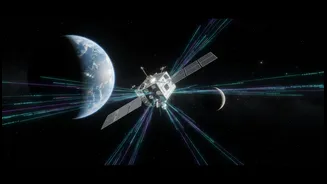
Several key experiments are planned to tackle the biggest challenges of lunar sustainability. A top priority is understanding and mitigating the effects of deep-space radiation. Instruments like ESA’s European Radiation Sensors Array (ERSA) and NASA’s Heliophysics Environmental and Radiation Measurement Experiment Suite (HERMES) will monitor space weather, providing crucial data to protect astronauts from health risks like cancer and radiation sickness. Another critical area is the development of closed-loop life support systems that can recycle air and water, reducing the need for Earthly supplies. Experiments will also test the extraction of resources. Probes and drills, tested in orbit and deployed on robotic landers, will search for water ice and other useful chemicals in the lunar soil, or regolith. These ISRU technologies are fundamental, as they could one day produce everything from breathable air and drinking water to rocket propellant.
Building Blocks of a Lunar Economy
These orbital experiments are more than just science projects; they are the essential research and development phase for a future lunar economy. Proving that we can generate power, produce water, and shield ourselves from radiation using local resources dramatically de-risks the entire enterprise for both public and private investment. Technologies like 3D printing with lunar regolith could be used to construct habitats, landing pads, and other infrastructure, slashing the astronomical cost of launching materials from Earth. The ability to refuel spacecraft using lunar-derived propellant could turn the Moon into a gateway for missions farther into the solar system, including Mars. By methodically testing these capabilities in orbit, space agencies are laying the groundwork for future commercial activities, from mining and manufacturing to science and even tourism, transforming the Moon from a desolate rock into a bustling hub of human activity.