


A Landscape Shaped by History
To understand the architecture of Skåne, one must first look at its history. For centuries, until 1658, this fertile region was part of Denmark. This Danish heritage is the primary reason for the prevalence of half-timbered houses, known locally as 'korsvirkeshus'.
This building style, common in Denmark and Germany, became the architectural language of the Scanian plains. The building technique was resource-efficient in a region that, unlike the rest of Sweden, was not covered in dense forest. This Danish-influenced past gives towns like Ystad and Lund a distinctly continental European feel, setting them apart from the timber and stone traditions found elsewhere in Sweden.
The Intricate Art of Half-Timber
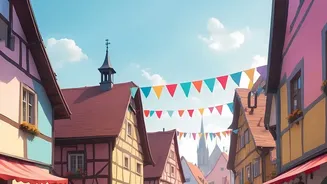
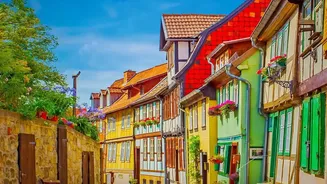
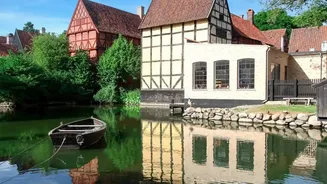
A half-timbered house is instantly recognizable. It features a visible wooden frame, typically made of oak beams, that forms a grid-like pattern across the facade. The spaces between the timbers, called panels, were historically filled with a mixture of clay and other materials, and later with brick. This method creates a visually striking contrast between the dark, structural wood and the often brightly painted or whitewashed infill. The style was a hallmark of merchant towns and prosperous farms, representing a certain civic pride and craftsmanship. The buildings often feature jettied upper floors that overhang the street, and intricately carved details on the beams and brackets, showcasing the skill of their builders.
Ystad: A Storybook Setting
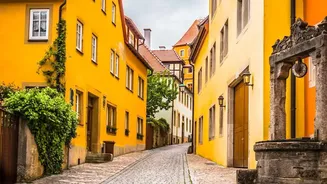
Nowhere is the charm of half-timbered architecture more alive than in Ystad. This coastal town boasts hundreds of preserved 'korsvirkeshus', with cobblestone streets winding between pastel-coloured facades. Walking through its oldest sections feels like stepping back in time. Buildings like Pilgrändshuset, the oldest half-timbered house in the Nordics dating back to 1480, and the well-preserved Per Helsas Gård complex, exemplify the town's medieval character. Ystad’s picturesque setting has famously served as the backdrop for the Kurt Wallander crime novels, creating a fascinating contrast between its idyllic appearance and the dark stories told within its streets.
Fortresses of Power and Stone
In stark contrast to the welcoming lanes of Ystad stand Skåne's stone fortresses. These structures tell a different story—one of power, defense, and feudal might. Glimmingehus is the most formidable example. Built starting in 1499 by the Danish knight Jens Holgersen Ulfstand, it is Scandinavia's best-preserved medieval stronghold. Its design was purely for defense, with walls up to 2.4 meters thick, 'murder-holes' for dropping projectiles on attackers, moats, and other deadly traps. Unlike the half-timbered homes built for living and commerce, Glimmingehus was a statement of authority, built to protect nobles from peasant uprisings and rival lords. Other castles, like Kärnan in Helsingborg and Malmöhus Castle, similarly served as military and administrative centers, projecting the power of the Danish crown.
A Region of Contrasting Characters
The two styles embody the dual history of the region. The half-timbered houses speak of a civilian society of merchants and craftsmen, of trade links to the continent, and of life lived in communities. Their construction is open and decorative, designed to be part of a bustling streetscape. The stone fortresses, on the other hand, are insular and imposing. They are symbols of a martial and aristocratic world, built to dominate the landscape and repel outsiders. One represents the blossoming of towns and trade, the other the harsh reality of medieval warfare and control. Together, they create a unique architectural dialogue that defines the identity of Sweden's southernmost province.