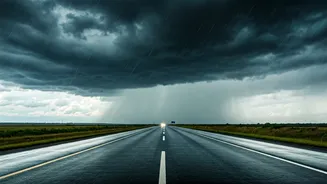






Rule 1: Prepare Your Vehicle Before the Rains Hit
A smart monsoon drive begins long before you turn the key. Proactive vehicle maintenance is non-negotiable. Start with your tyres; they are your only connection to the road. Ensure they have adequate tread depth (at least 2-3 mm) to channel water away
and prevent aquaplaning. Worn tyres struggle to disperse water, making them ride on a thin film of water instead of the road itself. Also, check that your tyres are inflated to the manufacturer's recommended pressure. Next, inspect your wiper blades. If they judder, squeak, or leave streaks, replace them. Good visibility is paramount in a downpour. Finally, test your brakes, all lights (headlights, tail lights, and indicators), and your battery, as high humidity can worsen electrical issues.
Rule 2: Slow Down and Maintain Double the Distance
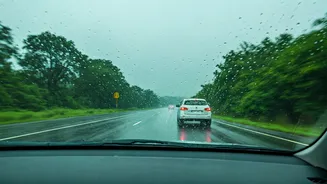
Speed is the enemy on wet roads. Your vehicle's braking distance increases significantly on slick surfaces. Smart drivers reduce their speed by at least 10-15 km/h from their normal pace. It is also crucial to increase your following distance. While a three-second gap is standard in the dry, you should double it to six seconds or more in the rain. This extra space provides a critical buffer to react to sudden stops or hazards. Avoid sudden acceleration, hard braking, and sharp turns, as these manoeuvres can easily lead to a loss of traction. Using cruise control is not recommended in the rain as it reduces your ability to respond quickly to changing road conditions.
Rule 3: Master Visibility—See and Be Seen
During a heavy downpour, visibility can drop to near zero in seconds. The most basic rule is to turn on your low-beam headlights, even during the day. This not only helps you see the road but, more importantly, helps other drivers, pedestrians, and cyclists see you. Avoid using high beams, as the light can reflect off the raindrops and create glare, further impairing your vision and blinding oncoming traffic. Keep your windshield—both inside and out—clean. Use your car’s defogger and AC to prevent the windows from fogging up in the high humidity. Topping up your windshield washer fluid with a proper cleaning solution can also help clear away mud and grime splashed up from the road.
Rule 4: Beware of Waterlogged Roads
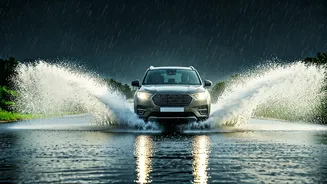
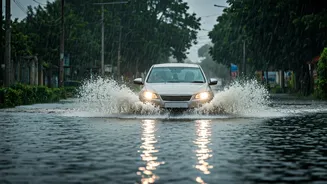
One of the biggest dangers in the Indian monsoon is driving through flooded streets. If you encounter a waterlogged road, the smartest rule is simple: turn around. It’s impossible to know the water's depth or what hazards—like open manholes, large potholes, or debris—lie beneath. Just six inches of water can be enough to cause a passenger car to stall, and a foot of water can float many vehicles, causing a complete loss of control. If you absolutely must proceed, do so only after watching other vehicles to gauge the depth. Drive in a low gear with high revs to prevent water from entering the exhaust. If your car stalls in water, do not attempt to restart it. Doing so can suck water into the engine, causing catastrophic and expensive damage known as hydrostatic lock.
Rule 5: Understand and Avoid Hydroplaning
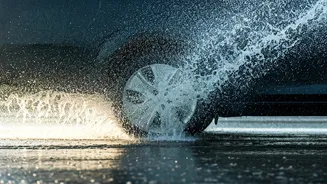
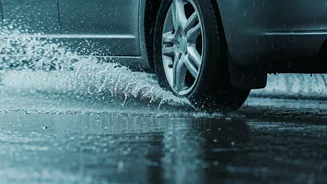
Hydroplaning, or aquaplaning, happens when your tyres can't clear water from the road surface fast enough, causing them to lose contact and glide on a thin layer of water. This leads to a terrifying loss of steering and braking control. It can happen at speeds as low as 55-60 km/h, especially if your tyre tread is low. The best way to avoid it is to slow down, steer clear of standing water, and drive in the tracks of the vehicle ahead of you, where the water has already been displaced. If you feel the car starting to hydroplane—the steering will feel light and unresponsive—do not panic or slam on the brakes. Instead, ease your foot off the accelerator gently and steer straight until the tyres regain their grip on the road.