



A Groundbreaking Catch for Starship
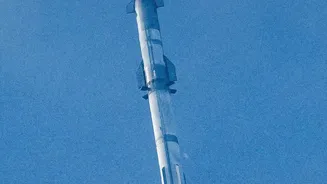
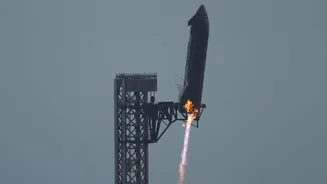
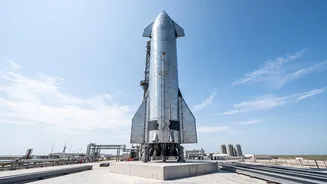
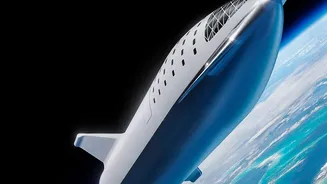
The undeniable triumph of the mission was the successful recovery of the Starship upper stage, known as Ship 42. After launching on November 13, the spacecraft entered orbit, deployed 26 Starlink satellites, and circled the Earth 14 times. Then, in a maneuver
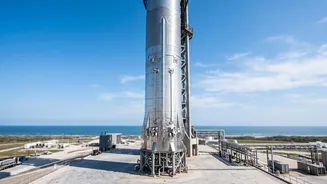
straight out of science fiction, it returned to its Texas launch site approximately 22.5 hours later. On November 14, the vehicle descended through the atmosphere, performed a controlled flip, and was caught in mid-air by the giant mechanical 'chopstick' arms of the launch tower, nicknamed 'Mechazilla'. This marked the first time any orbital spacecraft has been recovered this way, a monumental step toward SpaceX’s goal of a fully and rapidly reusable launch system. The achievement was hailed as the 'holy grail of spaceflight' by a SpaceX commentator during the landing webcast.
The Booster's Unfortunate Setback
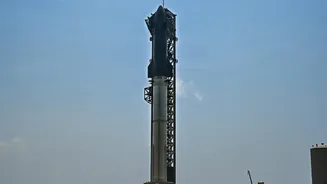
While the Starship itself had a near-perfect mission, its massive first-stage rocket, the Super Heavy booster, did not. The flight plan called for a 'double catch,' where both the booster and the ship would be recovered by the launch tower. However, shortly after separating from the upper stage minutes into the flight, the booster experienced an issue during its return burn. A low fuel mass alarm reportedly triggered a diversion, sending the booster for an emergency splashdown in the Gulf of Mexico, where it exploded just above the water. This was a significant setback, as SpaceX had successfully caught Super Heavy boosters on three previous flights and was aiming to prove the reliability of the double-recovery method. Company engineers are now investigating the root cause of the failure.
Decoding the 22-Hour Mission
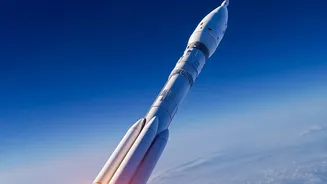
The 22-hour duration mentioned in the headline refers to the total mission time for the Starship upper stage, from liftoff to its eventual capture. After the Super Heavy booster propelled it on its way, Ship 42 fired its own engines to enter a stable low-Earth orbit. It then spent nearly a full day circling the planet, a mission duration far longer than any previous Starship flight. During this time, it successfully deployed a batch of next-generation Starlink internet satellites, demonstrating its capability as a cargo delivery platform. The extended flight was a crucial test of the vehicle's endurance and systems before it performed the deorbit burn that sent it back toward Texas for its historic landing. This long-duration orbital phase is what sets this flight apart from earlier, shorter suborbital hops and even its first orbital trip.
Why This Mixed Result Matters
This 'one step forward, one step back' outcome is typical of ambitious test programs, but it has major implications for SpaceX. The successful Starship catch proves that the most difficult and novel part of their recovery architecture is possible. This is vital for achieving the high flight cadence needed for deploying massive satellite constellations and for NASA's Artemis program, which relies on a version of Starship to land astronauts on the Moon. However, the loss of the booster highlights the remaining reliability challenges. True reusability requires both stages to return safely and consistently. While celebrating the historic achievement, SpaceX must now solve the booster's issues to make the full system as reliable and cost-effective as envisioned. The flight was a spectacular success for the ship, but a sobering reminder of the hurdles still to clear for the booster.