



A Taste of Tradition
Shrikhand is a beloved sweet dish with deep roots in the western Indian states of Maharashtra and Gujarat, though it's enjoyed across the country. Historical texts suggest variations of this dish, then called 'shikharini', existed as far back as 500 BC.
Legend even attributes its invention to traveling herders who strained yogurt to preserve it, then added sugar to balance the sourness, creating the first shrikhand. Traditionally served at weddings and festivals like Gudi Padwa, it represents celebration and comfort. Made from strained yogurt, or 'chakka', it’s a simple dessert at heart, elevated by fragrant spices. Its creamy texture and cooling properties make it a perfect treat, whether enjoyed on a hot summer day or a cozy rainy one.
The Heart of Shrikhand: Hung Curd
The secret to shrikhand’s luxuriously thick and creamy consistency lies in one crucial ingredient: hung curd. This is simply regular yogurt, or dahi, that has had all its excess water (whey) drained out. The process is straightforward but requires a bit of patience. To make hung curd at home, you pour full-fat yogurt into a muslin or cheesecloth, tie it into a tight bundle, and hang it over a bowl to let the whey drip away for several hours, often overnight in the refrigerator. What remains is a thick, concentrated yogurt mass, similar in texture to cream cheese, known as chakka in Marathi. While you can use store-bought Greek yogurt as a shortcut, which is already strained, hanging it for a few more hours will yield an even richer result. This process is what transforms simple yogurt into the perfect canvas for a decadent dessert.
Crafting Your Creamy Saffron Shrikhand
Once your hung curd is ready, the rest comes together in minutes. This recipe focuses on the classic 'kesar elaichi' (saffron and cardamom) flavour.
Ingredients: 2 cups of hung curd (from about 4 cups of full-fat plain yogurt) 1/2 cup of powdered sugar, or to taste A generous pinch of high-quality saffron threads 2 tablespoons of warm milk 1/2 teaspoon of freshly ground cardamom powder Chopped pistachios and almonds for garnish
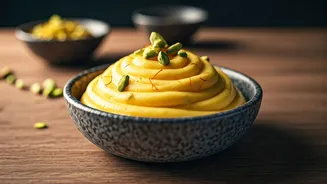
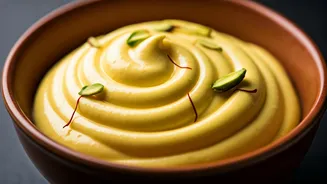
Instructions: 1. First, prepare the saffron milk. Soak the saffron threads in 2 tablespoons of warm milk for about 15 minutes. This will allow the saffron to release its beautiful colour and aroma. 2. In a medium-sized bowl, combine the thick hung curd and the powdered sugar. Using a whisk or spatula, mix them together until the sugar is completely dissolved and the mixture is smooth and lump-free. 3. Pour in the saffron-infused milk and add the ground cardamom powder to the yogurt mixture. Continue to whisk until everything is well incorporated and the shrikhand has a uniform, pale-yellow hue. 4. At this point, you can gently fold in some of the chopped nuts if you like, or save them all for the garnish. 5. Transfer the shrikhand to a serving bowl, cover, and chill in the refrigerator for at least four hours. Chilling is essential as it allows the flavours to meld and deepen.
Serving and Variations
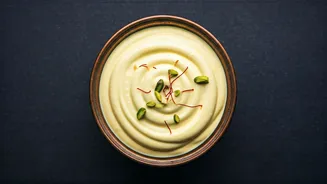
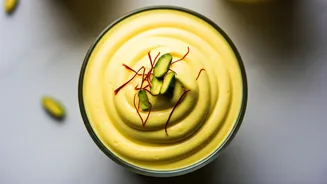
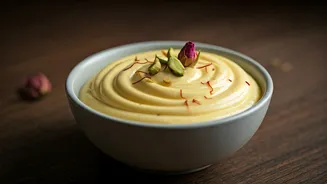
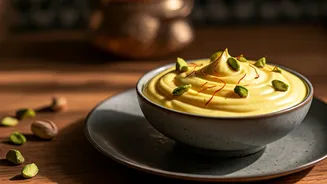
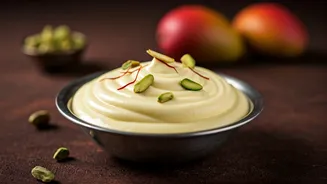
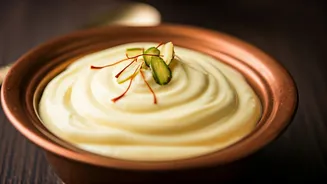
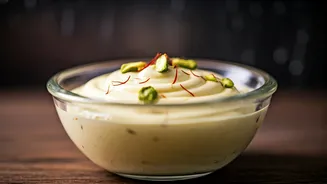
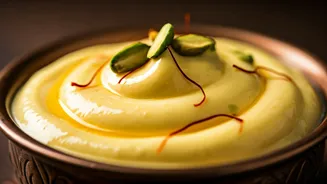
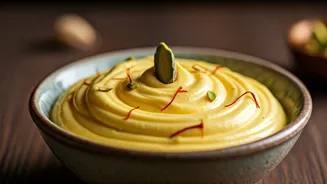
Shrikhand is best served cold. Just before serving, garnish generously with chopped pistachios, slivered almonds, and perhaps a few extra saffron strands. Traditionally, shrikhand is famously paired with hot, fluffy puris (a type of fried bread), creating a delightful contrast of sweet and savoury, hot and cold. It can also be enjoyed on its own as a standalone dessert.
Once you've mastered the classic version, feel free to experiment. During mango season, adding fresh mango puree creates the much-loved 'Amrakhand'. You can also incorporate other fruit purees, rose syrup, or even cocoa powder for different flavour profiles. The simple base of hung curd is incredibly versatile, inviting creativity in the kitchen.