



The Unorthodox Slingshot
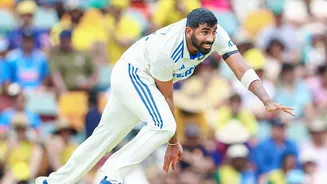
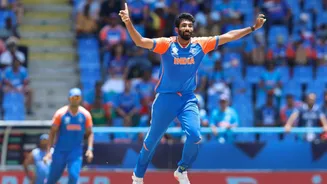
Unlike most fast bowlers who build momentum through a long, rhythmic run-up, Bumrah’s approach is short and explosive. He generates immense pace not from his run-up, but from the final moments of his delivery stride. His action is often described as a human
slingshot. This is achieved through a combination of a rigidly braced front leg, a hyperextended elbow, and a powerful, shoulder-dominant rotation. This unconventional mechanism is incredibly effective, allowing him to deliver the ball from a difficult-to-read angle and generate deceptive pace and bounce. His ability to produce yorkers and bouncers with minimal change in action is a direct result of these unique mechanics.
The Kinetic Chain Under Stress
In a classic bowling action, force is transferred smoothly up through the body in what is known as the kinetic chain—from the feet, through the hips, into the torso, and finally out through the shoulder and arm. Bumrah’s action, however, places an enormous amount of stress on his upper body and lower back. Because his run-up is so short, he must generate most of his force through his trunk and shoulder rotation. This makes him a 'front-on' or 'hip dominant' bowler, a style known to put more pressure on the back compared to a more classical, side-on approach.
Anatomy of the Injury Risk
The primary concern for Bumrah is his lower back, specifically the lumbar vertebrae. Biomechanical experts point to two key elements. The first is significant 'trunk lateral flexion'—meaning he bends his upper body sideways at an extreme angle upon release. While this helps create his trademark inswinger, studies have warned that exceeding a 45-degree flexion angle poses a risk to the lumbar spine. The second is the force generated against his braced front leg. This abrupt stop sends a shockwave of force back up into his body, with his lower back absorbing a huge amount of that energy. This repetitive, high-impact loading is a primary cause of lumbar stress fractures in fast bowlers.
A History Etched in Pain
The theoretical risks have unfortunately become a reality throughout Bumrah's career. He has suffered recurring back injuries, most notably stress fractures, which are small cracks in the bone caused by repetitive overuse. His first major back injury surfaced with a stress fracture in 2019. The issue resurfaced again in 2022, eventually forcing him to undergo surgery in 2023 and miss significant tournaments. These injuries are not a question of his overall fitness, but a direct consequence of the immense and specific strain his action places on his spine, delivery after delivery.
Managing a Generational Talent
Given that his action is the source of his success, a complete overhaul has always been out of the question. Early coaches were lauded for not trying to mould him into a 'perfect action' bowler. Instead, the focus for Bumrah and the Indian cricket board is meticulous workload management. This involves carefully monitoring the number of overs he bowls across all formats, ensuring adequate rest and recovery between series, and an intensive strength and conditioning program focused on his core and back. Even with these measures, fatigue can lead to a breakdown in technique, increasing the load on his spine and raising the risk of injury.