





A Global Net for Cosmic Rocks
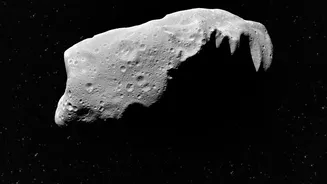
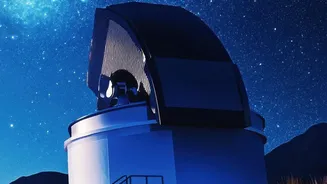
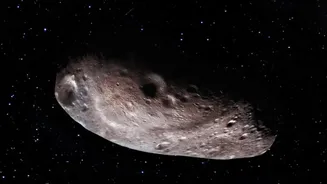
Around the world, a network of survey telescopes constantly scans the night sky. Their primary job is to find near-Earth objects (NEOs), which are asteroids and comets whose orbits bring them into our planetary neighborhood. The process is methodical:
telescopes take multiple images of the same patch of sky minutes apart. Computers then search for any speck of light that moves against the fixed background of stars. If a moving object is found and isn't a known body, it gets flagged for follow-up observations from astronomers, both professional and amateur, to calculate its orbit precisely. This global effort has cataloged tens of thousands of NEOs, creating a comprehensive database of what’s out there. The goal isn't just to find rocks, but to understand their paths and determine if they pose any future risk to Earth.
Prioritizing the Planet-Killers
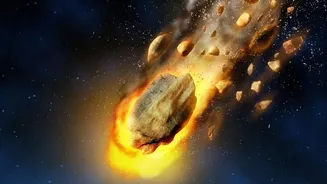
Not all asteroids are created equal. Planetary defense is a game of triage, and the top priority is finding the big ones. An asteroid over 140 meters in diameter is classified as a Potentially Hazardous Asteroid (PHA) if its orbit can bring it within 7.5 million kilometers of Earth. These are the objects large enough to cause significant regional devastation. Fortunately, scientists believe they have already found and tracked over 90% of the truly enormous asteroids, those a kilometer or larger that could pose a civilization-level threat. The focus of ongoing surveys is to complete the catalog of these 140-meter-plus objects. In contrast, smaller objects, like the recent 2026 RW1 which was about a meter wide and burned up harmlessly over the ocean on September 6, 2026, are far more numerous and much harder to detect in advance. Their discovery just hours before entry isn't a failure, but a testament to how sensitive our detection systems have become.
The Sun: Our Biggest Blind Spot
One of the greatest challenges in asteroid hunting is the Sun. Telescopes on Earth can only scan the night sky, looking away from our star. Any object approaching from the sun's direction is hidden in its brilliant glare. As with the famous Chelyabinsk meteor in 2013, these objects can go completely unseen until they are extremely close or even entering our atmosphere. Asteroids that spend most of their time inside Earth's orbit, known as Aten-type asteroids, are particularly tricky to spot for this reason. Discovering them often requires specialized search techniques during the brief twilight hours when the Sun's glare is minimized. Upcoming space telescopes like NASA's NEO Surveyor are being designed specifically to address this blind spot by using infrared detectors that can spot asteroids by their heat, even when they are not well-lit by the Sun.
From Detection to Active Defense
Finding an asteroid is only the first step. The ultimate goal of planetary defense is to be able to do something about a genuine threat. This is where the science fiction concept of deflecting an asteroid has become a reality. In 2022, NASA's Double Asteroid Redirection Test (DART) mission proved that humanity could change the path of a celestial body. The spacecraft successfully slammed into the small asteroid Dimorphos, altering its orbit around its larger companion, Didymos. The impact was even more effective than expected, proving that a 'kinetic impactor' is a viable strategy for planetary defense. The success of DART means that if a hazardous asteroid were discovered with years of warning time, a similar mission could be launched to give it a small nudge, changing its trajectory just enough to miss Earth entirely.