





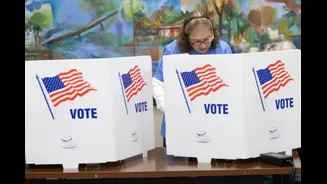
The Democratic party's sweeping victory in the US midterm elections has sent ripples through global markets. With Democrats taking control of both the House and Senate, a new era of divided government in Washington is set to reshape the final two years
of the Trump presidency. This political shift raises critical questions for international trade.
A New Political Chapter in Washington
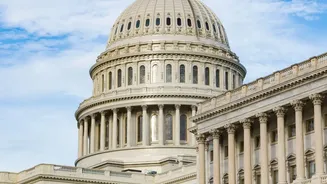
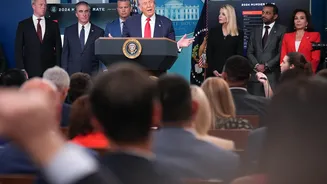
American voters delivered a decisive victory for the Democratic party, granting them a majority in both the House of Representatives and the Senate for the first time since 2009. This outcome is widely seen as a rebuke of the current administration's agenda and introduces significant constraints on its legislative power. With a Democratic-controlled Congress, President Trump will likely face increased scrutiny and legislative gridlock, forcing a greater reliance on executive orders to advance policy goals. Analysts note this creates an unpredictable environment, especially concerning foreign policy and trade, where presidential authority has historically been strong.
Market Reactions: A Mixed Bag
Initial market reactions were mixed but cautiously optimistic. While political uncertainty often spooks investors, global markets reacted positively to the idea of more checks and balances on the presidency. US stocks saw a rally, with the dollar weakening, which in turn supported commodities like gold. However, the prospect of increased regulation and scrutiny had a chilling effect on certain sectors. AI-linked technology stocks fell on fears of a slowdown in investment and tougher rules around data centres. Similarly, defence stocks weakened on expectations that a Democratic Congress will more closely scrutinise military spending and foreign conflicts.
The Future of US-China Trade
The new power dynamic in Washington could significantly alter the trajectory of US-China trade relations. A Democratic-led Congress may be inclined to reassert its authority on trade policy, potentially limiting the president's ability to unilaterally impose tariffs. This could bring a period of relative stability, as lawmakers may push for more carve-outs and exceptions to existing tariffs to ease the burden on American consumers and businesses. However, a tough stance on China has bipartisan support, meaning that while the tactics may change, the overall restrictive approach is likely to continue, especially regarding technology and national security. Chinese officials may see the president's weakened domestic position as an opportunity for greater leverage in upcoming negotiations, though they remain wary of a more confrontational approach from Congress on other issues like Taiwan.
Implications for Europe and Other Allies
European leaders reacted with cautious relief to the election results, hopeful for a more constructive and less hostile relationship with the US. The Trump administration's aggressive use of tariffs and dismissive stance toward traditional alliances like NATO has strained transatlantic relations. With Congress now in Democratic hands, there is an expectation that new tariff shocks will be less likely, although a complete reversal of existing duties is not anticipated. European officials see an opportunity to work more closely with Congress to blunt the impact of harmful policies and rebuild trust. Still, many analysts warn that a politically constrained president could become even more unpredictable on the world stage, using foreign policy to create the appearance of success.
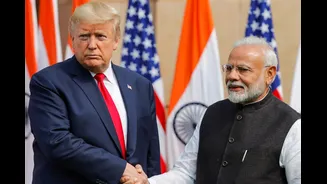
For India, the US election results present both opportunities and challenges. Experts believe the political shift could accelerate negotiations for a long awaited India US trade deal, as the White House may be eager to secure a foreign policy win. However, this urgency could come with increased pressure on New Delhi to grant greater market access for American agricultural and industrial goods. Indian negotiators may see an opportunity to secure more favourable terms now that the administration's leverage is altered. At the same time, the threat of new tariffs remains a concern, though a Democratic Congress might soften the enforcement of measures that could spike global energy prices, giving India more flexibility in areas like Russian oil imports.