


The Foundation of the Flow
Surya Namaskar translates to 'salutation to the sun' and is a sequence of 12 yoga postures (asanas) performed in a continuous, flowing motion. Each movement is synchronized with the breath—inhaling on expansive, opening poses and exhaling on contracting,
folding ones. Traditionally practiced in the morning to greet the new day, it serves as a comprehensive workout that engages major muscle groups, improves circulation, and enhances mental focus. One round consists of two sets, leading with the right leg on the first set and the left on the second, to ensure the body is worked symmetrically.
1. Pranamasana (Prayer Pose)
Stand at the edge of your mat with your feet together, balancing your weight evenly. As you breathe normally, expand your chest and relax your shoulders. Bring your palms together in a prayer position at your heart centre. This initial pose helps to centre the mind and ground the body.
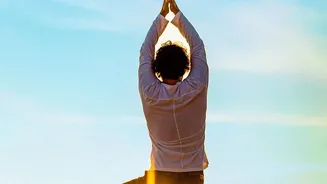
2. Hasta Uttanasana (Raised Arms Pose)
Inhale as you lift your arms up and back, keeping your biceps close to your ears. The aim is to stretch the entire body from the tips of the toes to the ends of the fingers. This is achieved by gently arching the back to create a graceful extension.
3. Hasta Padasana (Standing Forward Bend)
Exhale and bend forward from the waist, keeping your spine straight. Bring your hands down to the floor beside your feet. It’s okay to bend your knees slightly if needed to relieve pressure on your hamstrings. This pose stretches the back and legs.
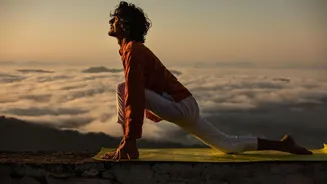
4. Ashwa Sanchalanasana (Equestrian Pose)
Inhale and push your right leg back as far as possible. Bring the right knee to the floor and look up, lifting your gaze. Ensure your front (left) knee is at a 90-degree angle, directly above the ankle. This pose deeply stretches the hips and groin.
5. Dandasana (Plank Pose)
As you inhale or hold your breath, take the left leg back and bring the whole body into a straight line, like a plank. Your arms should be perpendicular to the floor. This pose is excellent for building core and arm strength.
6. Ashtanga Namaskara (Eight-Limbed Salute)
Gently bring your knees down to the floor and exhale. Slightly push your hips back, slide forward, and rest your chest and chin on the floor. Your hips will remain slightly elevated. Eight points of your body—two hands, two knees, two feet, chest, and chin—are touching the ground.
7. Bhujangasana (Cobra Pose)
Slide forward and raise your chest up as you inhale, creating a gentle backbend. Keep your elbows bent and shoulders away from your ears. This pose opens the chest and strengthens the spine.
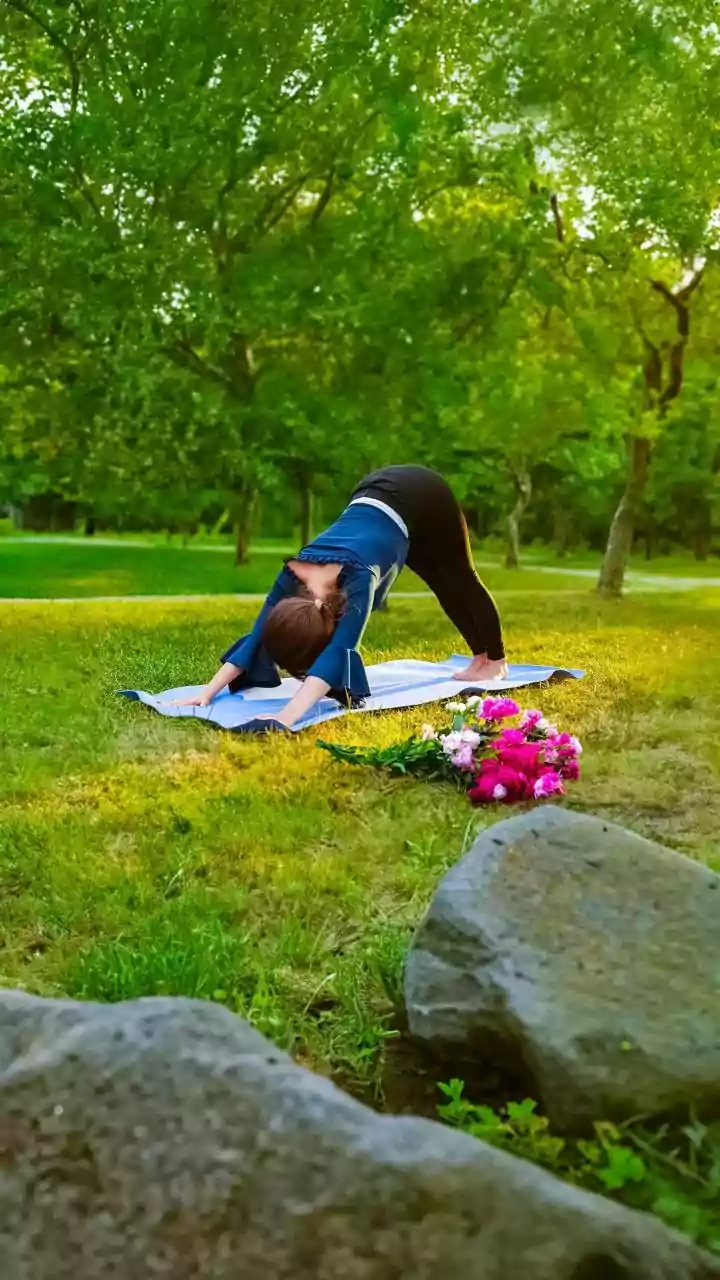
8. Adho Mukha Svanasana (Downward-Facing Dog)
Exhale and lift your hips and tailbone up to form an inverted 'V' shape. Try to push your heels towards the floor, lengthening your spine and the backs of your legs. This pose strengthens the arms and legs while stretching the entire back body.
9. Ashwa Sanchalanasana (Equestrian Pose)
Inhale and bring your right foot forward, placing it between your hands. Your left knee comes down to the floor. Push your hips down and look up. This is the same posture as step 4, but with the opposite leg forward.
10. Hasta Padasana (Standing Forward Bend)
Exhale and bring your left foot forward. Bend from the waist to bring your hands to the floor beside your feet, mirroring step 3.
11. Hasta Uttanasana (Raised Arms Pose)
Inhale and roll your spine up. Lift your hands overhead and bend backward slightly from the hips, repeating the movement from step 2.
12. Pranamasana (Prayer Pose)
As you exhale, first straighten your body, then bring your palms together in front of your chest. This final pose brings you back to the starting position, completing the sequence.