



The Limits of Traditional Forecasting
For decades, weather prediction has relied on complex physics-based models. These numerical weather prediction (NWP) systems run on massive supercomputers, solving intricate equations that describe the motion and state of the atmosphere. While incredibly
powerful, these models are slow and costly, with a single 10-day forecast taking hours to compute on hundreds of machines. This computational bottleneck limits their availability and the speed at which warnings can be issued, especially for rapidly developing extreme weather events like flash floods or 'bomb cyclones'.
How AI Is Changing the Game
Instead of solving physics equations from scratch, AI models take a different approach: they learn directly from data. By training on decades of historical weather observations, these systems learn the complex patterns and cause-and-effect relationships that govern how weather evolves. Tech giants and research institutions have developed groundbreaking models like Google DeepMind's GraphCast, Huawei's Pangu-Weather, and NVIDIA's Earth-2 platform. These AI models can generate a 10-day forecast in under a minute on a single machine, a task that takes traditional models hours. This incredible speed and efficiency are democratising weather prediction, making high-powered forecasting tools more accessible.
Breakthroughs in Extreme Weather Prediction
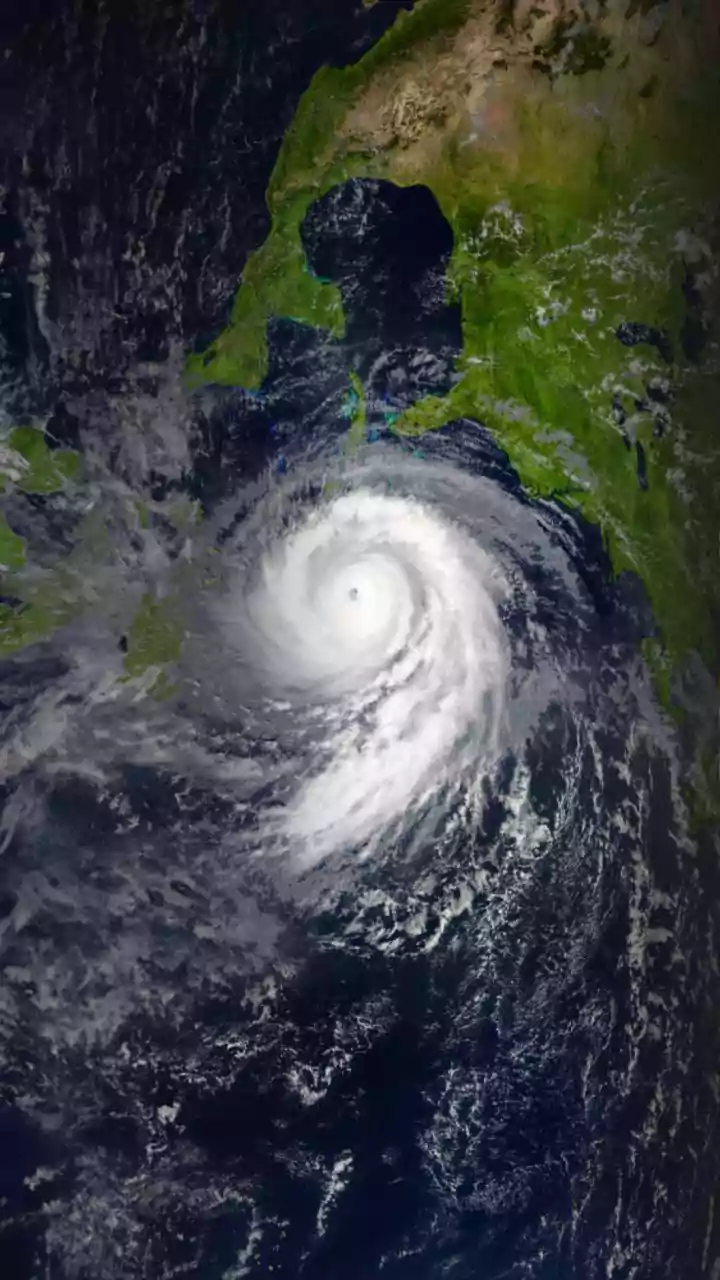
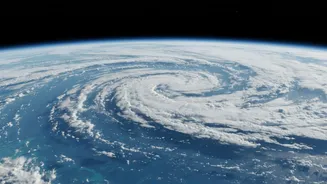
The most significant impact of AI is its ability to provide earlier warnings for high-impact weather. Google's GraphCast has demonstrated superior accuracy in predicting the paths of tropical cyclones. In one notable case, it accurately predicted Hurricane Lee's landfall in Nova Scotia a full nine days in advance, three days earlier than conventional models could confidently lock in the location. AI models are also proving adept at identifying atmospheric rivers associated with flood risks and predicting the onset of extreme temperatures. This capability has the potential to save lives and mitigate economic damage through better preparedness.
What This Means for India
For India, a country highly vulnerable to monsoons, heatwaves, and cyclones, this technology is a game-changer. The India Meteorological Department (IMD) is already deploying AI-based tools for cyclone monitoring and has launched initiatives for block-level monsoon forecasting. In 2025, a project involving the Indian government and University of Chicago researchers delivered AI-powered monsoon onset forecasts to 38 million farmers up to four weeks in advance. Such early, localised information helps farmers make critical decisions about planting, saving costs and averting crop losses. Mobile apps like Mausam and Meghdoot are also using AI to provide real-time updates and crop advisories directly to the public.
Not a Silver Bullet... Yet
Despite their remarkable success, AI models are not without limitations. They function as "black boxes," making it difficult for scientists to understand precisely how they arrive at a prediction. This lack of interpretability can be a problem, as models might learn statistical shortcuts that fail during unprecedented weather events they haven't been trained on. Some studies have found that AI models can underpredict the intensity of the most extreme storms. Furthermore, their accuracy is highly dependent on the quality and availability of historical data, which can be a challenge in many parts of the world. For these reasons, many experts believe the future lies in hybrid models that smartly combine the speed of AI with the rigour of physics-based simulations.