


The Backpacker's Fitness Dilemma
You're exploring new cities, hiking stunning landscapes, and living out of a backpack. But between the late-night socialising and early-morning bus rides, finding time and space for a workout feels impossible. Most hostels don't have gyms, and who wants
to pay for a day pass when you're on a budget? Even if you find a spot, you have no equipment. This is where bodyweight training becomes your best friend. It requires nothing but a few square feet of floor space—often no more than the size of a towel—and the willpower to get it done.
Why This Trio is So Effective
Squats, push-ups, and planks are 'compound' exercises. This means they each work multiple muscle groups and joints simultaneously. Instead of isolating one tiny muscle, you're engaging your entire body, making your workout incredibly efficient. Squats target your entire lower body and core. Push-ups work your chest, shoulders, triceps, and core. Planks are a masterclass in total-body stabilisation, particularly for your core muscles. Together, they provide a comprehensive, full-body workout in a fraction of the time it would take to target each muscle group individually.
Squat: The Lower Body Foundation
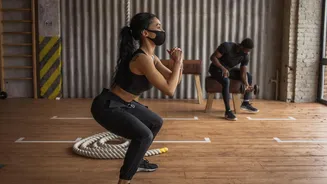
The squat is a fundamental human movement that strengthens your legs (quads, hamstrings) and glutes. A strong lower body is essential for days spent walking around new cities or hiking trails. To perform a squat correctly, stand with your feet shoulder-width apart. Keeping your chest up and back straight, lower your hips as if you’re sitting in a chair. Aim to get your thighs parallel to the floor, ensuring your knees track over your feet but not past your toes. Press through your heels to return to the starting position. It's a powerhouse move for building functional strength.
Push-Up: The Upper Body Standard
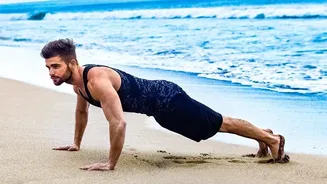
The push-up is unmatched for building upper body and core strength without any equipment. It targets your chest, shoulders, and triceps, improving posture and functional strength. Start in a high plank position with your hands slightly wider than your shoulders. Your body should form a straight line from your head to your heels. Lower your body until your chest is close to the floor, then push back up. If a full push-up is too difficult, you can modify it by placing your knees on the ground. This variation still provides excellent benefits while you build strength.
Plank: The Core Strength Finisher
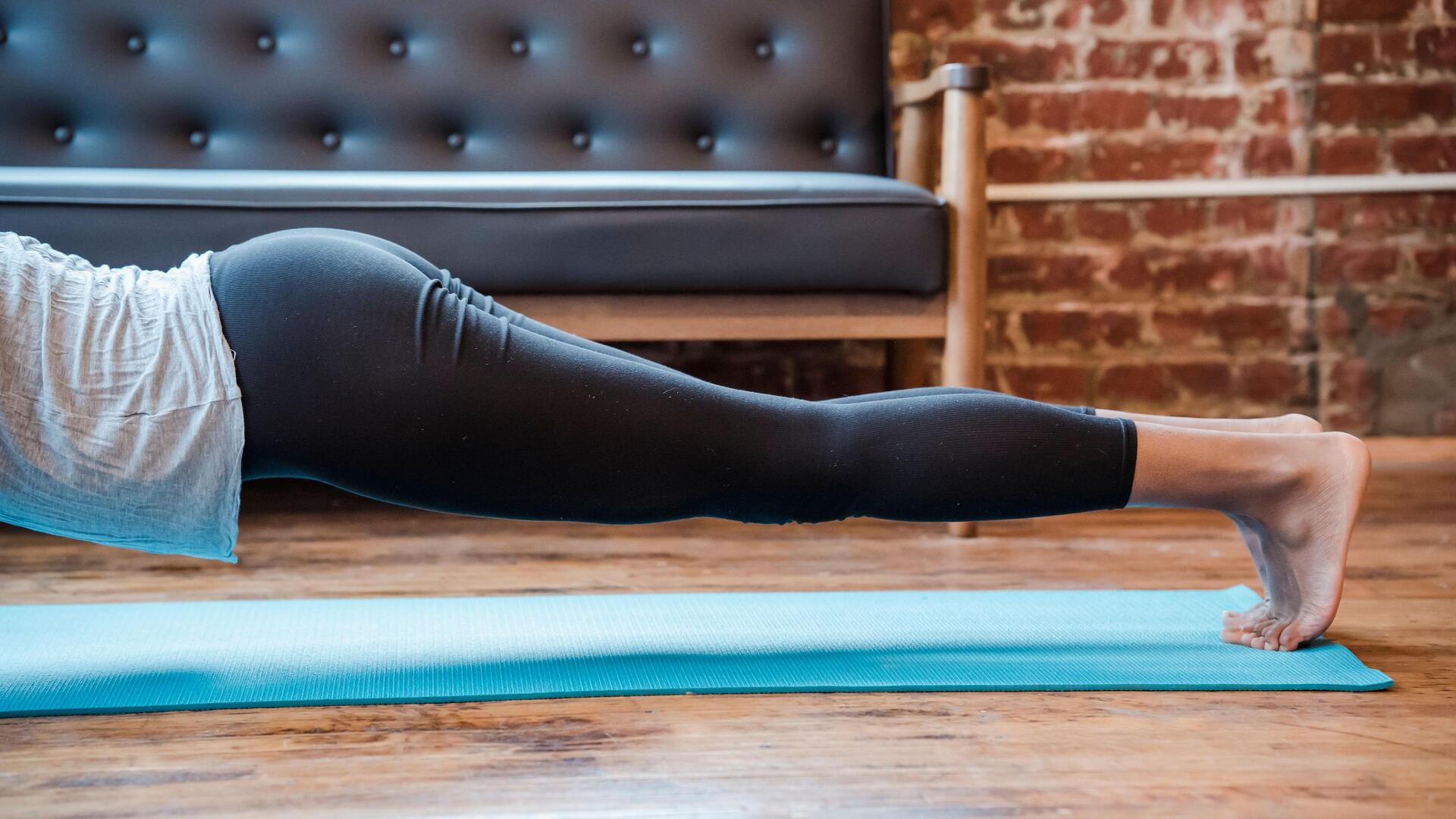
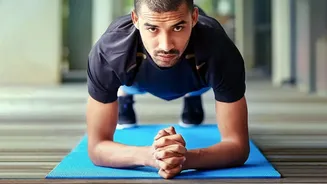
While it may look static, the plank is an intense isometric exercise that strengthens your entire core, including your abs, obliques, and lower back. A strong core is the key to stability and helps protect your back from injury—crucial when carrying a heavy backpack. To perform a plank, hold a push-up position, but rest your weight on your forearms instead of your hands. Keep your body in a perfectly straight line, engage your abs and glutes, and be careful not to let your hips sag or rise too high. It connects the strength built by squats and push-ups into a stable, unified frame.
The Ultimate 20-Minute Hostel Routine
This routine is designed as a circuit to maximize intensity and efficiency. All you need is a timer on your phone. Perform each exercise for 45 seconds, followed by 15 seconds of rest before moving to the next. That completes one round. Rest for 60 seconds after each full round. Complete a total of 4 rounds.Warm-up (3 minutes): Light cardio like high knees or jumping jacks.The Circuit (Approx. 12 minutes):- Round 1: Squats (45s), Rest (15s), Push-ups (45s), Rest (15s), Plank (45s), Rest (15s).- Rest for 60 seconds.- Repeat this cycle for a total of 4 rounds.Cool-down (5 minutes): Gentle stretching, focusing on your legs, chest, and back.This structure keeps your heart rate up, turning the strength workout into a cardio session as well, burning more calories and improving endurance.