


Our Hostile Neighbour
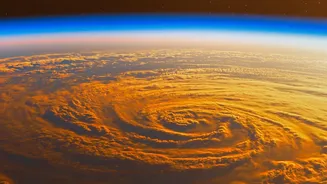
Venus may be similar to Earth in size and mass, but it’s one of the most inhospitable places in our solar system. Its surface temperature reaches a staggering 460 degrees Celsius, hot enough to melt lead. The atmospheric pressure is over 90 times that
of Earth's at sea level, equivalent to being nearly a kilometre deep in the ocean. The planet is perpetually covered by a thick blanket of sulfuric acid clouds, which not only obscures the surface from view but also poses a severe corrosive threat to any spacecraft that dares to venture near. This runaway greenhouse effect makes Venus a crucial subject of study, as it offers a cautionary tale for how dramatically a planet's climate can evolve.
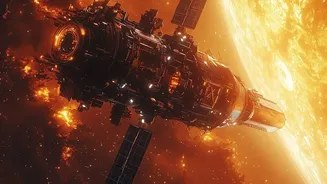
Introducing Shukrayaan-1: India's Venus Craft
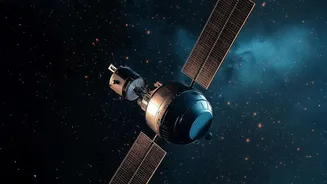
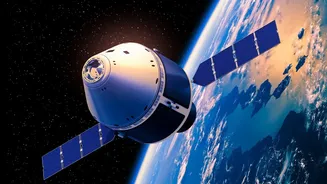
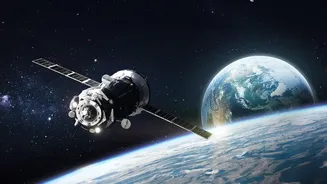
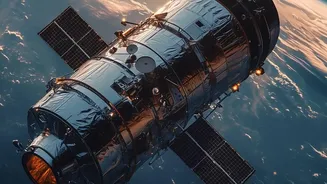
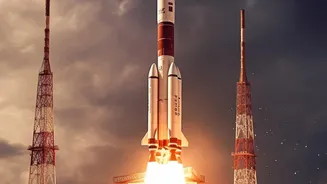
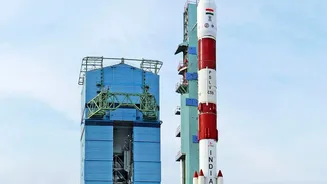
Following the monumental successes of the Chandrayaan moon missions and the Mangalyaan Mars orbiter, the Indian Space Research Organisation (ISRO) is turning its gaze to Venus. The Shukrayaan-1 mission, formally approved in September 2024, is India's first dedicated mission to our veiled neighbour. Scheduled for launch on March 29, 2028, aboard the powerful LVM-3 rocket, the spacecraft will embark on a 112-day journey to reach Venusian orbit by July 2028. With a budget of approximately ₹1,236 crore, the mission represents a significant national endeavour to push the frontiers of interplanetary exploration.
Peering Through the Veil with Radar
The central challenge of studying Venus is its opaque atmosphere. To overcome this, Shukrayaan-1's key instrument is a high-resolution Synthetic Aperture Radar (SAR). Radar technology allows the orbiter to effectively 'see' through the dense clouds, mapping the geological features of the surface below in unprecedented detail, day or night. This instrument is expected to have a resolution four times greater than NASA's Magellan mission in the 1990s. It will search for evidence of active volcanoes, lava flows, and other geological processes. In a world first, the mission also plans to carry a ground-penetrating radar to investigate the shallow sub-surface of Venus, providing insights into its stratigraphy and hidden structures.
Analysing the Atmosphere's Secrets
Beyond mapping the surface, a primary objective is to analyse the composition and dynamics of the hostile atmosphere. The orbiter will carry a suite of 19 scientific instruments, a mix of Indian and international payloads from collaborators in Russia, Sweden, and Germany. Instruments like the Venusian Neutrals Analyzer (VNA), a collaboration with Sweden, will study the interaction between the solar wind and the Venusian ionosphere. Other sensors will analyse atmospheric chemistry, monitoring for key gases like carbon dioxide and sulfur dioxide. The VIRAL instrument, a joint effort with Russia and France, will even search for traces of phosphine, a gas that has been speculatively linked to potential biological processes in the clouds.
A Mission of Global Importance
Shukrayaan-1 will initially enter a large elliptical orbit around Venus, with a closest approach of 500 km and a farthest point of 60,000 km. Over time, it will use a technique called aerobraking—using the drag of the upper atmosphere—to gradually lower its orbit to a more circular path of around 200 by 600 km for its main scientific operations. The mission, designed to last for four years, joins a renewed global interest in Venus, with other missions planned by NASA and the European Space Agency. By providing a comprehensive, long-term look at the entire planet, Shukrayaan aims to answer fundamental questions about how Earth's twin became so different and what lessons that holds for the future of our own world.